Issue · Education

Education

Every education bill, vote, and legislator stance in Pennsylvania, automatically classified by Maddy, our AI policy reader.

Total bills
33
2025-2026 Regular Session
Top supporter
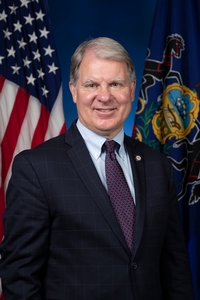
Dave Argall
89% support rate
Top opponent
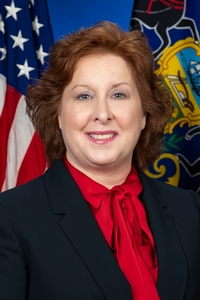
Barb Gleim
23% support rate
Ranked legislators
10
5 support · 5 oppose
Key legislators

Who's moving education in Pennsylvania

Legislators moving education in Pennsylvania
Legislator Party Stance Support rate Decisive votes
Dave Argall
Dave Argall Senate · District 29
R
Strong +
89% 18
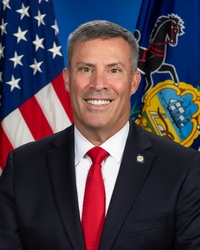
Greg Rothman
Greg Rothman Senate · District 34
R
Strong +
89% 18
Lynda Culver
Lynda Culver Senate · District 27
R
Strong +
89% 18
Kim Ward
Kim Ward Senate · District 39
R
Strong +
88% 17
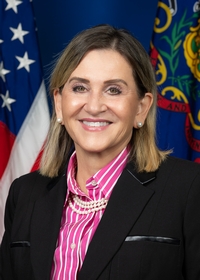
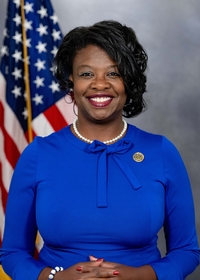
Regina Young
Regina Young House · District 185
D
Strong +
80% 123
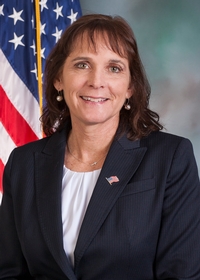
Barb Gleim
Barb Gleim House · District 199
R
Oppose
23% 98
Marc Anderson
Marc Anderson House · District 92
R
Oppose
25% 99
Joe D'Orsie
Joe D'Orsie House · District 47
R
Oppose
26% 98
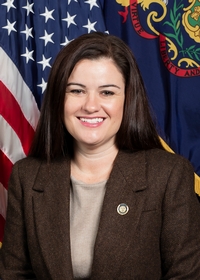
Charity Krupa
Charity Krupa House · District 51
R
Oppose
32% 88
Brian Rasel
Brian Rasel House · District 56
R
Oppose
33% 96
Showing 11–20 of 33 bills

All education bills

passed · Pennsylvania · House Jun 5, 2026

HB 2425: An Act amending the act of March 10, 1949 (P.L.30, No.14), known as the Public School Code of 1949, in career and technical education, providing for Career and Technical Education Curriculum Modernization Grant Program.

This bill creates a grant program to help Pennsylvania school districts and career and technical schools update their educational materials. Eligible schools can apply for funding to buy digital platforms or printed curricula that include lesson plans, multimedia content, and tools for tracking student progress. The amount each school receives is calculated based on its student enrollment and the total state funding available for the program. To qualify, schools must receive a recommendation from their local occupational advisory committee and certify that the funds will be used for approved curriculum modernization.
passed · Pennsylvania · House Jun 5, 2026

HB 2314: An Act providing for a public education campaign focused on educating the public about artificial intelligence and improving AI consumer literacy.

This Pennsylvania bill directs the Office of Attorney General to run a public education campaign aimed at increasing consumer understanding of artificial intelligence. The campaign will use various media channels to teach the public how to identify AI-generated content, avoid AI-enabled scams, protect personal data, and recognize potential biases in AI systems. Special attention will be given to vulnerable populations and children, with guidance provided on safe use of chatbots and detection of forged digital likenesses. The Office of Attorney General must submit a report on the campaign's performance within one year of its start, and funding will be provided by the General Assembly as needed.
passed · Pennsylvania · House Jun 5, 2026

HB 2117: An Act amending the act of March 10, 1949 (P.L.30, No.14), known as the Public School Code of 1949, in school health services, further providing for definitions, for possession and use of asthma inhalers and epinephrine auto-injectors, for school access to emergency epinephrine and for administration of epinephrine auto-injectors by school bus drivers and school crossing guards.

This bill amends Pennsylvania's Public School Code to allow students with asthma or severe allergies to possess and self-administer their prescribed asthma medications (including inhalers) and epinephrine auto-injectors at school. Schools must create written policies requiring students to demonstrate self-administration capability and notify the school nurse after use, while ensuring medications are stored safely and accessible only to authorized students. The bill also permits trained school staff, including bus drivers and crossing guards, to administer epinephrine auto-injectors in emergencies for students experiencing allergic reactions or asthma attacks. These changes aim to improve student safety by ensuring timely access to life-saving medications during school hours.
signed · Pennsylvania · Senate May 13, 2026

SB 375: An Act amending the act of March 10, 1949 (P.L.30, No.14), known as the Public School Code of 1949, in certification of teachers, repealing provisions relating to CPR instruction; in school safety and security, further providing for School Safety and Security Grant Program; and, in school health services, further providing for definitions, repealing provisions relating to automatic external defibrillators, providing for AED and CPR instruction and procedure, establishing the Automated External Defibrillator Program and providing for availability and specifications of automated external defibrillators.

SB 375 repeals a requirement that schools provide cardiopulmonary resuscitation (CPR) training for staff every three years. Instead, it mandates that Pennsylvania schools obtain and maintain automated external defibrillators (AEDs) - heart rhythm shock devices - by requiring 2.5% of annual school safety funding to be used for purchasing AEDs and related training. The bill establishes an AED program requiring school staff to complete AED and CPR training through approved organizations like the American Heart Association, and it defines AEDs as portable devices that restore heart rhythm during cardiac arrest. This law directly affects all public and nonpublic schools in Pennsylvania, shifting focus from mandatory staff CPR training to AED availability and use.
passed · Pennsylvania · Senate May 6, 2026

SB 1014: An Act amending the act of March 10, 1949 (P.L.30, No.14), known as the Public School Code of 1949, in student supports, providing for bell-to-bell mobile device policy.

SB 1014 amends Pennsylvania's Public School Code of 1949 to require public schools to adopt a "bell-to-bell phone-free policy" during the entire school day. This policy directly affects all public K-12 schools and students by prohibiting the use of personal electronic devices during instructional time. The key provision mandates that schools establish and enforce this policy, though the bill does not specify exemptions or implementation details. The legislation focuses on reducing distractions in classrooms by limiting student phone access from the start to the end of the school day. It is currently pending in the Education committee.
passed · Pennsylvania · House May 5, 2026

HR 437: A Resolution recognizing the month of April 2026 as "National Poetry Month" in Pennsylvania.

This bill is a House Resolution that formally recognizes April 2026 as "National Poetry Month" within Pennsylvania. It does not create new laws or change existing policies, but rather serves as an official statement of support for poetry and the literary arts. The resolution acknowledges the cultural and educational value of poetry, noting its role in education and community engagement. Sponsored by multiple legislators, it aims to honor the tradition of celebrating poetry during this designated month.
passed · Pennsylvania · House May 5, 2026

HR 228: A Resolution designating July 31, 2025, as "Intern Day" in Pennsylvania.

This resolution designates July 31, 2025, as "Intern Day" in Pennsylvania to recognize the value of internships for students, educational institutions, and employers. It aims to raise awareness about work-based learning opportunities that connect classroom education with workplace skills, aligning with national observances. The bill does not create new laws or funding but symbolically highlights Pennsylvania’s commitment to supporting internships as part of economic development. It directly affects students seeking career experience, career and technical centers, and businesses offering internships.
passed · Pennsylvania · House Feb 13, 2026

HB 1935: An Act amending Title 18 (Crimes and Offenses) of the Pennsylvania Consolidated Statutes, in assault, further providing for the offense of terroristic threats.

HB 1935 requires individuals convicted of terroristic threats to pay restitution for costs incurred during evacuations, including emergency response, transportation, and employee wages for first responders. It also mandates a sentencing enhancement for threats targeting schools or institutions of higher education, which the Pennsylvania Commission on Sentencing must consider. The bill defines "school entity" to include public, charter, private, and cyber charter schools, and "institution of higher education" to cover specific universities like Penn State, Pitt, Temple, and others. These changes directly affect offenders who make terroristic threats in educational settings, holding them financially accountable for the costs their actions trigger.
passed · Pennsylvania · House Dec 22, 2025

HB 1768: An Act establishing the Local Food Purchasing Incentive Grant Program, the Keystone Producer Grant Program, the Keystone Assistance Grant Program and the Keystone Fresh Farm to School Account; and imposing duties on the Department of Education and the Department of Agriculture.

HB 1768 establishes four new grant programs to support Pennsylvania's local food system. It provides incentives for schools and institutions to purchase local food (Local Food Purchasing Incentive Grant), offers financial assistance to farmers for production improvements (Keystone Producer Grant), supports food distribution networks (Keystone Assistance Grant), and funds school meal programs sourcing from local farms (Keystone Fresh Farm to School Account). The Department of Agriculture and Department of Education would administer these programs and manage the grant allocations. The bill directly affects Pennsylvania farmers, schools, food distributors, and local food businesses by creating new funding mechanisms to strengthen regional food systems.
signed · Pennsylvania · Senate Nov 12, 2025

SB 315: An act amending the act of March 10, 1949 (P.L.30, No.14), entitled "An act relating to the public school system, including certain provisions applicable as well to private and parochial schools; amending, revising, consolidating and changing the laws relating thereto," in preliminary provisions, further providing for Special Education Funding Commission and for minimum number of days or hours; in duties and powers of boards of school directors, providing for admission fees for school-sponsored activities; in intermediate units, further providing for staff; in certification of teachers, further providing for certificates qualifying persons to teach and for instructional certificate grade spans and age levels and duties of department, providing for instructional certificate grade spans and age levels and for State certificate fee reduction, further providing for standard employment application, for career and technical instructional certificate, for program of continuing professional and paraprofessional education and for postbaccalaureate certification, providing for assessment of basic skills, further providing for professional educator discipline fee and providing for career and technical administrative director certification flexibility; in pupils and attendance, further providing for attendance policy at charter, regional charter and cyber charter schools, for procedure when child is truant, for procedure by school when child habitually truant, for procedure upon filing of citation, for penalties for violating compulsory school attendance requirements and for study of truancy procedure, providing for department supports to prevent truancy and further providing for reports to Superintendent of Public Instruction and for exceptional children and education and training; in student supports, further providing for definitions; in school safety and security, further providing for definitions, for School Safety and Security Committee, for school safety and security assessment providers, for School Safety and Security Grant Program, for school safety and security coordinator and for school safety and security training, providing for school safety and mental health grants for 2025-2026 school year and further providing for reporting and memorandum of understanding; in school security, further providing for training, for school resource officers, for school security guards and for duties of commission; in Safe2Say Program, further providing for intent, for definitions, for Safe2Say Program and for annual report; in threat assessment, further providing for definitions, for threat assessment teams and for threat assessment guidelines, training and information materials; in Drug and Alcohol Recovery High School Program, further providing for scope of program and selection of students and for enrollment of students; in evidence-based reading instruction, further providing for definitions and providing for school entity duties related to evidence-based reading instruction, for school entity duties related to reading screening, for reading deficiency identification and parental notification, for reading intervention plans, for grant program, for funding, for reporting, for accountability and for construction; in high schools, further providing for attendance in other districts and providing for Free Application for Federal Student Aid; in interscholastic athletics accountability, further providing for council recommendations and standards; in charter schools, further providing for funding for cyber charter schools, for enrollment and notification and for enrollee wellness checks; in career and technical education, further providing for capital reserve fund for approved purchases of equipment and facility maintenance, for career and technical education equipment grants, for Cosmetology Training through Career and Technical Center Pilot Program and for Barber Training through Career and Technical Center Pilot Program; providing for Nursing Shortage Assistance Program; in community colleges, further providing for financial program and reimbursement of payments; in the State System of Higher Education, further providing for definitions and for Grow Pennsylvania Merit Scholarship Program; in educational tax credits, further providing for limitations; in higher education accountability and transparency, further providing for exit counseling; in miscellaneous provisions relating to institutions of higher education, repealing provisions relating to State-related university performance-based funding model, further providing for prohibition on scholarship displacement at public institutions of higher education and providing for cooperation and for State scholarship renewals; in institutions of higher education, further providing for powers and duties of State Board of Higher Education, for definitions, for Performance-based Funding Council and for public institution of higher education reporting, providing for State-related University Performance Fund, for performance-based funding formula and for public accountability and further providing for agency duties, for grant priority and for report; in Ready-to-Succeed Scholarship, further providing for agency; in funding for public libraries, providing for State aid for fiscal year 2025-2026; in reimbursements by Commonwealth and between school districts, further providing for student-weighted basic education funding beginning with 2023-2024 school year, for extraordinary special education program expenses, for assistance to school districts declared to be in financial recovery status or identified for financial watch status and for Ready-to-Learn Block Grant; in construction and renovation of buildings by school entities, further providing for applicability; abrogating regulations; and making an editorial change.

SB 315 amends Pennsylvania's 1949 education code to update school funding, safety, and instructional requirements. It establishes new school safety grants, updates teacher certification standards, and strengthens truancy prevention measures for all public and charter schools. The bill adds funding for career and technical education equipment, expands mental health support through school safety programs, and modifies higher education scholarship rules. As Act No. 47 of 2025, it became law on November 12, 2025, affecting students, teachers, school districts, and higher education institutions statewide.
Showing 11 to 20 of 33 bills
Previous 1 2 3 … 4 Next