




Issue · Education

Education

Every education bill, vote, and legislator stance in Pennsylvania, automatically classified by Maddy, our AI policy reader.

Total bills
28
2025-2026 Regular Session
Top supporter
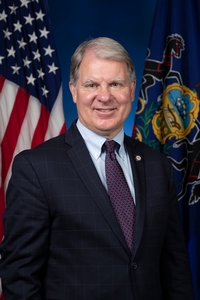
Dave Argall
89% support rate
Top opponent
Barb Gleim
23% support rate
Ranked legislators
10
5 support · 5 oppose
Key legislators

Who's moving education in Pennsylvania

Legislators moving education in Pennsylvania
Legislator Party Stance Support rate Decisive votes
Dave Argall
Dave Argall Senate · District 29
R
Strong +
89% 18
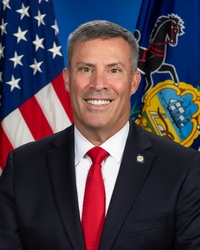
Greg Rothman
Greg Rothman Senate · District 34
R
Strong +
89% 18
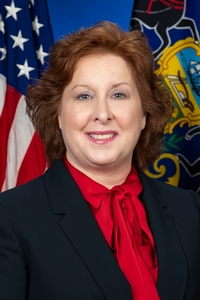
Lynda Culver
Lynda Culver Senate · District 27
R
Strong +
89% 18
Kim Ward
Kim Ward Senate · District 39
R
Strong +
88% 17
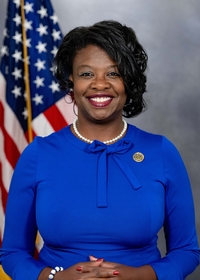
Regina Young
Regina Young House · District 185
D
Strong +
80% 123
Barb Gleim
Barb Gleim House · District 199
R
Oppose
23% 98
Marc Anderson
Marc Anderson House · District 92
R
Oppose
25% 99
Joe D'Orsie
Joe D'Orsie House · District 47
R
Oppose
26% 98
Charity Krupa
Charity Krupa House · District 51
R
Oppose
32% 88
Brian Rasel
Brian Rasel House · District 56
R
Oppose
33% 96
Showing 21–28 of 28 bills

All education bills

signed · Pennsylvania · Senate Nov 12, 2025

SB 315: An act amending the act of March 10, 1949 (P.L.30, No.14), entitled "An act relating to the public school system, including certain provisions applicable as well to private and parochial schools; amending, revising, consolidating and changing the laws relating thereto," in preliminary provisions, further providing for Special Education Funding Commission and for minimum number of days or hours; in duties and powers of boards of school directors, providing for admission fees for school-sponsored activities; in intermediate units, further providing for staff; in certification of teachers, further providing for certificates qualifying persons to teach and for instructional certificate grade spans and age levels and duties of department, providing for instructional certificate grade spans and age levels and for State certificate fee reduction, further providing for standard employment application, for career and technical instructional certificate, for program of continuing professional and paraprofessional education and for postbaccalaureate certification, providing for assessment of basic skills, further providing for professional educator discipline fee and providing for career and technical administrative director certification flexibility; in pupils and attendance, further providing for attendance policy at charter, regional charter and cyber charter schools, for procedure when child is truant, for procedure by school when child habitually truant, for procedure upon filing of citation, for penalties for violating compulsory school attendance requirements and for study of truancy procedure, providing for department supports to prevent truancy and further providing for reports to Superintendent of Public Instruction and for exceptional children and education and training; in student supports, further providing for definitions; in school safety and security, further providing for definitions, for School Safety and Security Committee, for school safety and security assessment providers, for School Safety and Security Grant Program, for school safety and security coordinator and for school safety and security training, providing for school safety and mental health grants for 2025-2026 school year and further providing for reporting and memorandum of understanding; in school security, further providing for training, for school resource officers, for school security guards and for duties of commission; in Safe2Say Program, further providing for intent, for definitions, for Safe2Say Program and for annual report; in threat assessment, further providing for definitions, for threat assessment teams and for threat assessment guidelines, training and information materials; in Drug and Alcohol Recovery High School Program, further providing for scope of program and selection of students and for enrollment of students; in evidence-based reading instruction, further providing for definitions and providing for school entity duties related to evidence-based reading instruction, for school entity duties related to reading screening, for reading deficiency identification and parental notification, for reading intervention plans, for grant program, for funding, for reporting, for accountability and for construction; in high schools, further providing for attendance in other districts and providing for Free Application for Federal Student Aid; in interscholastic athletics accountability, further providing for council recommendations and standards; in charter schools, further providing for funding for cyber charter schools, for enrollment and notification and for enrollee wellness checks; in career and technical education, further providing for capital reserve fund for approved purchases of equipment and facility maintenance, for career and technical education equipment grants, for Cosmetology Training through Career and Technical Center Pilot Program and for Barber Training through Career and Technical Center Pilot Program; providing for Nursing Shortage Assistance Program; in community colleges, further providing for financial program and reimbursement of payments; in the State System of Higher Education, further providing for definitions and for Grow Pennsylvania Merit Scholarship Program; in educational tax credits, further providing for limitations; in higher education accountability and transparency, further providing for exit counseling; in miscellaneous provisions relating to institutions of higher education, repealing provisions relating to State-related university performance-based funding model, further providing for prohibition on scholarship displacement at public institutions of higher education and providing for cooperation and for State scholarship renewals; in institutions of higher education, further providing for powers and duties of State Board of Higher Education, for definitions, for Performance-based Funding Council and for public institution of higher education reporting, providing for State-related University Performance Fund, for performance-based funding formula and for public accountability and further providing for agency duties, for grant priority and for report; in Ready-to-Succeed Scholarship, further providing for agency; in funding for public libraries, providing for State aid for fiscal year 2025-2026; in reimbursements by Commonwealth and between school districts, further providing for student-weighted basic education funding beginning with 2023-2024 school year, for extraordinary special education program expenses, for assistance to school districts declared to be in financial recovery status or identified for financial watch status and for Ready-to-Learn Block Grant; in construction and renovation of buildings by school entities, further providing for applicability; abrogating regulations; and making an editorial change.

SB 315 amends Pennsylvania's 1949 education code to update school funding, safety, and instructional requirements. It establishes new school safety grants, updates teacher certification standards, and strengthens truancy prevention measures for all public and charter schools. The bill adds funding for career and technical education equipment, expands mental health support through school safety programs, and modifies higher education scholarship rules. As Act No. 47 of 2025, it became law on November 12, 2025, affecting students, teachers, school districts, and higher education institutions statewide.
passed · Pennsylvania · House Oct 15, 2025

HB 1701: An Act amending the act of March 10, 1949 (P.L.30, No.14), known as the Public School Code of 1949, in grounds and buildings, further providing for referendum or public hearing required prior to construction or lease; providing for school facilities; establishing the Public School Facility Advisory Committee; in construction and renovation of buildings by school entities, repealing provisions relating to building condition assessments; and imposing duties on the Department of Education.

HB 1701 amends Pennsylvania's Public School Code to change how school districts handle facility projects. It requires school entities to hold voter referendums or public hearings before constructing new buildings or leasing space, directly affecting school districts and communities. The bill establishes a Public School Facility Advisory Committee to advise on facility planning and repeals outdated requirements for schools to conduct building condition assessments. It also imposes new duties on the Department of Education to oversee school facility planning and funding. (HB 1701, passed October 2025)
passed · Pennsylvania · House Jun 25, 2025

HB 1445: An Act amending Title 40 (Insurance) of the Pennsylvania Consolidated Statutes, providing for school-based services; and, in telemedicine, further providing for insurance coverage of telemedicine.

HB 1445 requires health insurers in Pennsylvania to cover medically necessary health services provided in schools - such as mental health care, behavioral health services, and speech therapy - without denying coverage solely because the service occurs in a school setting. It prohibits insurers from excluding coverage based on location (e.g., through "school setting" or "place of service" exclusions), applying to public, charter, cyber charter, and private schools. Exceptions allow denials if services are provided by unlicensed individuals, are not medically necessary per insurer policies, or conflict with existing legal obligations (like IEPs). This law directly affects students receiving school-based care, insurers, and school entities, ensuring coverage parity for services delivered on school premises.
passed · Pennsylvania · House Jun 6, 2025

HB 1500: An Act amending the act of March 10, 1949 (P.L.30, No.14), known as the Public School Code of 1949, in preliminary provisions, providing for Cyber Charter School Funding and Policy Council and further providing for advertising and sponsorships; in pupils and attendance, further providing for exceptional children and education and training; in charter schools, further providing for definitions, for funding for cyber charter schools, for powers and duties of department and for assessment and evaluation, providing for fund balance limits, further providing for cyber charter school requirements and prohibitions, providing for cyber charter school fund balance accountability, further providing for establishment of cyber charter school, for cyber charter school application, for enrollment and notification, for enrollee wellness checks and for applicability of other provisions of this act and of other acts and regulations and providing for cyber charter school moratorium; and, in reimbursements by Commonwealth and between school districts, further providing for extraordinary special education program expenses.

HB 1500 establishes a Cyber Charter School Funding and Policy Council to develop recommendations on funding, governance, and accountability for cyber charter schools by April 2026. The bill requires public school entities to report advertising and sponsorship spending annually, and mandates detailed cost-tracking for special education services based on individualized student plans. It also adds provisions for student wellness checks, enrollment notifications, and fund balance limits for cyber charter schools, while maintaining a moratorium on new cyber charter school approvals. The law directly affects cyber charter schools, public school districts, and students with disabilities in Pennsylvania.
in committee · Pennsylvania · House May 12, 2025

HB 1401: An Act amending the act of March 10, 1949 (P.L.30, No.14), known as the Public School Code of 1949, in certification of teachers, providing for educator preparation admission.

House Bill 1401 amends the Public School Code of 1949 by establishing new admission requirements for educator preparation programs. It mandates that applicants for initial preparation programs leading to a bachelor's degree must have completed at least 48 college credit hours with a minimum 2.8 GPA. Applicants for alternative programs must hold a bachelor's degree with a 2.8 GPA, and advanced program applicants need a 2.8 GPA along with professional recommendations. Preparing institutions may admit up to 10% of initial preparation applicants who do not meet the GPA requirement, provided other eligibility criteria are met. These provisions directly affect individuals aspiring to become teachers and the institutions that train them.
passed · Pennsylvania · House May 12, 2025

HB 265: An Act amending the act of December 5, 1936 (2nd Sp.Sess., 1937 P.L.2897, No.1), known as the Unemployment Compensation Law, in compensation, further providing for benefits based on service for educational institutions.

HB 265 amends Pennsylvania's unemployment compensation law to change eligibility rules for workers at educational institutions, such as teachers or staff employed on a term-by-term basis. It removes a prior requirement that these workers must prove they would not return to the same institution for the next academic term to receive benefits during breaks between terms. This change applies to service performed after the bill's effective date and aligns with federal guidelines (26 U.S.C. § 3304(a)(6)). The bill directly affects temporary and part-time employees in schools and colleges who experience academic breaks.
passed · Pennsylvania · House Feb 4, 2025

HB 201: An Act amending the act of March 10, 1949 (P.L.30, No.14), known as the Public School Code of 1949, in intermediate units, further providing for powers and duties of the intermediate unit board of directors and for capital subsidy.

HB 201 amends Pennsylvania's Public School Code to update how intermediate units (regional education agencies) manage facilities and receive state funding. It expands boards' authority to acquire land/buildings through purchase, lease, or gift (Section 914-A(11)), and requires pre-approval from the Secretary of Education for lease/loan agreements involving office, classroom, or warehouse space (Section 919.1-A(a)). The bill revises the capital subsidy calculation: the state will allocate funds based on each intermediate unit's student enrollment multiplied by the median per-student instructional cost across all districts, then applying a 0.03% rate. This directly affects intermediate units and school districts using their facilities, changing both facility management rules and state funding distribution.
passed · Pennsylvania · House Feb 4, 2025

HB 190: An Act amending the act of March 10, 1949 (P.L.30, No.14), known as the Public School Code of 1949, in school health services, providing for eating disorder awareness and education.

HB 190 requires Pennsylvania schools to annually provide eating disorder awareness and education materials to parents, guardians, and key school staff (like counselors and principals) for students in grades 6-12. The bill mandates that schools share this information via email, mail, or website, using materials developed by the Department of Health in collaboration with an advisory committee of experts from groups like the National Alliance for Eating Disorders and school health organizations. These materials must explain warning signs, resources, prevention, and be available in multiple languages. The law directly affects all public, charter, cyber, and nonpublic schools in Pennsylvania, aiming to improve early recognition and support for students facing eating disorders.
Showing 21 to 28 of 28 bills