Issue · Criminal Justice

Criminal Justice (Human Trafficking)

Every criminal justice bill, vote, and legislator stance in Pennsylvania, automatically classified by Maddy, our AI policy reader.

Total bills
24
2025-2026 Regular Session
Top supporter
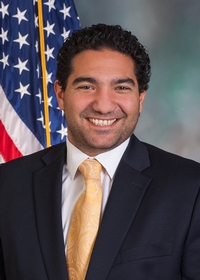
Aerion Abney
67% support rate
Top opponent
Andrew Kuzma
33% support rate
Ranked legislators
10
5 support · 5 oppose
Key legislators

Who's moving human trafficking in Pennsylvania

Legislators moving human trafficking in Pennsylvania
Legislator Party Stance Support rate Votes
Aerion Abney
Aerion Abney House · District 19
D
Support
67% 3
Andre Carroll
Andre Carroll House · District 201
D
Support
67% 3
Ben Sanchez
Ben Sanchez House · District 153
D
Support
67% 3
Chris Pielli
Chris Pielli House · District 156
D
Support
67% 3
Chris Rabb
Chris Rabb House · District 200
D
Support
67% 3
Andrew Kuzma
Andrew Kuzma House · District 39
R
Oppose
33% 3
Jim Rigby
Jim Rigby House · District 71
R
Oppose
33% 3
Joe Hamm
Joe Hamm House · District 84
R
Oppose
33% 3
Joe Kerwin
Joe Kerwin House · District 125
R
Oppose
33% 3
Josh Kail
Josh Kail House · District 15
R
Oppose
33% 3
Showing 1–10 of 24 bills

All criminal justice bills

in committee · Pennsylvania · House Aug 27, 2026

HB 2752: An Act amending Title 18 (Crimes and Offenses) of the Pennsylvania Consolidated Statutes, in human trafficking, further providing for asset forfeiture.

Pennsylvania House Bill 2752 amends state criminal law to mandate the seizure of assets from individuals convicted of human trafficking offenses. The bill requires courts to order the forfeiture of any property used in the crime or derived from its proceeds, ensuring these assets are transferred to local district attorneys or the state Attorney General for sale. A key provision establishes that funds recovered through this process must be prioritized for victim restitution before being distributed to law enforcement agencies or other government bodies. This legislation directly affects convicted traffickers by expanding the scope of their financial penalties and aims to ensure victims receive compensation from the illicit gains of the offenders.
in committee · Pennsylvania · Senate Jun 10, 2026

SB 1369: An Act amending the act of June 13, 1967 (P.L.31, No.21), known as the Human Services Code, in children and youth, providing for screening requirements.

This bill requires Pennsylvania county agencies and juvenile probation officers to use a specific screening process when interacting with children who may be dependent or delinquent. The goal is to identify whether these children are currently victims of human trafficking or are at risk of becoming victims, particularly those involved in sexual servitude. If a child is identified through this screening, the agency must immediately connect them with specialized support services designed for sexually exploited minors. The law takes effect 90 days after it is signed into action.
in committee · Pennsylvania · Senate Jun 15, 2026

SB 1379: An Act amending Title 42 (Judiciary and Judicial Procedure) of the Pennsylvania Consolidated Statutes, in post-trial matters, further providing for scope of subchapter and for eligibility for relief, providing for postconviction resentencing relief for defendant survivors of domestic violence, sexual violence or human trafficking and further providing for jurisdiction and proceedings; and, in sentencing, further providing for sentencing procedure for murder of the first degree and providing for criminal prosecutions involving defendant survivors of domestic violence, sexual violence or human trafficking.

This bill allows individuals in Pennsylvania who are currently serving prison sentences or awaiting execution to request a new sentencing hearing if they were survivors of domestic violence, sexual violence, or human trafficking. To qualify, a person must prove by a preponderance of the evidence that their victimization was a significant factor that contributed to their criminal behavior. The law requires petitioners to submit specific documentation, such as medical records, police reports, or sworn statements from witnesses, to support their claim of survivor status and the link between the trauma and their crime. Additionally, the bill outlines procedures for filing these petitions in the court where the original conviction occurred and establishes that survivor status can serve as a mitigating circumstance in capital cases.
in committee · Pennsylvania · Senate Jun 10, 2026

SB 1335: An Act amending the act of November 22, 1978 (P.L.1166, No.274), referred to as the Pennsylvania Commission on Crime and Delinquency Law, providing for Investigation and Prosecution of Internet Crimes Against Children Program.

This bill creates a new program within the Pennsylvania Commission on Crime and Delinquency to fund the investigation and prosecution of internet crimes against children. It authorizes the commission to provide grants to law enforcement agencies for establishing task forces that specialize in investigating online sexual offenses and human trafficking involving minors. The funding can also be used to supplement existing federal grants and to train investigators and prosecutors in handling these specific cases. Additionally, the bill requires the commission to set guidelines for awarding these grants, ensuring they are distributed across different geographic areas.
in committee · Pennsylvania · House Apr 9, 2026

HB 2368: An Act providing for standardized human trafficking screening and intervention protocols in health care facilities; imposing duties on the Department of Health; and providing for training and enforcement.

This bill requires Pennsylvania health care facilities, including emergency departments and urgent care centers, to adopt standardized protocols for identifying and assisting patients who may be victims of human trafficking. The Department of Health is tasked with creating these guidelines within 180 days, which will include trauma-informed screening questions, private interview procedures, and specific steps for referring individuals to support services even if they do not wish to involve law enforcement. To ensure staff are prepared, the law mandates that all clinical and patient-facing employees complete initial training upon hiring and undergo continuing education every two years. Additionally, facilities must annually report de-identified data on screenings and referrals to the Department of Health, which will then submit a summary report to the General Assembly.
in committee · Pennsylvania · House Mar 3, 2026

HB 2257: An Act amending the act of June 13, 1967 (P.L.31, No.21), known as the Human Services Code, in children and youth, providing for screening requirements.

This bill requires Pennsylvania county agencies to implement trauma-informed screening for children in their care to identify those who may be victims or at risk of human trafficking involving sexual exploitation. The screening process must be developed by the state department in consultation with county agencies and applied to all children with whom the agencies have contact. If a child is identified as a victim or at risk, the agency must connect them with specialized services designed for sexually exploited children. The law takes effect 90 days after passage.
Sub-Topics Human Trafficking
signed · Pennsylvania · Senate Jul 20, 2026

SB 45: An Act amending Titles 18 (Crimes and Offenses), 23 (Domestic Relations), 42 (Judiciary and Judicial Procedure), 44 (Law and Justice), 61 (Prisons and Parole) and 63 (Professions and Occupations (State Licensed)) of the Pennsylvania Consolidated Statutes, in human trafficking, further providing for definitions, providing for the offense of promoting prostitution, for the offense of living off of prostituted persons and for the offense of patronizing prostitution and further providing for grants; in public indecency, further providing for prostitution and related offenses; establishing the Prevention of Human Trafficking Restricted Account; in child protective services, further providing for definitions; in sentencing, further providing for sexual offenses and tier system; in DNA data and testing, further providing for definitions; in interstate compacts, further providing for supervision of persons paroled by other states; and, in powers and duties relating to the Bureau of Professional and Occupational Affairs, further providing for consideration of criminal convictions.

This bill amends Pennsylvania's criminal statutes to strengthen laws against human trafficking and prostitution by creating new offenses and clarifying definitions. It directly affects individuals who promote, facilitate, or profit from prostitution, including those who own prostitution businesses, transport people for sexual exploitation, or live off the proceeds of prostitution. Key provisions establish specific crimes for promoting prostitution, living off prostituted persons, and patronizing prostitution, with enhanced penalties for offenses involving minors or repeat offenders. The bill also creates a Prevention of Human Trafficking Account to provide grants for related prevention and response efforts.
in committee · Pennsylvania · House Mar 3, 2026

HB 2258: An Act amending Title 42 (Judiciary and Judicial Procedure) of the Pennsylvania Consolidated Statutes, in juvenile matters, providing for trauma-informed screening for human trafficking victimization.

This bill requires juvenile probation officers in Pennsylvania to administer a trauma-informed screening to children involved in delinquency cases to check for human trafficking victimization. The screening is designed to identify whether a child is currently being exploited or is at risk of becoming a victim of sexual servitude. If the screening indicates trafficking involvement or risk, the officer must connect the child with specialized support services for sexually exploited minors. The Department of Human Services and the Juvenile Court Judges' Commission will work together to develop and implement this screening process.
passed · Pennsylvania · House Jun 22, 2026

HB 2243: An Act amending Titles 18 (Crimes and Offenses) and 42 (Judiciary and Judicial Procedure) of the Pennsylvania Consolidated Statutes, in human trafficking, further providing for safe harbor for sexually exploited children; and, in juvenile matters, repealing provisions relating to dependency in lieu of delinquency.

HB 2243 expands protections for minors exploited through human trafficking in Pennsylvania. It amends Title 18 to provide "safe harbor" immunity from prosecution for non-violent offenses (like minor drug possession or disorderly conduct) committed as a direct result of trafficking victimization, for children under 18. The bill repeals the previous "dependency in lieu of delinquency" process (Section 6328), replacing it with immediate access to specialized services instead of criminal or juvenile justice proceedings. Law enforcement must detain trafficked youth only briefly to connect them with support services, not for punishment. This directly affects minors in trafficking situations by preventing them from being charged for crimes stemming from their exploitation.
in committee · Pennsylvania · Senate Jan 20, 2026

SB 1140: An Act amending the act of October 25, 2012 (P.L.1618, No.197), known as the National Human Trafficking Resource Center Hotline Notification Act, further providing for definitions; providing for training requirements for public lodging establishments and for training requirements for third-party listing platforms and rental operators; further providing for enforcement, for violation, for affirmative defenses, for administrative penalties and for criminal penalties; and imposing duties on the Pennsylvania Commission on Crime and Delinquency.

SB 1140 amends Pennsylvania’s National Human Trafficking Resource Center Hotline Notification Act to expand training requirements for businesses directly involved in lodging or short-term rentals. It requires hotels, motels, and similar public lodging establishments (offering >10 rooms) to provide human trafficking awareness training to all employees and third-party contractors managing staff who access guest areas. Short-term rental operators and platforms listing such rentals must also implement training for their workers. The bill mandates training completion within 90 days of hire or the law’s effective date, with valid training lasting two years, while allowing prior training to count if completed within the past year.
Showing 1 to 10 of 24 bills
1 2 3 Next