Issue · Criminal Justice

Criminal Justice (Policing)

Every criminal justice bill, vote, and legislator stance in Pennsylvania, automatically classified by Maddy, our AI policy reader.

Total bills
69
2025-2026 Regular Session
Top supporter
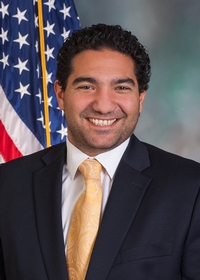
Ben Sanchez
100% support rate
Top opponent
Jim Rigby
0% support rate
Ranked legislators
10
5 support · 5 oppose
Key legislators

Who's moving policing in Pennsylvania

Legislators moving policing in Pennsylvania
Legislator Party Stance Support rate Votes
Ben Sanchez
Ben Sanchez House · District 153
D
Strong +
100% 9
Emily Kinkead
Emily Kinkead House · District 20
D
Strong +
100% 9
La'Tasha Mayes
La'Tasha Mayes House · District 24
D
Strong +
100% 9
Aerion Abney
Aerion Abney House · District 19
D
Strong +
100% 8
Kristine Howard
Kristine Howard House · District 167
D
Strong +
100% 8
Jim Rigby
Jim Rigby House · District 71
R
Strong −
0% 9
Josh Kail
Josh Kail House · District 15
R
Strong −
0% 9
Joe Hamm
Joe Hamm House · District 84
R
Strong −
0% 7
Rob Kauffman
Rob Kauffman House · District 89
R
Strong −
0% 7
Stephanie Borowicz
Stephanie Borowicz House · District 76
R
Strong −
0% 7
Showing 31–40 of 69 bills

All criminal justice bills

in committee · Pennsylvania · House Feb 12, 2025

HB 604: An Act amending Title 18 (Crimes and Offenses) of the Pennsylvania Consolidated Statutes, in firearms and other dangerous articles, further providing for sale or transfer of firearms, for duties of the Pennsylvania State Police and for the offense of altering or obliterating marks of identification and providing for destruction of confiscated or recovered firearms.

HB 604 modifies Pennsylvania's firearms laws to clarify procedures for handling confiscated guns. It requires law enforcement to make "reasonable efforts" to return seized firearms to their lawful owners within 120 days, failing which the guns must be destroyed. If the owner is identified but prohibited from owning firearms, or if the owner cannot be found, destruction is mandatory under new rules. The bill also establishes a detailed registry for confiscated firearms (tracking serial numbers, make/model, and date seized) and specifies that guns can only be melted at state smelters after completing this process. This directly affects Pennsylvania State Police and local law enforcement agencies managing seized firearms.
Sub-Topics Firearms Policing
in committee · Pennsylvania · House Jan 14, 2025

HB 91: An Act amending the act of February 14, 2008 (P.L.6, No.3), known as the Right-to-Know Law, in procedure, further providing for exceptions for public records.

HB 91 amends Pennsylvania's Right-to-Know Law (2008) to clarify that records related to noncriminal investigations by state agencies are exempt from public disclosure - except for the Pennsylvania Fish and Boat Commission. This means agencies like police departments or environmental agencies must now disclose such records (unlike the Fish and Boat Commission, which retains exemption). The bill specifically revises Section 708(b)(17) of the law to remove a blanket exemption for all agencies, making the Fish and Boat Commission the sole exception. It directly affects public access to noncriminal investigation records held by state agencies, with no new reporting or procedural requirements. The change takes effect immediately upon passage.
Sub-Topics Policing
in committee · Pennsylvania · House Mar 10, 2025

HB 849: An Act amending Titles 18 (Crimes and Offenses) and 42 (Judiciary and Judicial Procedure) of the Pennsylvania Consolidated Statutes, in falsification and intimidation, providing for the offense of failure to comply with child abuse offender registration requirements; in sentencing, providing for registration of child abuse offenders; and imposing penalties.

HB 849 creates a new felony offense for child abuse offenders who fail to comply with registration requirements under Pennsylvania law. It makes it a felony of the second degree (or first degree for repeat violations) to miss registration deadlines, provide inaccurate information, fail to verify address or employment, or skip required counseling. The bill requires offenders to register with the Pennsylvania State Police, update details regularly, and provide complete personal information, with police authorized to arrest without a warrant for violations. This directly affects individuals convicted of child abuse offenses who are subject to registration under existing law.
Sub-Topics Policing Sentencing
in committee · Pennsylvania · House Apr 30, 2025

HB 1341: An Act amending Title 42 (Judiciary and Judicial Procedure) of the Pennsylvania Consolidated Statutes, in budget and finance, further providing for Commonwealth portion of fines, etc.

HB 1341 changes how Pennsylvania distributes revenue from vehicle fines. It requires municipalities to provide at least 40 hours per week of police services (via their own department, regional department, or contracted services) to receive a share of these fines. Municipalities that don’t meet this service requirement will no longer qualify for the funds, which will instead be transferred to the Pennsylvania Commission on Crime and Delinquency. This commission will then distribute the funds to programs supporting regional police department accreditation and collaboration across the state. The bill takes effect 60 days after enactment.
signed · Pennsylvania · House Jun 29, 2026

HB 1344: An Act amending Titles 18 (Crimes and Offenses) and 53 (Municipalities Generally) of the Pennsylvania Consolidated Statutes, in riot, disorderly conduct and related offenses, further providing for definitions; and, in employees, further providing for canine training standards for police officers.

HB 1344 amends Pennsylvania state law to establish minimum training standards for police officers who work with police dogs. The bill directly affects municipal police departments and officers using canine units across the state. Its key provision requires officers to complete specific, standardized training programs before deploying police dogs, ensuring consistent competency and safety protocols. The legislation focuses on setting clear, measurable requirements for handler training rather than addressing broader police practices.
Sub-Topics Policing
in committee · Pennsylvania · Senate Jan 22, 2025

SB 123: An Act amending Title 23 (Domestic Relations) of the Pennsylvania Consolidated Statutes, in protection from abuse, further providing for definitions and for relief.

SB 123 amends Pennsylvania's protection from abuse laws to allow courts to require electronic monitoring devices for defendants who pose a substantial risk of violating protection orders or committing crimes against victims. The bill defines an "electronic monitoring device" as a GPS-enabled wearable (wrist or ankle) that continuously tracks location within 100 miles, allows police to access data indefinitely, and cannot be removed without specialized tools or alerting police. Courts may order this monitoring for the full duration of a protection order, requiring defendants to stay at specific distances from victims and locations, with removal only permitted for "good cause" and after notifying the victim. This directly affects domestic violence victims seeking protection and defendants found to present significant safety risks.
in committee · Pennsylvania · House May 1, 2025

HB 1363: An Act amending Title 18 (Crimes and Offenses) of the Pennsylvania Consolidated Statutes, in assault, providing for the offense of assault of emergency responder.

This bill creates new felony offenses for assaulting emergency responders (like police, EMTs, or firefighters) by exposing them to fentanyl or its derivatives. Intentionally throwing fentanyl at a responder while they are on duty (and knowing they are a responder) is a felony of the second degree. Unlawfully possessing fentanyl and causing a responder to come into contact with it is a felony of the third degree. The law defines "emergency responder" using existing Pennsylvania law and takes effect 60 days after enactment.
in committee · Pennsylvania · House Mar 20, 2025

HB 983: An Act amending Title 18 (Crimes and Offenses) of the Pennsylvania Consolidated Statutes, in firearms and other dangerous articles, further providing for persons not to possess, use, manufacture, control, sell or transfer firearms and for sale or transfer of firearms and providing for Gun Violence Task Force in cities of the first class.

HB 983 establishes a Gun Violence Task Force in each of Pennsylvania's cities of the first class (such as Philadelphia and Pittsburgh), under the Attorney General's authority. The task force will investigate and prosecute violations of state laws prohibiting illegal firearm possession and sales. It will include members from local district attorneys, city police, state police, and other law enforcement agencies. The task force will be funded through state appropriations and requires member agencies to notify it of relevant arrests within 48 hours.
in committee · Pennsylvania · Senate May 22, 2025

SB 771: An Act amending Title 18 (Crimes and Offenses) of the Pennsylvania Consolidated Statutes, in general principles of justification, further providing for use of force in self-protection.

SB 771 amends Pennsylvania's self-defense laws to clarify when deadly force is legally justified. It removes the duty to retreat from one's home or workplace before using force (unless the person was the initial aggressor), creating a "stand your ground" provision in those locations. The bill specifies that deadly force is only justified to prevent death, serious injury, kidnapping, or sexual assault, and requires the person using force to believe it was immediately necessary. It also prohibits using deadly force against a police officer acting in their official duties, and exempts the "stand your ground" rule if the attacker has a weapon. This directly affects Pennsylvanians using force in self-defense, particularly in home or workplace settings.
Sub-Topics Policing Violent Crime
in committee · Pennsylvania · House Jan 27, 2025

HB 334: An Act amending the act of March 4, 1971 (P.L.6, No.2), known as the Tax Reform Code of 1971, in tax credit and tax benefit administration, further providing for definitions; and providing for Pennsylvania Individual Recruitment and Retention Tax Credit.

HB 334 creates a $2,500 Pennsylvania Individual Recruitment and Retention Tax Credit for specific new professionals who move to the state after December 2024. It directly affects qualifying taxpayers certified in teaching (e.g., instructional or special education certificates), law enforcement (e.g., police academy graduates), or healthcare (e.g., registered nurses) who become Pennsylvania residents and secure employment in those fields. The credit reduces their state income tax bill for wages earned in qualifying roles, available for three consecutive years (including the first qualifying year), and requires proof of certification to the Department of Revenue. The credit expires December 31, 2030, and applies only to individuals becoming qualifying taxpayers between 2025 and 2027.
Showing 31 to 40 of 69 bills
Previous 1 3 4 5 7 Next