Issue · Criminal Justice

Criminal Justice

Every criminal justice bill, vote, and legislator stance in Pennsylvania, automatically classified by Maddy, our AI policy reader.

Total bills
412
2025-2026 Regular Session
Top supporter
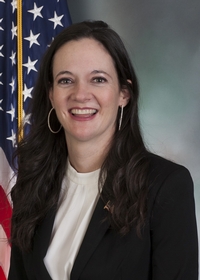
Lindsey Williams
85% support rate
Top opponent
Dawn Keefer
14% support rate
Ranked legislators
10
5 support · 5 oppose
Key legislators

Who's moving criminal justice in Pennsylvania

Legislators moving criminal justice in Pennsylvania
Legislator Party Stance Support rate Votes
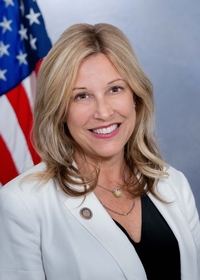
Lindsey Williams
Lindsey Williams Senate · District 38
D
Strong +
85% 36
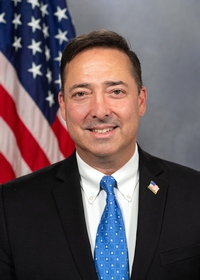
Chris Pielli
Chris Pielli House · District 156
D
Strong +
84% 203
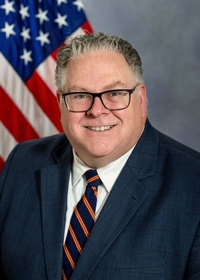
Tim Briggs
Tim Briggs House · District 149
D
Strong +
84% 199
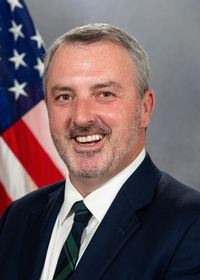
Kyle Donahue
Kyle Donahue House · District 113
D
Strong +
84% 237
Melissa Shusterman
Melissa Shusterman House · District 157
D
Strong +
83% 220
Dawn Keefer
Dawn Keefer Senate · District 31
R
Strong −
14% 41
James Malone
James Malone Senate · District 36
D
Strong −
14% 23
Doug Mastriano
Doug Mastriano Senate · District 33
R
Strong −
15% 53
Scott Hutchinson
Scott Hutchinson Senate · District 21
R
Strong −
17% 31
Stephanie Borowicz
Stephanie Borowicz House · District 76
R
Strong −
17% 204
Showing 31–40 of 412 bills

All criminal justice bills

in committee · Pennsylvania · Senate Jun 5, 2026

SB 1366: An Act amending the act of November 24, 1998 (P.L.882, No.111), known as the Crime Victims Act, in preliminary provisions, further providing for definitions.

This bill updates Pennsylvania's Crime Victims Act to clarify how "out-of-pocket loss" is defined for reimbursement purposes. It directly affects crime victims by expanding the list of reimbursable expenses to include costs for cleaning a crime scene, temporary relocation of victims and their pets, and physical examinations used to gather evidence. The legislation also specifies that "common household pets" includes domesticated animals like dogs, cats, and birds kept for pleasure. These changes aim to ensure victims can recover more specific costs incurred as a direct result of a criminal incident without covering property damage or pain and suffering.
Sub-Topics Victims' Rights
in committee · Pennsylvania · House Apr 29, 2026

HB 2477: An Act amending Titles 40 (Insurance) and 42 (Judiciary and Judicial Procedure) of the Pennsylvania Consolidated Statutes, providing for behavioral health benefits for justice-involved children; and, in juvenile matters, further providing for definitions and for costs and expenses of care of child, providing for mandatory intake conference and screening in cases alleging delinquency and further providing for informal adjustment and for powers and duties.

This bill requires health insurance policies and government programs in Pennsylvania to cover behavioral health services for children involved in the juvenile justice system. It mandates that insurers provide funding for screenings, assessments, and treatments related to mental health conditions and substance use disorders during specific legal proceedings, such as mandatory intake conferences and informal adjustments. The legislation also establishes clear definitions for terms like "behavioral health provider" and "screening" to ensure consistent application of these coverage requirements. By integrating mental health support into the juvenile justice process, the bill aims to address the needs of youth facing delinquency charges while maintaining a neutral focus on policy implementation.
in committee · Pennsylvania · House May 11, 2026

HB 2505: An Act amending the act of July 28, 1953 (P.L.723, No.230), known as the Second Class County Code, in second class county charter law, further providing for charter limitations.

This bill amends Pennsylvania's Second Class County Code to prohibit these counties from passing laws or taking actions that regulate firearms. Specifically, it removes the existing provision that allowed second-class counties to create ordinances regarding the transfer, ownership, transportation, or possession of guns. The change directly affects local governments in second-class counties by restricting their ability to implement their own gun control measures. The legislation becomes effective 60 days after it is passed.
Sub-Topics Drug Policy Firearms
in committee · Pennsylvania · House May 14, 2026

HB 2514: An Act amending Title 23 (Domestic Relations) of the Pennsylvania Consolidated Statutes, in alimony and support, further providing for alimony.

This bill modifies Pennsylvania's alimony laws to explicitly allow courts to deny spousal support to a party who subjected their spouse to a pattern or continuous threat of abuse during the marriage. The legislation also clarifies that marital misconduct occurring after the date of final separation will generally not be considered in alimony decisions, with the specific exception of abuse. By defining 'abuse' according to existing state definitions, the bill ensures that victims of domestic violence are protected from being financially penalized in divorce proceedings.
Sub-Topics Domestic Violence
in committee · Pennsylvania · Senate May 20, 2026

SB 1336: An Act amending Title 42 (Judiciary and Judicial Procedure) of the Pennsylvania Consolidated Statutes, in particular rights and immunities, providing for deprivation of rights.

This bill creates new legal protections against the deprivation of constitutional rights by prohibiting any individual or entity from infringing upon substantive due process or equal protection rights guaranteed by state and federal laws. It establishes that victims of such violations can file civil lawsuits to seek damages, injunctive relief, and civil penalties of up to $25,000 per violation, while also allowing the Attorney General or district attorneys to bring actions on behalf of the injured party. The legislation applies broadly to all persons, regardless of whether they are acting under official authority, and includes provisions for awarding attorney fees and costs to prevailing parties in these cases.
Sub-Topics Civil Rights Tags Civil Liberties
in committee · Pennsylvania · House May 11, 2026

HB 2506: An Act amending Titles 18 (Crimes and Offenses) and 53 (Municipalities Generally) of the Pennsylvania Consolidated Statutes, in firearms and other dangerous articles, further providing for limitation on the regulation of firearms and ammunition; and, in general provisions, further providing for limitation on municipal powers.

HB 2506 prevents Pennsylvania counties, municipalities, and townships from passing local laws that restrict the ownership, possession, transfer, or transportation of firearms and ammunition, as long as those items are not already banned by state or federal law. The bill also stops local governments from suing gun manufacturers or dealers for damages related to how firearms are designed, manufactured, or sold to the public. Additionally, it removes the specific authority for municipalities to regulate firearms entirely, ensuring that gun policy remains a state-level responsibility rather than a local one.
Sub-Topics Drug Policy Firearms
in committee · Pennsylvania · House Mar 31, 2026

HB 2339: An Act amending Title 18 (Crimes and Offenses) of the Pennsylvania Consolidated Statutes, in assault, further providing for the offense of aggravated assault.

This bill expands the legal definition of aggravated assault in Pennsylvania to include school staff members and crossing guards. Specifically, it adds teaching employees, school board members, licensed private school workers, parochial school employees, and school crossing guards to the list of individuals protected by aggravated assault laws. The change applies when these individuals are acting within the scope of their employment or due to their relationship with the school. If passed, the new provisions would take effect 60 days after the bill is enacted.
in committee · Pennsylvania · House Jun 8, 2026

HB 2392: An Act amending Titles 30 (Fish), 42 (Judiciary and Judicial Procedure) and 75 (Vehicles) of the Pennsylvania Consolidated Statutes, in operation of boats, further providing for the offense of operating watercraft under influence of alcohol or controlled substance; in sentencing, further providing for conditions of probation; and, in driving after imbibing alcohol or utilizing drugs, further providing for grading and for penalties.

This Pennsylvania bill updates state laws to make it illegal to operate a watercraft if a person has completed a diversion program for a similar boating offense within the last 10 years. It also clarifies that evidence of alcohol or drug levels found more than two hours after driving a boat can still be used to prove impairment. Finally, the legislation adjusts how penalties are graded based on the number of prior offenses and whether an accident occurred.
Sub-Topics Drug Policy
in committee · Pennsylvania · Senate May 1, 2026

SR 294: A Resolution recognizing the month of May 2026 as "National Treatment Court Month" in Pennsylvania.

This Senate Resolution designates May 2026 as "National Treatment Court Month" in Pennsylvania to raise awareness about specialized courts that address substance use and mental health issues. The measure highlights the work of judges, prosecutors, treatment providers, and other professionals who operate these courts to help individuals recover rather than face traditional punishment. By acknowledging these programs, the resolution aims to educate the public and encourage continued support for initiatives that focus on rehabilitation and community safety.
in committee · Pennsylvania · House Jul 1, 2026

HR 519: A Resolution directing the Pennsylvania Commission on Sentencing to conduct a study of bail and pretrial release practices and to issue recommendations to the House of Representatives regarding the setting of bail and pretrial release conditions.

This bill directs the Pennsylvania Commission on Sentencing to study current bail and pretrial release practices across the state. The study aims to identify inconsistencies in how bail amounts are set for similar defendants in different jurisdictions and to develop recommendations for more uniform procedures. The Commission must submit its findings and suggestions for reform to the House of Representatives within two years. This resolution does not change existing laws immediately but initiates a review process to potentially improve fairness in pretrial decision-making.
Sub-Topics Sentencing
Showing 31 to 40 of 412 bills
Previous 1 3 4 5 42 Next