Issue · Criminal Justice

Criminal Justice (Victims' Rights)

Every criminal justice bill, vote, and legislator stance in Pennsylvania, automatically classified by Maddy, our AI policy reader.

Total bills
21
2025-2026 Regular Session
Top supporter
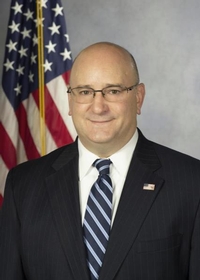
Aerion Abney
75% support rate
Top opponent
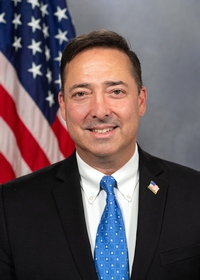
Art Haywood
0% support rate
Ranked legislators
10
5 support · 5 oppose
Key legislators

Who's moving victims' rights in Pennsylvania

Legislators moving victims' rights in Pennsylvania
Legislator Party Stance Support rate Votes
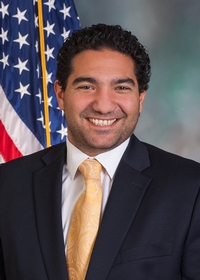
Aerion Abney
Aerion Abney House · District 19
D
Support
75% 8
Andre Carroll
Andre Carroll House · District 201
D
Support
75% 8
Ben Sanchez
Ben Sanchez House · District 153
D
Support
75% 8
Chris Pielli
Chris Pielli House · District 156
D
Support
75% 8
Chris Rabb
Chris Rabb House · District 200
D
Support
75% 8
Art Haywood
Art Haywood Senate · District 4
D
Strong −
0% 4
Andrew Kuzma
Andrew Kuzma House · District 39
R
Strong −
12% 8
Joe Kerwin
Joe Kerwin House · District 125
R
Strong −
12% 8
Josh Kail
Josh Kail House · District 15
R
Strong −
12% 8
Rob Kauffman
Rob Kauffman House · District 89
R
Strong −
12% 8
Showing 1–10 of 21 bills

All criminal justice bills

in committee · Pennsylvania · House Aug 27, 2026

HB 2752: An Act amending Title 18 (Crimes and Offenses) of the Pennsylvania Consolidated Statutes, in human trafficking, further providing for asset forfeiture.

Pennsylvania House Bill 2752 amends state criminal law to mandate the seizure of assets from individuals convicted of human trafficking offenses. The bill requires courts to order the forfeiture of any property used in the crime or derived from its proceeds, ensuring these assets are transferred to local district attorneys or the state Attorney General for sale. A key provision establishes that funds recovered through this process must be prioritized for victim restitution before being distributed to law enforcement agencies or other government bodies. This legislation directly affects convicted traffickers by expanding the scope of their financial penalties and aims to ensure victims receive compensation from the illicit gains of the offenders.
in committee · Pennsylvania · Senate Jun 15, 2026

SB 1379: An Act amending Title 42 (Judiciary and Judicial Procedure) of the Pennsylvania Consolidated Statutes, in post-trial matters, further providing for scope of subchapter and for eligibility for relief, providing for postconviction resentencing relief for defendant survivors of domestic violence, sexual violence or human trafficking and further providing for jurisdiction and proceedings; and, in sentencing, further providing for sentencing procedure for murder of the first degree and providing for criminal prosecutions involving defendant survivors of domestic violence, sexual violence or human trafficking.

This bill allows individuals in Pennsylvania who are currently serving prison sentences or awaiting execution to request a new sentencing hearing if they were survivors of domestic violence, sexual violence, or human trafficking. To qualify, a person must prove by a preponderance of the evidence that their victimization was a significant factor that contributed to their criminal behavior. The law requires petitioners to submit specific documentation, such as medical records, police reports, or sworn statements from witnesses, to support their claim of survivor status and the link between the trauma and their crime. Additionally, the bill outlines procedures for filing these petitions in the court where the original conviction occurred and establishes that survivor status can serve as a mitigating circumstance in capital cases.
in committee · Pennsylvania · House Jun 2, 2026

HB 2589: An Act amending Title 75 (Vehicles) of the Pennsylvania Consolidated Statutes, in miscellaneous provisions relating to operation of vehicles, further providing for homicide by vehicle while driving under influence.

This bill, known as the Legacy Law, amends Pennsylvania's homicide statutes to mandate financial restitution for parents or guardians when a child under 18 or a dependent dies due to a parent driving under the influence. If a court convicts a driver of this offense and the victim was a minor or dependent, the defendant must pay reasonable financial support to the victim's family until the child turns 18 or 19, depending on their education status. The law requires courts to consider various factors, such as the child's needs and the surviving parent's resources, when calculating these payments, which can be made directly to the family or held in a court trust. Additionally, the bill specifies that if a surviving parent has already won a civil lawsuit for damages, the criminal restitution order will be adjusted to avoid double compensation. The new provisions take effect 60 days after the bill is enacted.
in committee · Pennsylvania · Senate Jun 5, 2026

SB 1366: An Act amending the act of November 24, 1998 (P.L.882, No.111), known as the Crime Victims Act, in preliminary provisions, further providing for definitions.

This bill updates Pennsylvania's Crime Victims Act to clarify how "out-of-pocket loss" is defined for reimbursement purposes. It directly affects crime victims by expanding the list of reimbursable expenses to include costs for cleaning a crime scene, temporary relocation of victims and their pets, and physical examinations used to gather evidence. The legislation also specifies that "common household pets" includes domesticated animals like dogs, cats, and birds kept for pleasure. These changes aim to ensure victims can recover more specific costs incurred as a direct result of a criminal incident without covering property damage or pain and suffering.
Sub-Topics Victims' Rights
in committee · Pennsylvania · House Mar 31, 2026

HB 2343: An Act amending Titles 23 (Domestic Relations) and 42 (Judiciary and Judicial Procedure) of the Pennsylvania Consolidated Statutes, in protection from abuse, further providing for definitions and for relief; and, in sentencing, providing for electronic monitoring with victim notification.

This bill expands Pennsylvania's protection from abuse laws by allowing courts to establish specific geographic 'exclusion zones' that defendants cannot enter. It authorizes the use of GPS electronic monitoring devices for defendants in protection orders or sentencing, which would automatically alert law enforcement and, with the victim's consent, the victim if the defendant enters a prohibited area. The bill also clarifies that the defendant is responsible for paying all costs related to the monitoring equipment and services.
passed · Pennsylvania · House Jun 24, 2026

HB 2443: An Act providing for Child Victim Recovery Fee; establishing the Child Victim Recovery Fund; and imposing duties on the Pennsylvania Commission on Crime and Delinquency.

This bill creates a new fee in Pennsylvania courts to help fund support services for children who are victims of specific sexual offenses and crimes against minors. When a person is convicted, pleads guilty, or enters a diversion program for these crimes, they must pay a fee ranging from $250 to $1,000 depending on the severity of the offense. The collected money goes into a state fund that the Pennsylvania Commission on Crime and Delinquency uses to provide grants to children's advocacy centers. Courts are required to allow defendants who cannot afford the fee to pay it in installments, and the bill ensures that any restitution owed to victims is paid before this fee is collected.
in committee · Pennsylvania · House May 4, 2026

HB 2476: An Act amending the act of November 24, 1998 (P.L.882, No.111), known as the Crime Victims Act, in preliminary provisions, further providing for definitions.

This bill amends Pennsylvania's Crime Victims Act to update the definition of "out-of-pocket loss" for reimbursement purposes. It directly affects crime victims by expanding the list of eligible expenses to include costs for medical and nonmedical care, prosthetics, cleaning crime scenes, and temporary relocation for victims and their household pets. The legislation also clarifies that "common household pets" refers to domesticated animals kept for pleasure rather than commercial use. These changes ensure victims can receive financial support for a broader range of necessary costs incurred due to criminal incidents, while explicitly excluding property damage and pain and suffering from this specific reimbursement category.
Sub-Topics Victims' Rights
in committee · Pennsylvania · Senate Apr 8, 2026

SR 263: A Resolution recognizing the week of April 19 through 25, 2026, as "National Crime Victims' Rights Week" in Pennsylvania.

This Senate resolution designates the week of April 19 through 25, 2026, as "National Crime Victims' Rights Week" in Pennsylvania. The measure directly affects the state Senate by formally recognizing this observance period to honor crime victims and survivors. It includes a statement reaffirming the Senate's commitment to protecting victims' rights and supporting victim services throughout the year. The resolution does not create new laws or funding but serves as a symbolic acknowledgment of the importance of victim support.
Sub-Topics Victims' Rights
in committee · Pennsylvania · Senate Apr 13, 2026

SB 1266: An Act amending Title 42 (Judiciary and Judicial Procedure) of the Pennsylvania Consolidated Statutes, in juvenile matters, further providing for definitions, providing for financial obligations imposed on child and further providing for disposition of delinquent child.

This bill updates Pennsylvania's juvenile justice laws by expanding the legal definition of a "child" to include individuals up to age 21 who committed offenses or were previously adjudicated dependent before turning 18. It also clarifies that minors and their guardians generally cannot be forced to pay fees for programs or services, with the specific exception of restitution ordered for victims. Under the new provisions, courts can order delinquent children to pay restitution for damages, capped at $50 per victim for specific funds, and may require up to 75% of earnings from community service to be used for victim compensation. The legislation ensures that courts retain jurisdiction over restitution orders until the child turns 21 or fully complies with the payment plan.
in committee · Pennsylvania · House Jul 1, 2026

HB 2154: An Act amending Title 61 (Prisons and Parole) of the Pennsylvania Consolidated Statutes, establishing the Prison Industry Enhancement Authority; providing for employment of incarcerated individuals by private industry and for subcontracts with correctional agencies; establishing guidelines for incarcerated individual compensation; and providing for location of private sector prison industry.

HB 2154 establishes Pennsylvania's Prison Industry Enhancement Authority to create job opportunities for incarcerated individuals in state correctional facilities through partnerships with private industry. The bill requires private companies to employ incarcerated people under specific guidelines, including setting fair wages (with deductions allowed for room/board, victim compensation, and family support), while explicitly prohibiting displacement of civilian jobs or privatization of prisons. It mandates that private sector prison industry programs must operate within the state's "open market" and cannot create competitive advantages for participating businesses. The law aims to develop work skills for post-release employment and strengthen family ties through structured compensation mechanisms.
Showing 1 to 10 of 21 bills
1 2 3 Next