

Issue · Budget & Taxes
Budget & Taxes (Procurement)
Every budget & taxes bill, vote, and legislator stance in Pennsylvania, automatically classified by Maddy, our AI policy reader.
Total bills
42
2025-2026 Regular Session
Top supporter
Aerion Abney
100% support rate
Top opponent
David Rowe
0% support rate
Ranked legislators
10
5 support · 5 oppose
Key legislators
Who's moving procurement in Pennsylvania
| Legislator | Party | Stance | Support rate | Votes |
|---|---|---|---|---|

Aerion Abney
House · District 19
|
D |
Strong +
|
100% | 5 |

Ben Sanchez
House · District 153
|
D |
Strong +
|
100% | 5 |

Ben Waxman
House · District 182
|
D |
Strong +
|
100% | 5 |

Bridget Malloy Kosierowski
House · District 114
|
D |
Strong +
|
100% | 5 |

Chris Rabb
House · District 200
|
D |
Strong +
|
100% | 5 |
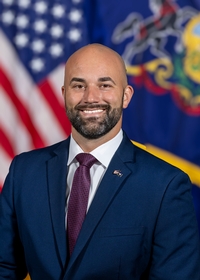
David Rowe
House · District 85
|
R |
Strong −
|
0% | 4 |
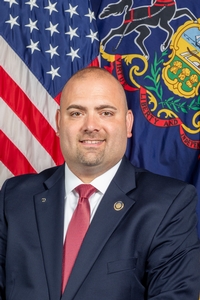
Joe Hamm
House · District 84
|
R |
Strong −
|
0% | 4 |

Kerry Benninghoff
House · District 171
|
R |
Strong −
|
0% | 4 |

Ryan Warner
House · District 52
|
R |
Strong −
|
0% | 4 |

Stephanie Borowicz
House · District 76
|
R |
Strong −
|
0% | 4 |
Showing 31–40 of 42
bills
All budget & taxes bills
HB 1154: An Act amending the act of April 9, 1929 (P.L.343, No.176), known as The Fiscal Code, in general budget implementation, further providing for Department of Health.
Topics
✓ Budget & TaxesSupports Budget & TaxesMandates $10/user monthly state expenditure for health app, directly increasing budget allocation for public health services per bill's funding mechanism.
✓ HealthcareSupports HealthcareRequires mobile app for Medicaid-eligible prenatal/postpartum care access, expanding healthcare services and patient connectivity through state-funded program expansion.
HB 108: An Act providing for real property emergency services funds in municipalities.
Sub-Topics
Procurement
SB 339: An Act amending the act of June 30, 1981 (P.L.128, No.43), known as the Agricultural Area Security Law, further providing for purchase of agricultural conservation easements and for Agricultural Conservation Easement Purchase Fund.
Topics
✓ Budget & TaxesSupports Budget & TaxesDirects 10% of realty transfer tax revenue into Agricultural Conservation Easement Purchase Fund, allocating existing tax revenue to fund conservation programs.
✓ EnvironmentSupports EnvironmentBill expands agricultural conservation easement access by lowering acreage requirements and directs tax revenue to conservation fund, directly advancing land protection and resource conservation.
SB 814: An Act amending the act of March 4, 1971 (P.L.6, No.2), known as the Tax Reform Code of 1971, in sales and use tax, further providing for exclusions from tax.
HB 279: An Act amending the act of February 14, 2008 (P.L.6, No.3), known as the Right-to-Know Law, in State contract information, further providing for submission and retention of contracts.
Sub-Topics
Procurement
HB 1219: An Act amending Title 71 (State Government) of the Pennsylvania Consolidated Statutes, in boards and offices, providing for information technology; establishing the Office of Information Technology and the Information Technology Fund; providing for administrative and procurement procedures and for the Joint Cybersecurity Oversight Committee; imposing duties on the Office of Information Technology; providing for administration of Pennsylvania Statewide Radio Network; and imposing penalties.
Topics
✓ Budget & TaxesSupports Budget & TaxesImposes five-year budget limits and business case reviews for IT projects to reduce costs and improve efficiency, promoting fiscal responsibility.
✓ TechnologySupports TechnologyCreates Joint Cybersecurity Oversight Committee and mandates stronger cybersecurity practices to protect state data, aligning with data privacy and cybersecurity protection indicators.
HB 250: An Act amending the act of November 29, 2004 (P.L.1376, No.178), known as the Alternative Fuels Incentive Act, further providing for Alternative Fuels Incentive Fund.
Topics
✓ Budget & TaxesSupports Budget & TaxesProvides state-funded rebates ($3k-$2k for low-income) through Alternative Fuels Incentive Fund, directly allocating budget resources to promote vehicle adoption.
✓ EnergySupports EnergyProvides rebates for electric/hydrogen vehicles, promoting renewable energy adoption and reducing fossil fuel dependence per bill's incentive structure.
✓ EnvironmentSupports EnvironmentBill provides rebates for electric/hydrogen vehicles and low-income residents, directly promoting clean energy adoption and reducing emissions per Alternative Fuels Incentive Act amendments.
✓ TransportationSupports TransportationBill provides rebates for alternative fuel vehicles, directly promoting sustainable transportation through financial incentives for EVs, hydrogen, and plug-in hybrids per the Alternative Fuels Incentive Act amendment.
HB 185: An Act amending the act of March 4, 1971 (P.L.6, No.2), known as the Tax Reform Code of 1971, in sales and use tax, further providing for exclusions from tax.
Topics
✓ Budget & TaxesSupports Budget & TaxesBill provides temporary sales tax exemption for energy-efficient products, offering direct tax relief to consumers during designated period, aligning with tax relief indicators.
✓ EnergySupports EnergyBill promotes energy efficiency by exempting sales tax on EPA-certified Energy Star products during annual window, directly incentivizing consumer adoption of efficient technologies.
✓ EnvironmentSupports EnvironmentTax exemption for EPA-certified energy/water efficiency products (Energy Star, WaterSense) promotes conservation and reduces resource use, directly supporting environmental protection.
HB 47: An Act amending the act of March 4, 1971 (P.L.6, No.2), known as the Tax Reform Code of 1971, in sales and use tax, further providing for exclusions from tax.
Topics
✓ Budget & TaxesSupports Budget & TaxesExcludes at-home medical tests from sales tax, providing direct tax relief for consumers purchasing essential health products.
✓ HealthcareSupports HealthcareExcludes at-home medical tests from sales tax, reducing costs for consumers and improving access to essential healthcare products like pregnancy and glucose monitors.