




Issue · Budget & Taxes

Budget & Taxes

Every budget & taxes bill, vote, and legislator stance in Pennsylvania, automatically classified by Maddy, our AI policy reader.

Total bills
23
2025-2026 Regular Session
Top supporter
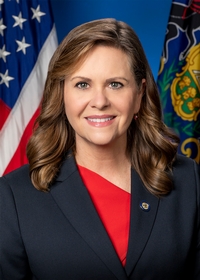
Camera Bartolotta
94% support rate
Top opponent
Katie Muth
23% support rate
Ranked legislators
10
5 support · 5 oppose
Key legislators

Who's moving budget & taxes in Pennsylvania

Legislators moving budget & taxes in Pennsylvania
Legislator Party Stance Support rate Decisive votes
Camera Bartolotta
Camera Bartolotta Senate · District 46
R
Strong +
94% 31
Lisa Baker
Lisa Baker Senate · District 20
R
Strong +
93% 28
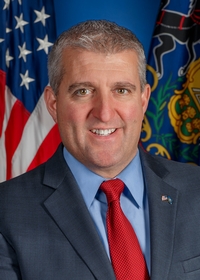
Joe Picozzi
Joe Picozzi Senate · District 5
R
Strong +
92% 39
Frank Farry
Frank Farry Senate · District 6
R
Strong +
92% 36
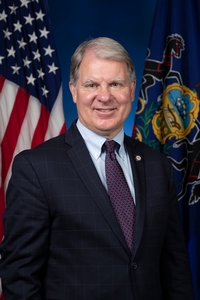
Dave Argall
Dave Argall Senate · District 29
R
Strong +
91% 32
Katie Muth
Katie Muth Senate · District 44
D
Oppose
23% 35
Art Haywood
Art Haywood Senate · District 4
D
Oppose
29% 41
Lindsey Williams
Lindsey Williams Senate · District 38
D
Oppose
30% 30
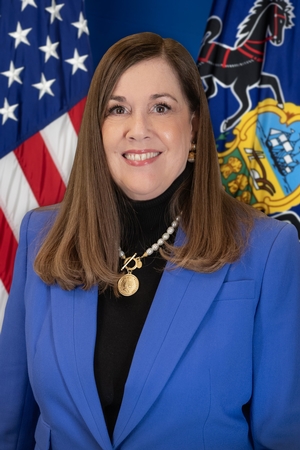
Charity Krupa
Charity Krupa House · District 51
R
Oppose
31% 179
Steve Santarsiero
Steve Santarsiero Senate · District 10
D
Oppose
32% 28
Showing 1–10 of 23 bills

All budget & taxes bills

signed · Pennsylvania · House Jul 12, 2026

HB 1505: An Act amending the act of March 10, 1949 (P.L.30, No.14), known as the Public School Code of 1949, in preliminary provisions, providing for standardized testing study; in grounds and buildings, repealing provisions relating to lead testing and providing for lead testing; providing for school facilities; in certification of teachers, further providing for special education certificate grade spans and age levels and duties of department, for program of continuing professional and paraprofessional education, for continuing professional education for school or system leaders and for Pennsylvania school leadership standards, repealing provisions relating to permit for classroom monitors and providing for permit for classroom monitors; in pupils and attendance, further providing for attendance policy at charter, regional charter and cyber charter schools, providing for school district enrollee wellness checks and further providing for procedure when child is truant and for procedure upon filing of citation; in student supports, further providing for policy relating to bullying; in school safety and security, further providing for definitions, for School Safety and Security Grant Program, for school safety and security coordinator and for school safety and security training, providing for school safety and mental health grants for 2026-2027 school year, further providing for school safety and security coordinator training and for reporting and memorandum of understanding and providing for school mapping services; in school health services, further providing for health services and for reports and providing for eating disorder awareness and education; in terms and courses of study, providing for use of funds for implementing later school start times, further providing for flexible instructional days and for physical education, providing for recess periods, further providing for economic education and personal financial literacy programs and providing for social media literacy education; in early learning programs, further providing for definitions and for duties of approved providers; in high schools, further providing for attendance in other districts; in charter schools, further providing for enrollment, for cyber charter school requirements and prohibitions, for enrollment and notification and for enrollee wellness checks; in disability inclusive curriculum, further providing for pilot program; in career and technical education, providing for temporary waiver; in community colleges, further providing for financial program and reimbursement of payments; in Thaddeus Stevens College of Technology, further providing for individuals eligible for admission; in the State System of Higher Education, further providing for definitions and for Grow Pennsylvania Tuition Waiver Program; in institutions of higher education, further providing for definitions and for agency duties, providing for institution duties and further providing for report; in Ready-to-Succeed Scholarship, further providing for agency; in funding for public libraries, providing for State aid for fiscal year 2026-2027; in reimbursements by Commonwealth and between school districts, further providing for student-weighted basic education funding beginning with 2023-2024 school year and for extraordinary special education program expenses, providing for temporary assistance program and further providing for assistance to school districts declared to be in financial recovery status or identified for financial watch status and for Ready-to-Learn Block Grant; and, in construction and renovation of buildings by school entities, further providing for applicability.

HB 1505 amends Pennsylvania's Public School Code of 1949 to clarify definitions related to early learning programs. The bill specifically updates terminology used in the existing law to better define what constitutes early learning programs within the state's educational framework. This change directly affects school districts, early learning providers, and state education agencies by providing clearer standards for program classification and reporting under the Public School Code. The bill focuses solely on refining definitions, not creating new programs or funding mechanisms.
signed · Pennsylvania · Senate Jul 12, 2026

SB 146: An Act amending the act of April 9, 1929 (P.L.343, No.176), known as The Fiscal Code, in emergency COVID-19 response, providing for extension of use of certain funds; in Child Care Staff Recruitment and Retention Program, further providing for Child Care Staff Recruitment and Retention Program; in cigarette sales and licensing, further providing for definitions and providing for allowable mode of operations for licensed cigarette stamping agents; in joint underwriting association, further providing for fund transfers; providing for food processing residuals; in financially distressed municipalities, further providing for financial recovery; in oil and gas wells, further providing for Oil and Gas Lease Fund and providing for deep wells and Utica Shale permits and for well plugging; providing for manufacturing and investment tax credit, for Innovate in PA 2.0 Tax Credit and for design build best value; in human services, further providing for medical assistance payments for institutional care, for resident care and related costs and for LIFE Program and providing for transition to chip-enabled access cards, for Medical Assistance Reentry Program, for Children's Trust Fund and for medical assistance pharmacy services; in additional keystone opportunity expansion zones, providing for additional zone for shipbuilding and for additional zones; providing for residential revitalization keystone opportunity zones and for violent incident clearance and technological investigative methods; in special funds, further providing for funding and for Pennsylvania Convention Center; in additional special funds and restricted accounts, providing for Veterans' Trust Fund Board and further providing for establishment of special fund and account, for use of fund and for distributions from Pennsylvania Race Horse Development Fund; in additional special funds and restricted accounts, further providing for deposits and providing for Professional Licensure Augmentation Account; in general budget implementation, further providing for Executive Offices, for Department of Agriculture, for Department of Corrections, for Department of Labor and Industry and for Department of Transportation, providing for Pennsylvania Emergency Management Agency and further providing for Commonwealth Financing Authority, for Federal and Commonwealth use of forest land, for Multimodal Transportation Fund, for School Safety and Security Fund, for State Gaming Fund, for State Employees' Retirement System Restricted Account and for Public School Employees' Retirement System Restricted Account; in retirement, providing for 2026 special ad hoc municipal police and firefighter postretirement adjustment, for supplemental annuities for public school employees commencing 2026, for supplemental annuities for State employees commencing 2026 and for payment of supplemental annuity and special ad hoc postretirement adjustment; in electricity load forecast accountability, providing for energy and water reporting and for advanced transmission technologies; in 2025-2026 budget implementation, further providing for Department of Agriculture, for Department of Human Services and for Pennsylvania Higher Education Assistance Agency; providing for 2026-2027 budget implementation and for 2026-2027 restrictions on appropriations for funds and accounts; in fiscal supplements to statutory programs, providing for amusement tax clarification, for situs for local sales tax for cities of the first class, for situs for local sales tax for counties of the second class, for net income and for housing; abrogating a regulation; making repeals; providing for suspension of pension actuarial notes; and making editorial changes.

SB 146 establishes a Veterans' Trust Fund Board to manage and oversee the State Veterans' Trust Fund under Pennsylvania law. The bill directly affects veterans' programs by creating a dedicated board to administer funds supporting veteran services, such as housing, healthcare, and employment initiatives. Key provisions include defining the board's structure, responsibilities, and governance for the Trust Fund, updating existing statutes to reflect these changes. The bill does not create new benefits but organizes the management of existing funding streams for veterans' support. (Note: As of the latest action, the bill was "Reported as amended" in committee and has not yet become law.)
in committee · Pennsylvania · House Feb 4, 2026

HB 2169: An Act amending the act of April 9, 1929 (P.L.343, No.176), known as The Fiscal Code, making editorial changes to delete references to "approved private school" for the purpose of adding references to "approved special education school."

HB 2169 amends Pennsylvania's Fiscal Code to update terminology in funding provisions for special education schools. It replaces references to "approved private school" with "approved special education school" in Section 1923(5), which governs how funds from the Public School Code (Section 2509.8) are allocated. The bill directly affects approved special education schools with day tuition under $32,000, requiring funding to be no less than 175% of the 2015-2016 allocation. This is a technical correction to align statutory language with current educational terminology, with no change to the underlying funding mechanism or eligibility criteria.
passed · Pennsylvania · House Jan 30, 2026

HB 1129: An Act amending the act of March 4, 1971 (P.L.6, No.2), known as the Tax Reform Code of 1971, in corporate net income tax, repealing provisions relating to penalties and to repealer and effective date; establishing the Net Operating Loss Transfer Program; and imposing penalties.

HB 1129 amends Pennsylvania's corporate tax code to establish a new program allowing businesses to transfer unused net operating losses to other corporations, directly affecting companies with tax losses they previously couldn't utilize. The bill repeals outdated penalty provisions and a repealer clause from the 1971 tax code while adding new penalties for non-compliance. Key provisions include creating a formal mechanism for loss transfers and updating tax enforcement rules. This bill is pending in the legislature (last reported as committed on 2025-09-10) and would change how corporations manage tax liabilities under Pennsylvania law.
passed · Pennsylvania · House Jan 30, 2026

HB 1304: An Act amending Titles 24 (Education) and 71 (State Government) of the Pennsylvania Consolidated Statutes, in administration and miscellaneous provisions, further providing for stress test of system; and, in administration, funds, accounts and general provisions, further providing for stress test of system.

HB 1304 requires Pennsylvania to conduct annual stress tests on state pension systems for both education and state government sectors. The bill mandates that relevant boards submit test results - including scenario and sensitivity analyses - to the Governor, General Assembly, and Independent Fiscal Office by April 1 (education) or October 1 (state government). The Independent Fiscal Office must then produce a summary report by June 1 (education) or December 1 (state government), including a calculation of projected pension contributions relative to state revenues. This directly affects state pension systems, covering public employees and retirees, by establishing regular, transparent assessments of pension fund financial health.
passed · Pennsylvania · House Dec 22, 2025

HB 1768: An Act establishing the Local Food Purchasing Incentive Grant Program, the Keystone Producer Grant Program, the Keystone Assistance Grant Program and the Keystone Fresh Farm to School Account; and imposing duties on the Department of Education and the Department of Agriculture.

HB 1768 establishes four new grant programs to support Pennsylvania's local food system. It provides incentives for schools and institutions to purchase local food (Local Food Purchasing Incentive Grant), offers financial assistance to farmers for production improvements (Keystone Producer Grant), supports food distribution networks (Keystone Assistance Grant), and funds school meal programs sourcing from local farms (Keystone Fresh Farm to School Account). The Department of Agriculture and Department of Education would administer these programs and manage the grant allocations. The bill directly affects Pennsylvania farmers, schools, food distributors, and local food businesses by creating new funding mechanisms to strengthen regional food systems.
passed · Pennsylvania · House Nov 24, 2025

HB 1811: An Act amending Title 34 (Game) of the Pennsylvania Consolidated Statutes, in property and buildings, further providing for price paid for acquisitions and improvements.

HB 1811 sets a $400 per acre maximum limit for the Pennsylvania Game Commission when purchasing land for game conservation in counties classified as sixth, seventh, or eighth class. This directly affects the Game Commission’s land acquisition costs for wildlife management in smaller counties. The bill clarifies that this price limit applies exclusively to these specific county classifications, ensuring purchases align with local market values while controlling expenses.
signed · Pennsylvania · House Nov 24, 2025

HB 1359: An Act amending Title 12 (Commerce and Trade) of the Pennsylvania Consolidated Statutes, in Entertainment Economic Enhancement Program, further providing for definitions, for procedure and for limitations; providing for regulation of self-service storage facilities; and making a repeal.

HB 1359 amends Pennsylvania's entertainment tax incentive program by updating its definitions, procedures, and limitations, directly affecting entertainment businesses seeking tax benefits. It also adds new regulatory requirements for self-service storage facilities, including operational standards. The bill clarifies how the entertainment program operates while creating a new framework for overseeing storage facility safety and business practices. These changes became law on November 24, 2025, after approval by the governor. The legislation focuses on administrative updates and new oversight without altering tax rates or funding levels.
signed · Pennsylvania · House Nov 24, 2025

HB 923: An Act amending the act of August 26, 1971 (P.L.351, No.91), known as the State Lottery Law, in pharmaceutical assistance for the elderly, further providing for determination of eligibility.

HB 923 amends the State Lottery Law to redirect lottery revenue toward providing pharmaceutical assistance for elderly residents. It directly affects seniors who qualify for prescription drug aid under state programs by modifying eligibility determination procedures. The key provision updates how income and asset thresholds are calculated to determine who qualifies for this assistance. The bill became law on November 24, 2025, after approval by both legislative chambers and the governor.
passed · Pennsylvania · House Nov 24, 2025

HB 1528: An Act establishing the Grand-family Assistance Program; providing for payments to area agencies on aging; imposing duties on the Department of Aging; and establishing the Grand-family Assistance Program Fund.

HB 1528 establishes the Grand-family Assistance Program to provide financial support to grandparents and other relatives raising grandchildren. It creates a dedicated fund to make regular payments to local area agencies on aging, which will administer the program and assist eligible families. The bill requires the Department of Aging to manage the program and oversee fund distribution, ensuring direct support reaches affected relatives caring for children. This policy change directly affects grandfamilies and local aging services agencies through structured financial aid and administrative responsibilities.
Showing 1 to 10 of 23 bills
1 2 3 Next