Iran Nuclear Treaty Act This bill requires Senate approval of certain actions with respect to Iran's nuclear program. Specifically, the bill deems any agreement reached between the President and Iran relating to Iran's nuclear program to be a treaty that is subject to the advice and consent of the Senate. Further, the bill prohibits the President from (1) limiting the application of certain sanctions, or (2) refraining to apply such sanctions pursuant to an agreement unless the agreement is subject to the advice and consent of the Senate as a treaty.
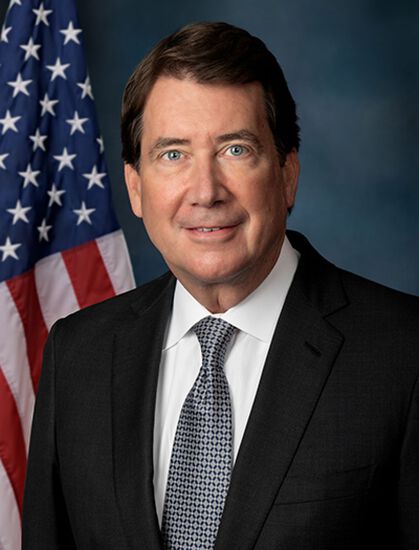
Sen. Bill Hagerty
Sponsored bills
Li Wenliang Global Public Health Accountability Act of 2021 This bill authorizes the President to impose property- and visa-blocking sanctions on foreign individuals and entities involved in deliberate acts to conceal or distort information about a public health emergency of international concern, including COVID-19. Specifically, the President may impose sanctions on (1) a government official (or a senior associate of such an official) who is responsible for or complicit in deliberate acts to conceal or distort information about an international public health emergency, or who financially benefits from such acts; or (2) a foreign person or entity that has materially assisted or supported such acts.
This resolution offers the condolences of the Senate regarding the death of Senator John William Warner and expresses deep appreciation for his outstanding and important service to his country.
Palestinian International Terrorism Support Prevention Act of 2021 This bill imposes sanctions targeting Hamas, the Palestinian Islamic Jihad, and any affiliate or successor groups. The President shall periodically report to Congress a list of each foreign person or instrumentality that knowingly assists, provides significant support or services to, or is involved in a significant transaction with a senior member or supporter of any of the targeted groups. The President shall impose two or more sanctions on the named persons. Specifically, the person may be (1) denied credit and services from the Export-Import Bank, (2) barred from purchasing certain controlled defense articles, (3) denied exports of items on the U.S. Munitions List, (4) prevented from receiving exports of certain goods or technology controlled for national security reasons, (5) prohibited from receiving financing of more than $10 million from any U.S. financial institution, or (6) subject to property-blocking restrictions. The President shall periodically report to Congress a list of foreign governments that have repeatedly provided material support for the targeted groups' terrorist activities. The President shall bar these governments from receiving for one year (1) U.S. assistance, or (2) exports of controlled munitions. The Department of Treasury shall instruct U.S. leadership of international financial institutions to oppose the provision of assistance to an identified government for one year. The bill provides for certain exceptions and waivers, such as for transactions that would serve U.S. national interests. The President shall report to Congress and periodically provide briefings on other specified topics related to the targeted groups, such as where these groups secure financing and surveillance equipment.
Preventing Antisemitic Hate Crimes Act This bill requires a designated officer or employee of the Department of Justice (DOJ) to facilitate the expedited review of anti-Semitic hate crimes and reports of anti-Semitic hate crimes. Further, the bill requires DOJ to issue guidance for state, local, and tribal law enforcement agencies on expanding public education campaigns to raise awareness of anti-Semitic hate crimes. Finally, the bill increases the statutory maximum prison term for an individual who is convicted of a federal hate crime offense after a prior conviction for a hate crime offense under federal law or a hate crime felony under state law.
This resolution offers the condolences of the Senate regarding the death of Senator David Henry Gambrell and honors his life and legacy.
Migrant Resettlement Transparency Act This bill requires the federal government to, before resettling, transporting, or relocating any aliens not in detention, consult with the affected state and local governments. Specifically, the department taking the action, either the Department of Health and Human Services (HHS) or the Department of Homeland Security (DHS), must consult with the affected state and local governments at least three days before the action. HHS and DHS must also submit to Congress monthly state-specific reports about such actions.
This resolution addresses issues regarding Jews in the United States and anti-Israel rhetoric. Specifically, the Senate condemns hatred and violence against Jews; denounces the anti-Israel rhetoric of elected officials; rejects as biased, incomplete, and inaccurate information promulgated by the news media in the United States about Israel and the Israeli government's efforts to protect its citizens from terrorism; celebrates the contributions of American Jews to our nation, culture, values, and way of life; and reaffirms its intent to ensure that Jews in the United States are treated with dignity and respect and receive the full protection of the law owed to them as U.S. citizens.
This resolution expresses approval of the sales of defense items to Israel that were notified to Congress on May 5, 2021, on the basis that those sales are consistent with the foreign policy interests of the United States.
Accelerating Access to Critical Therapies for ALS Act This bill establishes grant programs to address neurodegenerative diseases, such as amyotrophic lateral sclerosis (also known as ALS or Lou Gehrig's disease), and contains other related provisions. The Department of Health and Human Services (HHS) shall award grants to eligible entities to facilitate patients' access to investigational drugs that diagnose or treat ALS. The Food and Drug Administration (FDA) shall award grants to public and private entities to cover the costs of research and development of drugs that diagnose or treat ALS and other severely debilitating neurodegenerative diseases. HHS shall also establish the Public-Private Partnership for Neurodegenerative Diseases between the National Institutes of Health, the FDA, and at least one eligible entity (generally, an institution of higher education or a nonprofit organization). The partnership shall support the development and regulatory review of drugs that address ALS and other rare neurodegenerative diseases. The FDA shall publish on its website a five-year action plan for fostering the development of drugs that improve or extend the lives of people living with rare neurodegenerative diseases.