Maddy summarySRES 645 is a ceremonial Senate resolution designating April 20-28, 2024, as "National Park Week." It does not create new laws or affect any group directly; instead, it formally recognizes this week to highlight the National Park System. The resolution encourages the public to responsibly visit, experience, and support national parks, referencing the system’s history, visitor statistics (325 million visits in 2023), and economic impact ($50.3 billion in 2022). As a non-binding resolution, it has no legal effect but serves to promote awareness of national parks.
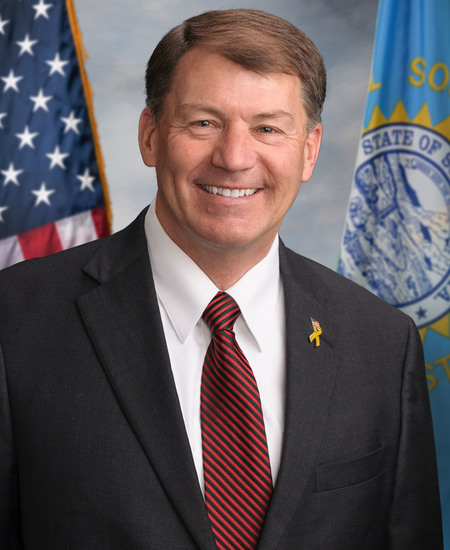
Sen. Mike Rounds
Sponsored bills
Maddy summaryThe VA Abortion Transparency Act of 2024 (S 4128) requires the Department of Veterans Affairs (VA) to submit quarterly reports to Congress detailing abortions facilitated by the VA. These reports must include the total number of abortions, broken down by type (surgical or medication), recipient (veteran or dependent), gestational age, legal justification, and Veterans Integrated Service Network, along with all related costs for procedures, staff training, infrastructure, and funding sources. The VA must exclude all individually identifiable patient information from these reports. This bill directly affects VA operations and congressional oversight, mandating specific data collection and transparency about abortion services provided to veterans and their dependents.
Maddy summaryThe Whole-Home Repairs Act of 2024 establishes a $25 million pilot program to provide home repair assistance to eligible homeowners and landlords. It creates a system where local governments and qualified nonprofits will administer grants to homeowners with incomes at or below 80% of area median income, and forgivable loans to landlords who own fewer than 10 rental properties. The program requires repairs to address accessibility, habitability, energy efficiency, and safety concerns, with landlords agreeing to rent caps, lease extensions for current tenants, and compliance with housing codes. The pilot will run until October 1, 2029, and includes reporting requirements to track program impact and prevent waste. This legislation directly affects low-income homeowners and small-scale landlords in communities across the United States.
Maddy summaryThe Rural Housing Service Reform Act of 2023 establishes a permanent program to preserve and revitalize rural affordable housing projects financed under sections 514, 515, and 516 of the Housing Act of 1949, directly affecting low-income rural residents and housing owners. It creates mechanisms for loan restructuring to maintain safe, affordable housing, including options like reducing interest rates, deferring payments, and subordinating debt. The bill also creates a new Native CDFI relending program to increase homeownership opportunities for Native American communities and extends the maximum term of direct loans from 30 to 40 years. Additionally, it establishes procedures for renewing rental assistance contracts for up to 20 years and adjusts the process for updating housing voucher amounts based on changes in household income or composition.
Maddy summaryThe Affordable Housing Credit Improvement Act of 2023 updates the federal Low-Income Housing Tax Credit program to create more affordable housing options. Key provisions include increasing state funding allocations through revised per capita and minimum amount calculations, modifying tenant eligibility rules to better protect vulnerable populations (including domestic violence victims), and expanding the program's reach to Native American communities and rural areas. The bill also changes the program's name from "Low-income Housing Credit" to "Affordable Housing Credit" and makes administrative improvements to enhance transparency and accountability. These changes aim to make it easier for developers to create and maintain affordable housing units for low- and moderate-income households.
Maddy summarySJRES 61 is a joint resolution seeking congressional disapproval of a Federal Highway Administration rule that established performance measures for the National Highway System, including a requirement to track greenhouse gas emissions from highway activities. The rule, published in December 2023, would have mandated that states and federal agencies assess highway performance using this emissions metric. If enacted, the resolution would block the rule from taking effect, preventing the implementation of the emissions tracking measure. This action is pursued under the Congressional Review Act, which allows Congress to reject federal regulations with a simple majority vote.
Maddy summaryThis resolution (SRES 638) calls on the Taliban to immediately release Ryan Corbett, a U.S. citizen wrongfully detained since August 2022 while visiting Afghanistan for business. It condemns the Taliban's detention of Corbett - held in a small cell under poor conditions without charges - and urges U.S. officials to prioritize his release. The resolution also demands the Taliban stop detaining Americans for political gain and calls for the release of other U.S. citizens wrongfully held in Afghanistan. As a symbolic congressional action, it does not create new law but expresses formal support for Corbett and his family.
Maddy summaryThis bill extends the African Growth and Opportunity Act (AGOA) through 2041, maintaining duty-free access to U.S. markets for eligible sub-Saharan African countries. It introduces biennial reviews of beneficiary countries' compliance with eligibility requirements related to governance, human rights, and trade practices. The bill creates a new category for countries that have ratified the African Continental Free Trade Agreement (AfCFTA) and establishes a process for "graduating" countries that become high-income economies for five consecutive years. Additionally, it requires beneficiary countries to develop biennial strategies to better utilize AGOA benefits and mandates reports on forced labor enforcement and potential trade agreements with sub-Saharan African nations.
Maddy summaryThe Countering Antisemitism Act establishes a National Coordinator within the Executive Office of the President and an Interagency Task Force to coordinate federal efforts against antisemitism across government agencies. The bill requires annual threat assessments of antisemitic violent extremism from the FBI, DHS, and National Counterterrorism Center, and mandates reports from relevant agencies on implementing the U.S. National Strategy to Counter Antisemitism. It also requires the Department of Education to designate a senior officer to address antisemitic discrimination in higher education and to report on complaints, while directing a study on Holocaust education in schools. Additionally, the legislation amends the Nonprofit Security Grant Program to require public reporting on grant applications and awards, and designates May as Jewish American Heritage Month.
Maddy summaryThe Revoke Iranian Funding Act of 2023 revokes existing licenses and exemptions that permitted U.S. funds to be released to Iran for humanitarian purposes, including the $6 billion South Korea transfer in September 2023, and blocks the Treasury from issuing new such licenses for one year. It also rescinds a specific waiver issued by the State Department in September 2023 that allowed humanitarian funding. The bill requires the Treasury to report within 30 days on Iranian assets held in the U.S. and current licenses related to Iran sanctions, directly affecting Iran's government and entities linked to its military, nuclear program, or terrorist groups like Hamas. This targets financial transactions involving Iran's accounts in Qatar and aims to prevent funds from being diverted to support terrorism.