Maddy summarySRES 888 is a ceremonial Senate resolution honoring the late James Ralph Sasser, a former U.S. Senator from Tennessee (served 1976-1993). It formally expresses the Senate’s "profound sorrow" over his death and requests the Secretary of the Senate transmit the resolution to his family. The resolution has no policy impact or direct effect on any individuals or entities - it is solely a commemorative gesture. As a procedural resolution, it does not create new laws or alter existing policies.
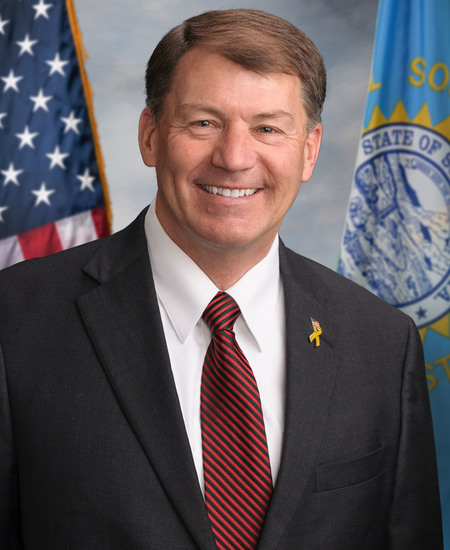
Sen. Mike Rounds
Sponsored bills
Maddy summaryThis bill awards a Congressional Gold Medal to the United States Army Dustoff crews who served during the Vietnam War, recognizing their life-saving medical evacuations. The medal, to be designed by the Secretary of the Treasury in consultation with the Secretary of Defense, will be displayed at the U.S. Army Medical Department Museum. The bill honors the approximately 900,000 wounded personnel these crews transported over the course of the Vietnam War, including U.S., South Vietnamese, and allied forces, who relied on their rapid medical evacuation services.
Maddy summaryThis resolution (SRES 887) is a symbolic Senate expression of support for designating October 7-12, 2024, as "National 4-H Week." It does not create new laws or funding but formally recognizes the 4-H youth development program, which serves nearly 6 million young people nationwide through community-based projects in health, science, and leadership. The resolution highlights 4-H’s role in fostering youth leadership and its partnership with land-grant universities and the USDA. It directly affects the 4-H organization, its 500,000 volunteers, and the youth members participating in the program.
Maddy summaryThis Senate resolution (SRES 890) condemns Hamas for the October 7, 2023, attack on Israel that killed approximately 1,200 people - including 40 U.S. citizens - and took hostages. It supports three specific outcomes: ensuring Israel's long-term security, preventing Hamas from regaining power in the region, and securing the safe return of U.S. hostages held in Gaza. As a non-binding resolution, it does not create new laws or policies but expresses the Senate's position. The resolution was introduced by 45 Senators and passed unanimously on September 25, 2024.
Maddy summaryThis bill authorizes a federal feasibility study to assess building a water supply project from the Missouri River for the Western Dakota Regional Water System, which serves municipal, rural, and industrial users in western South Dakota. The study, to be conducted by the Interior Secretary with the Western Dakota Water Development District, must follow federal guidelines and is limited to 50% federal funding (up to $10 million total). The study must be completed within 10 years of the bill's enactment, with no guarantee the project will proceed.
Maddy summaryThe MedShield Act of 2024 establishes a new pandemic preparedness program under the Department of Health and Human Services (HHS) to leverage artificial intelligence and technology for faster, more coordinated responses to biological threats. The program requires HHS to develop a national system for real-time pathogen surveillance, accelerate vaccine and therapeutic development using AI, and optimize distribution strategies, drawing on recommendations from the National Security Commission on Artificial Intelligence. It mandates a detailed integration plan within 180 days of enactment and authorizes $300 million in fiscal year 2025, increasing to $500 million by 2029, to fund the initiative. The bill directly affects HHS as the lead agency and requires coordination with other federal departments and international partners to create a unified biodefense system.
Maddy summarySRES 851 is a Senate resolution designating November 2, 2024, as National Bison Day. It encourages the American public to observe the day with ceremonies and activities to recognize bison's cultural, historical, and economic significance. The resolution highlights bison's role in Indigenous traditions, conservation efforts, and U.S. heritage, as detailed in its preamble. It does not create legal obligations but serves as a symbolic acknowledgment of bison's importance.
Maddy summaryThe Empowering Main Street in America Act of 2024 would make it easier for small businesses and startups to access capital by expanding securities exemptions and revising investor rules. It increases the revenue threshold for "emerging growth companies" from $1 billion to $2 billion (adjusted for inflation), maintains a $500,000 micro-offering cap with inflation adjustments, and creates new pathways for retail investors to qualify as accredited investors through education-based certification. The bill also requires the Securities and Exchange Commission to publish detailed economic data on capital markets and consider costs and benefits when creating new regulations. These changes would directly affect small businesses seeking funding, investors, and the SEC's regulatory approach to capital markets.
Maddy summaryThe Stand Strong Falls Prevention Act (S 5023) establishes a 12-member Advisory Committee to develop and coordinate a national strategy for preventing falls among older adults. The Committee, including federal agency representatives and external experts (like healthcare providers, caregivers, and housing specialists), will assess current federal falls prevention efforts, recommend pilot programs (such as Medicare coverage for home modifications), and advise on improving screening and public education campaigns. It requires annual data sharing across agencies and mandates regular reports to Congress every four years evaluating program outcomes and progress. The Committee will operate for 10 years, focusing on reducing fall-related injuries and healthcare costs for seniors through coordinated federal action.
Maddy summaryThe ROAD to Housing Act (S 5027) is a comprehensive housing bill aimed at improving housing access, financial literacy, and support for vulnerable populations. It reforms housing counseling programs to prioritize areas with high foreclosure rates, creates incentives for small dollar mortgage originators, and updates regulations to encourage lending for mortgages under $70,000. The bill also expands the Moving to Work Program for public housing agencies to increase flexibility in providing housing assistance, introduces incentives for local communities to reduce homelessness, and requires annual oversight testimony from housing regulators. These provisions primarily affect HUD programs, public housing agencies, housing counselors, and low-to-moderate income households seeking housing assistance.