

Maddy summaryThe Break the Cycle of Violence Act creates federal grant programs to fund community-based violence intervention initiatives that aim to reduce gun violence in high-risk communities. It authorizes $300 million in 2024, increasing to $700 million annually from 2026-2031, for grants to community organizations and local governments to implement evidence-based strategies that provide trauma-informed services, job training, and wraparound support to individuals at high risk of violence. The bill establishes a National Community Violence Response Center to coordinate efforts, collect data, and share best practices, while also creating IMPACT grants for job training programs targeting opportunity youth in communities disproportionately affected by gun violence. The legislation specifically addresses racial disparities in violence exposure, with findings showing Black children and teens are over 12 times more likely to be shot to death than White peers. The program requires grantees to use strategies that reduce violence without contributing to mass incarceration, and to partner with community organizations reflecting the populations impacted by violence.
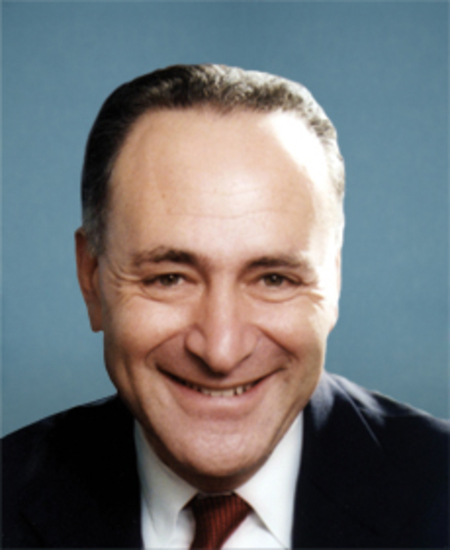
Sen. Charles E. Schumer
Sponsored bills
Maddy summaryThe Rural Outdoor Investment Act (S 2604) creates federal grants to fund outdoor recreation projects in rural communities, aiming to spur local economic development. It authorizes $30 million annually (2024-2028) for grants under existing programs, plus $12.5 million annually for a new "Recreation Economy for Rural Communities" grant program. The bill also requires training for rural small businesses and communities on accessing existing federal funding for outdoor recreation projects, including business development, infrastructure, and marketing. These provisions directly support rural areas, small businesses, and local planning efforts through targeted financial resources and capacity-building.
Maddy summaryThis Senate resolution (SRES 315) authorizes former Senate employee Daniel Schwager to provide testimony in the federal criminal case *United States v. Bozell* (Case No. 21-216, D.C. District Court), excluding matters protected by Senate privileges. It directs Senate Legal Counsel to represent Schwager and any current or former Senate office employee regarding evidence requests related to this case. The resolution cites Senate rules and the Ethics in Government Act, which allow the Senate to manage testimony involving official responsibilities. It does not change laws but formally permits testimony and legal support for Senate employees in this specific court matter.
This resolution authorizes (1) Daniel Schwager, a former employee of the Office of the Secretary of the Senate, to provide relevant testimony in the case of United States v. Sahady , except concerning matters for which a privilege should be asserted; and (2) the Senate Legal Counsel to represent Mr. Schwager and any current or former officer or employee of his office in connection with this case.
Maddy summary# Summary of Proposed Election Reform Legislation This comprehensive legislative document outlines a wide-ranging election reform bill with multiple titles addressing various aspects of voting rights, election administration, and election integrity. Key provisions include: 1. **Democracy Restoration** (Title I): - Restores voting rights for citizens with criminal convictions (except those serving felony sentences in correctional institutions) - Requires states to notify individuals of restored voting rights upon completion of sentence or release from custody - Includes enforcement mechanisms for states to comply with the restoration provisions 2. **Voter Identification Requirements** (Title II): - Establishes a standardized system for voter identification requirements - Specifies acceptable forms of identification (including many government-issued documents) - Requires states to provide free identification documents to eligible voters - Includes funding ($5 million annually for 5 years) to cover costs 3. **Voter List Maintenance** (Title III): - Prohibits "voter caging" (using undeliverable mail to challenge voter eligibility) - Requires states to verify voter ineligibility using objective and reliable evidence - Limits removal of voters from registration lists to specific circumstances (death, permanent move) - Mandates notice requirements for voters removed from lists 4. **Election Integrity** (Title IV): - Prohibits interference with voter registration (Section 612) - Restricts removal of local election administrators to cases of inefficiency, neglect, or malfeasance - Prohibits harassment and intimidation of election workers - Bans deceptive practices in elections (false information about voting procedures, qualifications, or endorsements) The legislation aims to expand voting access while maintaining election integrity, with specific focus on eliminating barriers for people with criminal convictions, ensuring fair voter list maintenance, and protecting election workers from harassment and intimidation. It also includes provisions for enforcement through civil actions, criminal penalties, and reporting requirements.
This resolution designates August 11, 2023, as Hip Hop Celebration Day, August 2023 as Hip Hop Recognition Month, and November 2023 as Hip Hop History Month. The resolution also recognizes the 50 years of contributions of hip hop to art and culture.
Maddy summary# Summary of Comprehensive Election Reform Bill This document is a comprehensive voting rights and election reform bill containing multiple titles with various provisions designed to: 1. **Restore voting rights** for citizens with criminal convictions (Democracy Restoration Act) - Restores voting rights for citizens not serving felony sentences in correctional institutions - Requires states to notify individuals of restored voting rights upon release or probation - Establishes enforcement mechanisms through civil actions 2. **Strengthen voter identification requirements** - Establishes a broad list of acceptable identification documents - Requires states to provide government-issued identification at no cost - Allows for provisional ballots with sworn statements for those without ID - Includes provisions for electronic documents and copies 3. **Prohibit voter caging and improper voter list maintenance** - Bans the use of "voter caging" documents or lists as evidence for challenging voter eligibility - Establishes strict conditions for removing voters from registration lists - Requires objective and reliable evidence for removals - Mandates notification procedures for voters removed from lists 4. **Enhance election integrity protections** - Prohibits interference with voter registration (including hindering, interfering with, or preventing registration) - Restricts removal of local election administrators to cases of inefficiency, neglect, or malfeasance - Protects election workers from intimidation and harassment - Bans deceptive practices regarding election information within 60 days of an election - Establishes criminal penalties for deceptive election practices 5. **Provides enforcement mechanisms** - Establishes private rights of action for violations - Includes civil and criminal penalties for violations - Requires reports to the Department of Justice for removals of election administrators - Sets specific timeframes for notification and corrective actions The bill aims to expand voting access while maintaining election integrity, with provisions designed to protect voting rights, prevent discrimination, and ensure fair administration of elections for Federal office.
Maddy summaryThe Healthy Families Act requires most employers (with 15 or more employees) to provide workers with up to 56 hours of paid sick leave annually, earned at a rate of 1 hour for every 30 hours worked. Employees can use this leave for their own illness, medical care, caring for family members with health conditions, or addressing domestic violence, sexual assault, or stalking situations. The law prohibits employers from retaliating against workers who use this leave and mandates that employers post notices about the policy. Smaller employers (with fewer than 15 employees) may provide up to 56 hours of unpaid sick leave instead of paid leave. The Act includes enforcement mechanisms allowing employees to file complaints with the Department of Labor and seek damages for violations.
Maddy summaryThe Paycheck Fairness Act aims to reduce gender-based pay disparities by strengthening protections against wage discrimination. It modifies the "bona fide factor" defense to require employers to prove pay differences are based on job-related factors rather than sex, prohibits reliance on salary history when making hiring decisions, and requires employers with 100+ employees to collect and report pay data disaggregated by sex, race, and ethnicity. The bill enhances penalties for violations, including compensatory and punitive damages, and strengthens non-retaliation protections for employees discussing wages. These changes directly affect employers, employees, and prospective employees, with particular focus on addressing pay gaps that disproportionately impact women and women of color. The act also creates a National Award for Pay Equity in the Workplace to recognize employers making progress in eliminating pay discrimination.
Maddy summaryThe Richard L. Trumka Protecting the Right to Organize Act of 2023 strengthens workers' rights to organize and bargain collectively by amending key labor laws. It clarifies that multiple employers can be held accountable for labor practices (joint employer definition), makes it harder for employers to misclassify workers as independent contractors, and prohibits employers from permanently replacing workers who strike. The bill requires employers to provide detailed voter lists for union elections, strengthens protections against anti-union discrimination, and increases penalties for unfair labor practices (up to $100,000 for repeat violations). It directly affects workers seeking union representation, employers who must comply with new requirements, and labor organizations conducting organizing campaigns. The bill aims to make it easier for workers to form unions and negotiate better wages and working conditions.