

Maddy summaryThis bill directs $1.4 billion annually (2025-2029) to upgrade U.S. Postal Service mailboxes with high-security models and replace physical "arrow keys" with electronic locks, directly affecting postal carriers and mail collection points. It requires the Attorney General to appoint dedicated prosecutors in each judicial district to coordinate investigations and prosecutions of crimes against postal employees, including assaults or robberies. The bill also mandates the U.S. Sentencing Commission to amend guidelines so that assaults or robberies against postal employees are treated with the same severity as assaults against law enforcement officers. These changes aim to enhance physical security, improve legal responses to violence, and increase penalties for attacks on postal workers.
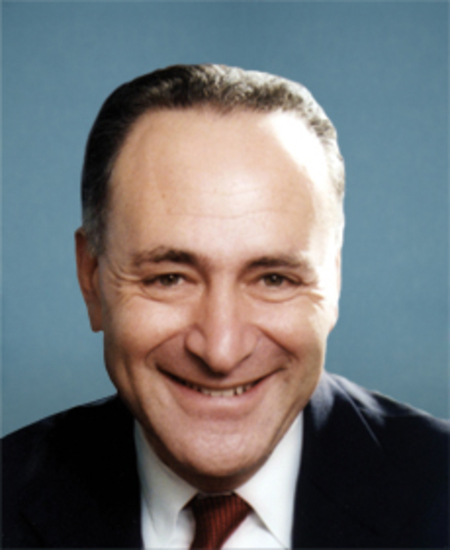
Sen. Charles E. Schumer
Sponsored bills
Maddy summaryThis bill permanently extends the New Markets Tax Credit (NMTC) program, which incentivizes private investment in low-income communities. It modifies the tax code to keep the credit available beyond 2025 (replacing "2020 through 2025" with "2020 and each calendar year thereafter") and adds automatic annual inflation adjustments to the credit amount starting in 2026. The bill also provides tax relief by allowing NMTC credits to offset the alternative minimum tax, specifically for investments made after December 2024. This directly affects community development financial institutions (CDFIs) and investors who fund projects in designated low-income areas.
Maddy summaryS 490, the Protecting Americans’ Privacy Act of 2025, restricts access to Treasury payment systems (like those managing public funds) to prevent unauthorized use of tax return information. It prohibits certain non-tenured federal employees, contractors with less than a year of service, and individuals with conflicts of interest from accessing these systems, with violations subject to civil lawsuits. The bill also amends tax law to explicitly forbid disclosing tax returns via these payment systems to restricted personnel, allowing affected taxpayers to seek $250,000 in damages per violation. It directly affects federal employees, contractors, and entities handling public funds, focusing on safeguarding taxpayer data through clear access rules and enforcement.
Maddy summaryThe Plum Island Preservation Act permanently protects Plum Island, New York, and its associated properties for ecological conservation, historical/cultural heritage preservation, and public access. It requires the General Services Administrator, within 180 days of enactment, to initiate visioning sessions with federal agencies, state governments, Tribal nations, and stakeholders to develop a future ecological management plan. The Administrator must submit annual reports to Congress detailing consultation efforts, discussion topics, outcomes, and timelines for completing this planning process. The bill directly affects the management of Plum Island’s federal land and ensures ongoing oversight through mandatory reporting to congressional committees.
Maddy summaryThis bill directs the Secretary of the Interior to study whether Plum Island in New York should be added to the National Park System or National Wildlife Refuge System, or protected through other means. The study must evaluate the island's national significance, consult with relevant agencies and groups, and estimate costs for potential protection options. The Secretary must submit a report to Congress within three years of funding the study, outlining findings and recommendations. The bill itself does not change current protections or management of Plum Island; it only authorizes a study to inform future decisions.
Maddy summaryS 432 establishes the Fort Ontario Holocaust Refugee Shelter National Historical Park in New York to preserve and interpret the site where 982 Holocaust refugees were housed from 1944 to 1946. The bill requires the Secretary of the Interior to acquire sufficient land (only via donation for state-owned property) and issue a Federal Register notice before establishing the park. It mandates a management plan within three years and allows cooperative agreements for interpretive services and public access to historic resources. The park unit will focus on protecting the physical site and its historical significance for public education.
Maddy summarySRES 51 is a symbolic Senate resolution expressing that the United States Agency for International Development (USAID) is essential for advancing U.S. national security. It states USAID helps mitigate foreign threats before they reach U.S. shores, promotes global stability, addresses the root causes of migration and extremism, and counters China's influence. The resolution does not change laws or funding - it only affirms the Senate’s view on USAID’s role. It was introduced by 38 Senators and refers to existing laws requiring congressional input for USAID changes.
Maddy summaryThis bill authorizes Congress to award Muhammad Ali a Congressional Gold Medal in recognition of his life and legacy. The medal, designed by the Treasury Secretary, will be presented by congressional leaders and given to Ali's widow, Lonnie Ali, following his death. The legislation is purely ceremonial, with no new policy or funding impacts beyond the medal's creation and presentation.
Maddy summaryThis Senate resolution (SRES 42) is a symbolic expression of disapproval by the Senate for pardons granted to individuals convicted of assaulting Capitol Police officers. It does not change any laws or affect legal outcomes but formally condemns those pardons as inconsistent with the Senate's position. The resolution directly addresses the Senate's stance toward those who received pardons for violent acts against law enforcement during the January 6, 2021, Capitol breach.
Maddy summaryS 280, the Global Health, Empowerment and Rights Act, removes barriers for foreign nongovernmental organizations (NGOs) seeking U.S. aid under the Foreign Assistance Act. It directly affects foreign NGOs providing health services (like counseling) with non-U.S. funds, ensuring they cannot be denied aid solely for offering such services if they comply with local laws and U.S. federal standards. The bill prohibits denying aid based on health services provided with non-U.S. funds and stops applying stricter rules on non-U.S. funds for advocacy to foreign NGOs compared to U.S. NGOs. This changes how the U.S. government evaluates eligibility for aid, making the process more consistent for foreign health-focused organizations.