

Maddy summaryThis resolution designates August as "National Anti-Counterfeiting and Consumer Education and Awareness Month" to raise public awareness about the dangers of counterfeit products. It directly affects consumers, businesses, and brands by promoting education on how counterfeit goods - such as unsafe medical products or fake electronics - threaten health, safety, and the economy. The key mechanism is encouraging existing efforts (led by agencies like the FTC and FBI) to educate the public through campaigns that help identify counterfeit items in both physical and online markets. The resolution does not create new laws or funding but affirms support for ongoing awareness initiatives to reduce consumer harm and economic losses from counterfeiting.
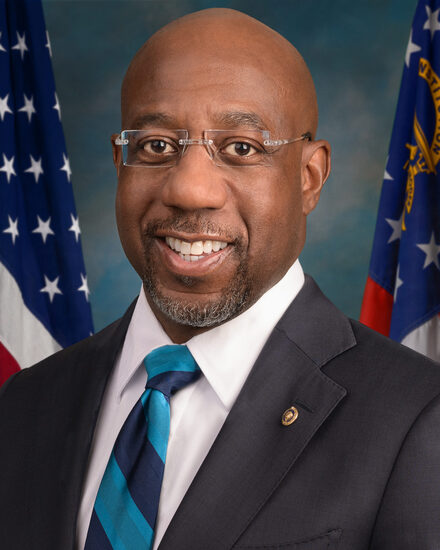
Sen. Raphael G. Warnock
Sponsored bills
American Dream Down Payment Act of 2022 This bill establishes qualified down payment savings programs that allow taxpayers to establish tax-free accounts to save for down payments, including closing costs, on a principal residence. The Department of the Treasury, in coordination with the Securities and Exchange Commission, must report on matters relating to such accounts, including the number of states that have established down payment savings programs and information about beneficiaries of such programs.
Housing Market Transparency Act This bill requires the Department of Housing and Urban Development (HUD) to collect and report certain information about buildings that receive low-income housing tax credits, including relevant development costs, ownership information, habitability standards, and related data. State agencies that administer the credit must also report such information to HUD.
Rent Relief Act of 2022 This bill allows a refundable tax credit through 2024 for individuals who pay rent for a principal residence that exceeds 30% of their gross income for the taxable year. The amount of the credit ranges from 25% to 100% of the excess rent, depending on the gross income of the taxpayer. The credit is not available for taxpayers with gross income that exceeds $100,000 ($125,000 for a taxpayer whose principal residence is located in a high-cost area, as defined by the bill). Rent that exceeds 100% of the small area fair market rent (including the utility allowance) for the residence may not be taken into account for the purpose of determining the amount of the credit. For individuals who reside in government-subsidized housing, the bill allows a credit equal to 1/12th of the rent paid by the taxpayer (and not subsidized under the program) during the year with respect to the residence. The Department of the Treasury must establish a program for making advance payments of the credit on a monthly basis.
Let Doctors Provide Reproductive Health Care Act This bill sets out protections for and establishes programs to support health care providers (and those who assist such providers) who offer reproductive health care services that are lawful in the state where the services are provided. Reproductive health care services refer to abortion services; contraceptive services; in vitro fertilization; or other reproductive care, education, and counseling that is provided (1) at a health care site or via telehealth, and (2) in a medically accurate manner. The bill prohibits individuals, entities, and states from preventing, restricting, or otherwise interfering with the provision of lawful reproductive health care services by health care providers. The Department of Justice, individuals, or providers may bring a lawsuit to enforce this bill, and states are not immune from suits for violations. Furthermore, states may not use federal funds to pursue legal cases or similar proceedings (e.g., adverse licensing proceedings) against health care providers, individuals, or entities that offer or assist with lawful reproductive health care services. Additionally, medical malpractice insurers may not deny coverage to or sue a health care provider because the provider offers or assists with lawful reproductive health care services. The bill also funds grants to assist health care providers who offer or refer for abortion services and face legal issues relating to their provision of reproductive health care services with legal matters and improving security.
Investing in Kids' Mental Health Now Act of 2022 This bill temporarily increases the payment rate for pediatric mental, emotional, and behavioral health services, including telehealth services, under Medicaid. The Centers for Medicare & Medicaid Services must issue guidance on how states may expand such services through provider flexibilities and other regulatory pathways.
Invest to Protect Act of 2022 This bill directs the Office of Community Oriented Policing Services within the Department of Justice to award grants to local and tribal governments that employ fewer than 200 law enforcement officers. Grant funds may be used for various activities, including to provide de-escalation training and improve recruitment and retention.
Recycling Infrastructure and Accessibility Act of 2022 This bill requires the Environmental Protection Agency (EPA) to establish a pilot grant program for improving recycling accessibility in communities. The EPA may award grants to states, local governments, Indian tribes, or public-private partnerships.
Recovering America’s Wildlife Act of 2022 This bill provides financial and technical assistance to states, territories, and the District of Columbia for the purposes of (1) recovering species listed as a threatened or endangered species under the Endangered Species Act or under state law, or (2) avoiding the need to list species under such laws. For example, the bill establishes the Endangered Species Recovery and Habitat Conservation Legacy Fund. A portion of the fund must be used to establish an Endangered Species Recovery Grant Program. It also provides funding for (1) the conservation or restoration of wildlife and plant species of greatest conservation need; (2) the wildlife conservation strategies of states, territories, or the District of Columbia; and (3) wildlife conservation education and recreation projects. The Department of the Interior must use a portion of the funding for a grant program. The grants must be used for innovative recovery efforts for species of greatest conservation need, species listed as endangered or threatened species, or the habitats of such species. In addition, the bill requires certain revenues generated from fees and penalties for violations of environmental requirements to be used as a source for the funding.
Empowering States to Protect Seniors from Bad Actors Act This bill reauthorizes through FY2028 and otherwise revises the Senior Investor Protection Grant Program. The bill moves the program from the Consumer Financial Protection Bureau to the Securities and Exchange Commission, establishes a task force to oversee the program, and eliminates certain grant eligibility requirements.