Maddy summaryThis bill requires U.S. companies exporting advanced integrated circuits (high-performance chips used in AI/data centers) to "countries of concern" (including China, Hong Kong, and Macau) to first offer them to U.S. customers for 15 days. Companies must certify they have no backlog of U.S. orders for similar chips and aren’t providing better terms to foreign buyers. It also creates a "trusted U.S. person" program, allowing certain companies to export without licenses if they meet security, U.S. manufacturing sourcing, and ownership requirements. The law directly affects chip exporters, U.S. tech companies purchasing these chips, and foreign entities seeking access to advanced semiconductors.
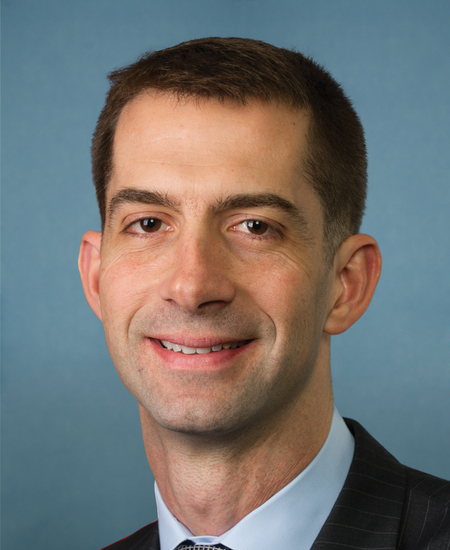
Sen. Tom Cotton
Sponsored bills
Maddy summaryThis bill allows federal prosecutors to directly charge juveniles aged 16 or older with specific violent crimes in federal court, bypassing the usual process requiring the Attorney General to file a transfer motion. It directly affects juveniles aged 16+ accused of five serious offenses: murder, aggravated assault, motor vehicle theft, armed robbery, or aggravated sexual assault involving a firearm. The key mechanism removes the mandatory transfer step for these cases, enabling immediate federal prosecution. The bill targets only the most severe crimes listed under federal law, not all juvenile offenses.
Maddy summaryThis bill ensures that critical firearm-related operations continue during government shutdowns by designating them as "excepted" under federal law. It specifically covers the FBI's background check system (NICS), ATF enforcement programs, Commerce Department firearm export licensing, and State Department defense trade controls. These functions would remain operational even if most government services halt, directly affecting firearm background checks and export licensing processes. The policy change prevents temporary disruptions to gun sales and international firearm transactions during shutdowns.
Maddy summaryThe Border Lands Conservation Act directs the Secretaries of Interior and Agriculture to install roads and surveillance technology on federal lands adjacent to the U.S. borders with Mexico and Canada to enhance border security and operational control. It requires reports on environmental damage and wildfires caused by illegal border crossings, establishes a program to manage vegetation and reduce fire risks on border lands, and prohibits federal funding for housing undocumented immigrants on federal lands (except in detention facilities). The bill affects federal land management agencies, the Department of Homeland Security, and border states, while explicitly protecting tribal sovereignty and legal land uses like grazing and recreation.
Maddy summaryThis bill requires all commercial driver's license (CDL) testing - including knowledge tests, entry-level training, and third-party assessments - to be conducted solely in English. It also mandates that new CDL applicants must hold a standard driver's license for at least one year before applying for a CDL, though current CDL holders are exempt. States issuing non-domiciled CDLs (licenses to non-residents) risk losing that authority if they fail to comply with these rules or federal standards. The law directly affects new commercial drivers seeking CDLs and states managing non-domiciled license programs.
Maddy summaryThis bill prohibits federal judges from considering a defendant's "perceived gender identity" as a factor in sentencing decisions. It amends Title 18 of the U.S. Code (specifically Section 3553(a)) to add a new provision stating courts "shall not consider the perceived gender identity of the defendant as a mitigating factor." The bill also defines "perceived gender identity" and requires the U.S. Sentencing Commission to update guidelines within 30 days of enactment to reflect this change. It directly affects federal sentencing judges and defendants in criminal cases.
Maddy summarySRES 446 is a ceremonial Senate resolution commemorating the 250th anniversary of the U.S. Navy's founding on October 13, 1775. It recognizes the Navy's historical role in protecting U.S. interests and acknowledges its current size (over 290 ships, 3,700 aircraft, and 590,000 personnel). The resolution expresses appreciation for the service of Navy personnel past and present and reaffirms Senate support for the Navy as a key national defense force. It has no binding effect or policy changes, serving solely as a symbolic tribute.
Maddy summaryThe Shutdown Fairness Act ensures that certain federal employees who must work during government shutdowns - such as those in national security or emergency roles, plus their supporting contractors - receive wages during funding gaps. It directs agencies to use unspent Treasury funds to pay these "excepted employees" for work performed when no appropriations are in effect, covering periods until new funding is enacted. Payments end automatically when either full-year appropriations are passed or a continuing resolution without such funding is enacted. All costs are later charged to the agency’s next regular budget, avoiding new appropriations. This directly affects federal workers designated as essential during shutdowns, not the general public.
Maddy summaryThis bill would amend federal law to allow qualified prosecutors and federal judges to carry concealed firearms under specific conditions. To qualify, they must provide agency-issued photographic identification plus certification that they've met firearms training standards established by their state or agency. The bill defines "qualified prosecutor" as a full-time criminal case prosecutor who meets certain professional and training requirements, and "qualified Federal judge" as a serving judge without pending disciplinary actions or substance use issues. Similar requirements apply to retired prosecutors and judges who meet service and training criteria. This would expand the current law that allows qualified law enforcement officers to carry concealed weapons.
Maddy summaryThis bill requires federal and state prisons to house inmates based on biological sex, defined as the sex assigned at birth based on physical characteristics. It prohibits co-housing inmates of different biological sexes in the same housing unit, except for temporary, non-overnight situations. States must certify compliance to receive federal prison funding, and the federal Bureau of Prisons must implement this policy for its facilities. The bill directly affects all inmates in participating federal and state prisons by changing housing arrangements to separate by biological sex.