Maddy summaryThe Fuel STAR Act of 2026 amends the Renewable Fuel Standard to limit the volume of non-advanced biofuel required each year to match projected domestic ethanol consumption. It extends the use of credits earned between 2020 and 2022 for compliance through five additional years, while prohibiting the use of electric vehicle credits. The bill also expands exemptions for small refineries by adding specific economic hardship criteria and requiring the EPA to automatically approve exemption requests if it fails to respond within 90 days. Furthermore, the legislation allows for the year-round sale of E15 fuel blends containing 10 to 15 percent ethanol by removing previous restrictions on Reid vapor pressure limitations.
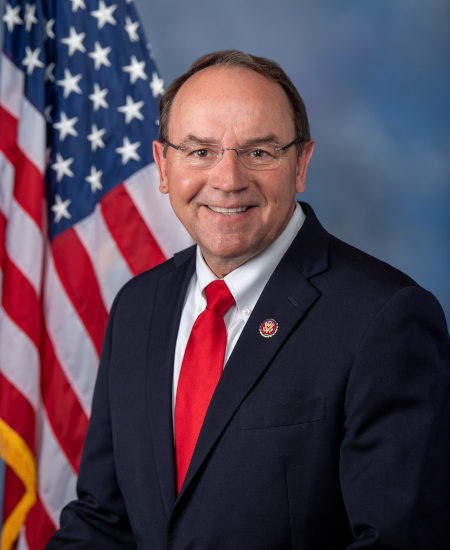
Rep. Thomas P. Tiffany
Sponsored bills
Maddy summaryThe Fair Air Standards Act allows states to request that the Environmental Protection Agency reclassify certain air zones from "nonattainment" to "attainment" status. This change is permitted if the state proves that its air quality would have met national standards for ozone had pollution from outside the state not been a factor. The process requires the state governor to submit evidence and modeling data, after which the EPA has 180 days to review and approve the redesignation. By shifting the focus to external pollution sources, the bill aims to provide a clearer path for states to improve their air quality designations.
Maddy summaryThe DAIRY PRIDE Act aims to amend the Federal Food, Drug, and Cosmetic Act to establish a specific definition for "dairy product." This bill directly affects food manufacturers and consumers by regulating how certain food names can be used. It defines a "dairy product" as food that is, contains as a primary ingredient, or is derived from, the lacteal secretion of hooved mammals. The act prohibits foods that do not meet this definition, or the requirements for an imitation food, from using names for standardized dairy products (like milk, yogurt, and cheese) in interstate commerce. Additionally, it requires the FDA to issue guidance on enforcement of these provisions and report to Congress on actions taken.
Equal Representation Act This bill requires that the statement sent by the President to Congress after the decennial census indicating the number of persons in each state exclude noncitizens. (This statement is the basis for reapportionment of U.S. Representatives.) The bill also requires any questionnaire used in the decennial census to include a checkbox or other similar option for respondents to indicate whether the respondent and each household member is (1) a U.S. citizen, (2) a U.S. national but not a citizen, (3) a non-U.S. national ( alien under federal law) lawfully residing in the United States, or (4) a non-U.S. national unlawfully residing in the United States. The Department of Commerce must make public the number of persons in each state, disaggregated by each of these four categories.
Maddy summaryThe ESA Amendments Act of 2025 makes significant changes to the Endangered Species Act of 1973 to streamline conservation efforts and reduce regulatory burdens. It establishes a national listing work plan with priority classifications for species to better allocate resources, and creates "Candidate Conservation Agreements with Assurances" that provide private landowners with regulatory certainty in exchange for conservation actions. The bill also requires the government to publish the basis for listings online, streamlines permitting processes for projects that comply with conservation measures, and modifies critical habitat designation to better accommodate existing conservation plans on private lands. These changes aim to improve conservation outcomes while reducing delays for landowners, developers, and federal agencies working with listed species.
Maddy summaryThe Swalwell Act aims to reform how workplace misconduct claims involving Members of Congress and senior staff are handled. It prohibits the use of federal or campaign funds to pay settlements or awards for such claims, making the individuals personally liable for the full amount. The bill mandates the creation of a public database disclosing details of these settlements and awards, including historical data, while protecting victims' identities. Additionally, it requires prompt referral of any allegations of criminal conduct by Members or senior staff to the Department of Justice, regardless of settlement agreements.
Maddy summaryThe SAFER Act of 2026 prohibits U.S. immigration officials from granting asylum to individuals who have returned to their country of nationality or last habitual residence after applying for asylum. The bill also allows for the termination of existing asylum status, denaturalization, and deportation for those who return to their country of concern. Exceptions to these restrictions may be made on a case-by-case basis if the President certifies national security needs or the Secretary of State certifies a legitimate transfer of power in the country. This legislation directly affects asylum seekers and those already granted asylum who travel back to their home countries.
Bill to Outlaw Wounding of Official Working Animals Act or the BOWOW Act This bill establishes that a non-U.S. national ( alien under federal law) convicted of, or who admits to having committed, an offense related to harming animals used in law enforcement is inadmissible and deportable.
Deporting Fraudsters Act of 2026 This bill makes certain acts related to public benefits fraud grounds for (1) barring a non-U.S. national ( alien under federal law) from admission into the United States, or (2) deporting the individual. The bill also makes such an individual ineligible for immigration enforcement relief, including relief for an individual in danger of subjection to torture. Specifically, this bill applies to individuals who have been convicted of, admit to having committed, or admit to acts which constitute certain offenses. Offenses covered by this bill include (1) fraud involving Supplemental Nutrition Assistance Program (SNAP) benefits, (2) fraud involving Social Security benefits, (3) fraud involving programs that receive federal funds, and (4) the production of fraudulent identification documents.
Maddy summaryHR 556, the Protecting Access for Hunters and Anglers Act, prevents federal agencies from banning lead ammunition or tackle on public lands and waters managed for hunting or fishing. It directly affects hunters and anglers using federal lands (like national wildlife refuges, public forests, and BLM lands) by blocking nationwide restrictions on lead products. The bill allows limited exceptions only for specific locations where wildlife decline is directly linked to lead use, and the restriction must align with state law or get approval from the state wildlife agency. This changes how federal land managers can regulate lead, requiring state coordination for any local restrictions.