Maddy summaryHR 6260 amends federal law to clarify that fraud involving bail arrangements falls under existing fraud statutes. Specifically, it adds "including the posting of monetary bail, criminal bail bonds, and Federal immigration bail bonds" to a section of Title 18, U.S. Code. This change directly affects federal prosecutors and courts handling cases where individuals commit fraud related to securing bail. The bill does not create new penalties but ensures these bail-related fraud activities are explicitly covered under current legal definitions. It has no direct impact on the public or defendants beyond clarifying prosecutorial authority.
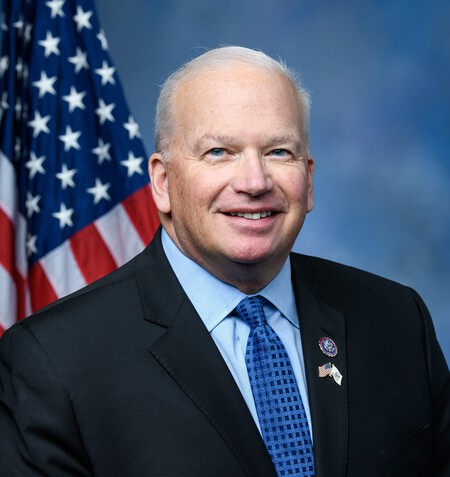
Rep. Scott Fitzgerald
Sponsored bills
Maddy summaryHR 5625, the Cashless Bail Reporting Act, requires the Attorney General to publish and regularly update a public list of all states and local governments that allow cashless bail (release without requiring money bonds). This list must be available within 30 days of the bill's enactment and updated quarterly. The bill does not change existing bail laws but increases transparency by making it easier for the public to see where cashless bail is used. It directly affects individuals seeking information about bail practices in different jurisdictions. The key mechanism is a mandatory, publicly accessible database maintained by the federal government.
Maddy summaryThis bill requires the Department of Defense to review and eventually ban contracts with retailers that use payment processing systems from specific countries deemed a national security risk, such as China, Russia, Iran, and North Korea. Effective January 1, 2027, the Defense Department will be prohibited from entering into agreements for payment equipment or services if those tools rely on technology developed, owned, or controlled by entities in these nations. The law defines covered systems broadly to include hardware, software, and firmware linked to these countries, aiming to prevent potential foreign access to sensitive military financial data. Retailers wishing to continue working with the Department of Defense must replace their payment processing infrastructure with systems that do not involve these restricted technologies.
Maddy summaryHR 3766 prohibits the District of Columbia from requiring courts or administrative bodies to automatically accept the Mayor's interpretation of laws or regulations when reviewing the Mayor's decisions or rules. It specifically blocks DC from making tribunals defer to the Mayor's or agencies' interpretations of statutes during legal challenges. The bill also repeals a temporary 2024 law (D.C. Law 25-290) that had allowed such deference. This change directly affects how DC courts and administrative proceedings handle appeals of Mayor-led agency actions. The policy shift ensures independent review of interpretations rather than automatic acceptance of the executive branch's stance.
Maddy summaryThis bill would amend federal law to strengthen penalties for organized retail crime by expanding definitions of theft to include digital goods, gift cards, and setting a $5,000 aggregate value threshold for charges over a 12-month period. It would establish a new "Organized Retail and Supply Chain Crime Coordination Center" under Homeland Security to coordinate Federal, State, local, and Tribal law enforcement efforts against cross-jurisdictional theft groups. The Center would share information with retailers, transportation companies, and law enforcement agencies, track crime trends, and produce annual reports on organized retail crime. This legislation directly affects retailers, supply chain businesses, and law enforcement agencies, while targeting organized crime groups responsible for a 93% increase in larceny incidents and rising safety concerns for retail employees. The bill aims to address significant financial losses and supply chain disruptions noted in the National Retail Federation's 2023 data.
Maddy summaryThis resolution formally condemns the attempted assassination of President Donald J. Trump on April 25, 2026, as well as previous attempts in 2024, and recognizes the critical role of the Department of Homeland Security. The bill expresses gratitude to law enforcement officers who responded to the attack and affirms the Secret Service's responsibility for protecting the President. Additionally, it calls on Americans to unite against political violence and condemns those who incite attacks against public officials.
Maddy summaryThe Fair Air Standards Act allows states to request that the Environmental Protection Agency reclassify certain air zones from "nonattainment" to "attainment" status. This change is permitted if the state proves that its air quality would have met national standards for ozone had pollution from outside the state not been a factor. The process requires the state governor to submit evidence and modeling data, after which the EPA has 180 days to review and approve the redesignation. By shifting the focus to external pollution sources, the bill aims to provide a clearer path for states to improve their air quality designations.
Maddy summaryThis House Resolution proposes to formally "expunge" the two impeachments of President Donald Trump that passed the House of Representatives on December 18, 2019, and January 13, 2021. If passed, the resolution specifies that these impeachments would be treated "as if such Articles had never passed the full House of Representatives." This action directly affects President Trump by aiming to remove these impeachment proceedings from his official record and would alter the historical legislative record of the House. The resolution's text outlines several reasons for this action, including claims of wrongful accusations, lack of due process, and political bias in the original impeachment proceedings.
Maddy summaryThe DAIRY PRIDE Act aims to amend the Federal Food, Drug, and Cosmetic Act to establish a specific definition for "dairy product." This bill directly affects food manufacturers and consumers by regulating how certain food names can be used. It defines a "dairy product" as food that is, contains as a primary ingredient, or is derived from, the lacteal secretion of hooved mammals. The act prohibits foods that do not meet this definition, or the requirements for an imitation food, from using names for standardized dairy products (like milk, yogurt, and cheese) in interstate commerce. Additionally, it requires the FDA to issue guidance on enforcement of these provisions and report to Congress on actions taken.
Equal Representation Act This bill requires that the statement sent by the President to Congress after the decennial census indicating the number of persons in each state exclude noncitizens. (This statement is the basis for reapportionment of U.S. Representatives.) The bill also requires any questionnaire used in the decennial census to include a checkbox or other similar option for respondents to indicate whether the respondent and each household member is (1) a U.S. citizen, (2) a U.S. national but not a citizen, (3) a non-U.S. national ( alien under federal law) lawfully residing in the United States, or (4) a non-U.S. national unlawfully residing in the United States. The Department of Commerce must make public the number of persons in each state, disaggregated by each of these four categories.