

Maddy summaryHR 7046, the Qualified Immunity Abolition Act of 2026, removes qualified immunity as a defense in civil rights lawsuits against law enforcement officers. It directly affects federal, state, and local law enforcement officers by eliminating their ability to avoid liability in cases where they allegedly violated constitutional rights. The bill amends Section 1983 of federal law to prohibit using four specific defenses: claiming good faith, believing conduct was lawful, arguing rights weren't clearly established, or asserting the law was unclear at the time. This change means officers can no longer dismiss lawsuits based on these arguments after the bill's enactment. The law applies to all civil actions pending or filed after the effective date.
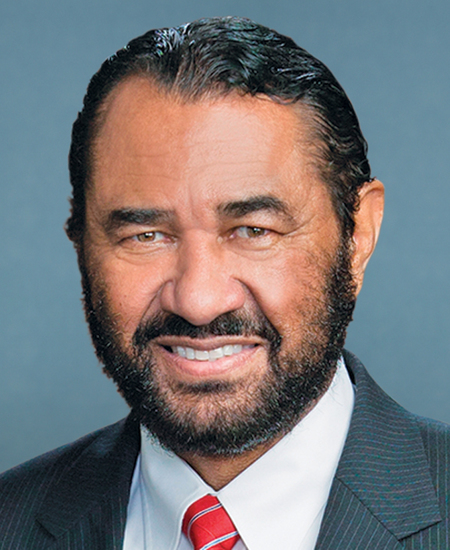
Sponsored bills
Maddy summaryHR 6088, the *Restoring Food Security for American Families and Farmers Act of 2025*, repeals specific sections (10101-10108) from a prior reconciliation law. This action revives previous provisions related to food security programs that were modified by those repealed sections. The bill directly affects federal food assistance and agricultural support programs by restoring their prior legal framework. It does not create new policies but reverses recent changes to existing food security measures.
Maddy summaryThis concurrent resolution (HCONRES 69) commemorates the 15th anniversary of the January 8, 2011, Tucson shooting that killed six people and injured 13, including former Congresswoman Gabby Giffords. It honors the victims, survivors, and Giffords - now a prominent advocate for gun violence prevention - and recognizes her leadership in promoting civility and reducing gun violence. The resolution also commends Tucson residents and first responders for their resilience and reaffirms Congress’s commitment to respectful dialogue and opposing political violence. As a ceremonial resolution, it does not create new laws or policies.
Maddy summaryHRES 970 is a non-binding resolution urging the U.S. government to increase diplomatic efforts to end the Sudan conflict, with a specific focus on holding the UAE accountable for its military support to warring parties. It cites the UAE as the only country confirmed to have imported weapons linked to atrocities in Sudan and states that external military support from the UAE exacerbates the crisis. The resolution references Sudan's severe humanitarian situation, including over 40,000 deaths and 12 million displaced people since 2023, as justification for action. As a resolution, it does not create new law but formally expresses the House's position that the U.S. should pressure the UAE to cease military support.
Maddy summaryHR 4611 (EACH Act of 2025) requires all federally funded health programs - including Medicaid, Medicare, military health plans, and the Indian Health Service - to cover abortion services without restrictions, repealing the Hyde Amendment's long-standing ban on federal funding for most abortions. This directly affects millions of people enrolled in these programs, particularly low-income women, women of color (including 25% of Black women and 22% of Hispanic women on Medicaid), and young people. The bill mandates coverage in all federally administered health plans and prohibits state or private insurers from restricting abortion coverage in health insurance. It aims to eliminate current federal and state barriers that deny abortion access to people who rely on government health programs.
Maddy summaryThis bill renames the Dallas, Texas Department of Veterans Affairs medical center at 4500 South Lancaster Road as the "Eddie Bernice Johnson VA Medical Center." It directly affects the facility and all official references to it in federal documents, laws, and records. The key provision (Section 2(a)) officially changes the facility's name upon enactment, and Section 2(b) requires all future references to use the new name. The bill is procedural, honoring Congresswoman Johnson's service to veterans.
Maddy summaryThis bill creates a $25,000 one-time payment for eligible individuals who served as crewmembers in the U.S. Merchant Marine between December 1941 and December 1946. To qualify, applicants must not have received benefits under the 1944 GI Bill, provide proof of service (like a DD-214), and submit an application to the Department of Veterans Affairs. The bill authorizes $125 million in fiscal year 2026 to fund these payments, which will be distributed in the order applications are received. It directly affects surviving WWII Merchant Mariners or their estates who meet the service criteria.
Maddy summaryHRES 962 is a ceremonial resolution honoring Harriet Tubman's legacy. It formally acknowledges her courage, leadership in the Underground Railroad (rescuing ~70 enslaved people), Civil War service (including the Combahee River Raid liberating 700), and post-war advocacy for human rights and women’s suffrage. The resolution has no legal effect or policy changes - it is solely a symbolic recognition by the U.S. House of Representatives. It does not affect any individuals, programs, or government actions.
Maddy summaryHCONRES 61 directs the President to withdraw U.S. military forces from hostilities against any terrorist organization designated by the president in the Western Hemisphere. This bill specifically applies to military operations involving U.S. armed forces in the region targeting such groups. The key provision requires the withdrawal unless Congress has passed a formal declaration of war or specific authorization for that military action. The resolution invokes Section 5(c) of the War Powers Resolution to compel this change in military deployment.
Maddy summaryThis bill directs the Comptroller General to study whether a federal uniform residential building code could reduce local government approval times for new housing, lower construction costs nationwide, and improve the quality and affordability of housing. The study must be completed within one year of the bill's enactment and report findings to Congress. It does not create new regulations but examines potential benefits of standardized building codes. The study would primarily inform future policy decisions affecting local governments and the housing market, without directly changing current building standards or costs.