Maddy summaryThe Leadership in CET Act creates a temporary program to fast-track patent reviews for applications in critical technology areas like artificial intelligence, semiconductors, and quantum computing. To qualify, applications must be new utility patents without domestic benefit claims and submitted by non-foreign entities of concern (as defined by national security law). The program will accept up to 15,000 applications or run for five years, whichever comes first, and requires the U.S. Patent Office to report on its effectiveness to Congress. This policy change aims to accelerate patent processing for strategic technologies to support U.S. innovation leadership.
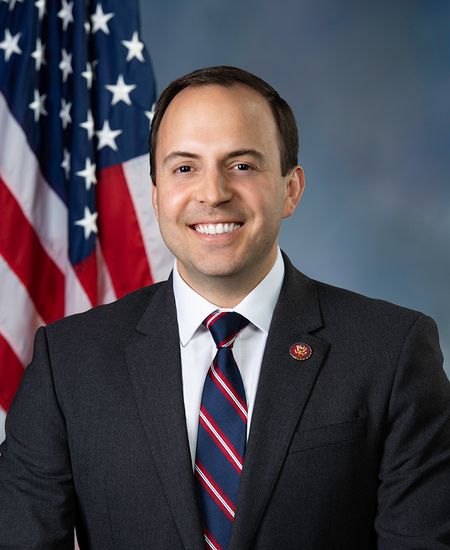
Rep. Lance Gooden
Sponsored bills
Maddy summaryThis resolution (HRES 433) is a symbolic congressional statement condemning former FBI Director James Comey for a social media post described in the bill as inciting violence against President Trump. It claims Comey's post - featuring the phrase "86-47" with "cool shell formation" - seemed to call for eliminating the president, jeopardizing his security during a foreign trip. The resolution formally condemns this as "indefensible," urges barring Comey from future federal employment, and requests a DOJ investigation into his post. As a non-binding resolution, it does not change laws but reflects the sponsors' position on the matter. The bill focuses on the stated claims within its text, not on verified facts about the post or Comey's intent.
Maddy summaryHR 3512, the Tackling Predatory Litigation Funding Act, imposes a new annual tax on funds received by third-party investors who finance lawsuits through litigation financing agreements. It directly affects investors (including foreign entities) who provide funding to plaintiffs or law firms in exchange for a share of settlement or judgment proceeds, excluding small agreements under $10,000 or standard loans. The tax equals the top individual income tax rate plus 3.8 percentage points, with 50% withheld from settlement payments by parties involved in the lawsuit. The law also clarifies that such funds cannot offset losses and excludes certain typical legal fee reimbursements from taxation. The provisions take effect for taxable years beginning after December 31, 2025.
Maddy summaryHR 3526, the Uplifting First-Time Homebuyers Act of 2025, increases the maximum amount first-time homebuyers can withdraw penalty-free from retirement accounts. It amends the Internal Revenue Code to raise the limit from $10,000 to $50,000 for qualified first-time homebuyer distributions. This change directly affects individuals using retirement savings to purchase their first home, allowing them to access significantly more funds without incurring the usual 10% early withdrawal penalty. The provision applies to taxable years beginning after December 31, 2024.
Maddy summaryHR 3392, the STOP Screwworms Act, requires the U.S. Department of Agriculture to build modular facilities for rearing sterile New World screwworm flies within 180 days of enactment. These facilities will disperse sterile flies into at-risk agricultural areas - identified based on migratory patterns and suitability for dispersal - to prevent infestations that threaten livestock. The bill authorizes $300 million in funding for construction, operation, and annual reporting to Congress on threat assessments and effectiveness. It directly affects livestock producers and agricultural regions vulnerable to screwworm fly migration, using sterile insect technique as a preventive measure.
Maddy summaryThis bill amends the Victims of Crime Act to expand compensation for "angel families" - immediate family members of homicide victims caused by undocumented immigrants (under INA 212(a)(6)(A)(i)) or international drug cartel members (under Controlled Substances Act). It adds coverage for emotional distress-related wage loss and medical expenses, alongside existing medical, funeral, and physical injury costs. The bill also creates a new Victims of Immigration Crime Engagement Office within Homeland Security to provide victims and families with support services, referrals, and criminal history information, while requiring annual reports tracking crime demographics, locations, and perpetrator patterns. These changes directly affect families of homicide victims where the perpetrator fits the specified categories of immigration or drug trafficking violations.
Maddy summaryThe LEO Fair Retirement Act of 2025 allows federal law enforcement officers to include unpaid overtime hours in their retirement benefit calculations. Currently, pay caps prevent officers from being compensated for all overtime worked, meaning they miss out on retirement credit for those hours. To qualify, officers must make a lump-sum payment (or choose a reduced monthly annuity) to cover the retirement contributions they would have made if paid, based on their actual overtime hours. This applies to officers covered by the Civil Service Retirement System (CSRS) or Federal Employees Retirement System (FERS), and the bill also provides a tax credit for the lump-sum payment.
Maddy summaryThe Law Enforcement Officers Equity Act expands federal retirement benefits to include specific non-traditional law enforcement roles, such as IRS tax collection officers, U.S. Postal Inspection Service employees, Department of Veterans Affairs police, and certain U.S. Customs and Border Protection seized property specialists. It directly affects current and future federal workers in these positions who were previously excluded from law enforcement retirement benefits under the Federal Employees Retirement System and Civil Service Retirement System. The bill allows current employees (incumbents) to elect to count prior service toward retirement by paying a deposit covering the difference in retirement contributions, with government contributions made over 10 years. It also temporarily exempts law enforcement officers from mandatory separation for three years after enactment.
Maddy summaryThis bill requires the U.S. President to identify and sanction individuals involved in "involuntary harvesting of organs" in China by blocking their U.S. property and banning their entry. It mandates an annual list of designated persons (submitted to Congress) and imposes sanctions like visa restrictions and asset freezes under the International Emergency Economic Powers Act. Exceptions cover humanitarian aid, national security activities, and UN-related travel. The sanctions expire after 5 years, and the bill also requires a report on China's organ transplant practices and whether Falun Gong persecution meets atrocity definitions. The bill directly targets Chinese officials/entities linked to organ harvesting claims, not Falun Gong practitioners.
Maddy summaryHR 3178, the Save Healthcare Workers Act, creates a new federal crime for assaulting hospital staff while they are performing their duties, with penalties including fines and up to 10 years in prison (up to 20 years for aggravated cases involving weapons or injuries). The bill directly affects hospital employees - including nurses, doctors, and support staff - across all covered facilities (such as emergency rooms, long-term care centers, and children’s hospitals) by criminalizing violence that disrupts patient care. It also establishes a $25 million annual grant program (2025-2034) to help hospitals implement safety measures like staff de-escalation training, security technology, and coordination with local law enforcement. These provisions aim to address workplace violence in healthcare settings, which the bill cites as a growing problem affecting service delivery and staff retention.