No taxpayer funding for United Nations Human Rights Council Act This bill requires the Department of State to withhold from the U.S. contribution to the United Nations (U.N.) the amount that would be allocated to the U.N. Human Rights Council. Such withheld funds must be rescinded and must not be considered arrears to be repaid to the United Nations. The bill also prohibits the State Department from making voluntary contributions to the U.N. Human Rights Council.
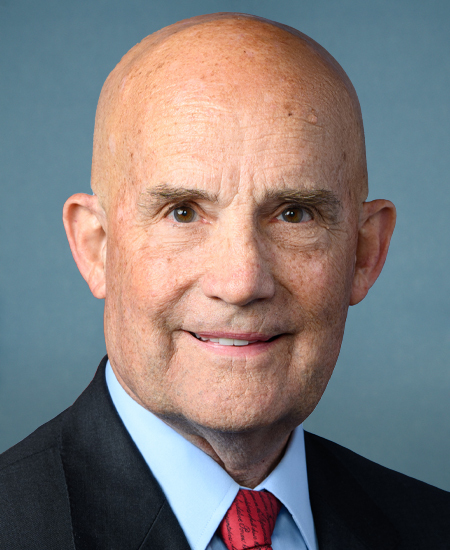
Rep. Keith Self
Sponsored bills
Maddy summaryThis bill expands the use of 529 college savings accounts to cover career training and credentialing costs. It allows funds to pay for tuition, fees, books, and testing expenses related to recognized postsecondary credential programs (like vocational certifications) that meet specific standards under the Workforce Innovation and Opportunity Act. The change directly affects workers seeking industry-recognized credentials - such as nursing certifications or IT certifications - instead of traditional degrees. It treats these expenses the same as traditional college costs for 529 account withdrawals, making it easier to save for career-focused training. The provision applies to expenses paid after the bill's enactment date.
Maddy summaryHR 1286, the Lone Star Reimbursement Act, directs the Department of Defense and Department of Homeland Security to reimburse the State of Texas $2.2 billion for costs incurred during Operation Lone Star in fiscal years 2022 and 2023. The bill specifically allocates funds from existing appropriations to cover Texas' expenses related to border security operations, including apprehensions and fentanyl seizures documented in the bill's findings. This reimbursement applies to costs already incurred by Texas, with no new policy changes or requirements for the state.
Feral Swine Act This bill extends through FY2028 the feral swine eradication and control pilot program to respond to the threat feral swine pose to agriculture, native ecosystems, and human and animal health.
No Retaining Every Gun In a System That Restricts Your Rights Act This bill modifies the retention requirements for firearm transaction records of federal firearms licensees (FFLs) that go out of business. Current law generally requires FFLs that go out of business to deliver their firearm transaction records to the Bureau of Alcohol, Tobacco, Firearms and Explosives (ATF). This bill removes the requirement for FFLs that go out of business to deliver their firearm transaction records to the ATF. Further, the bill requires the ATF to destroy all out-of-business records it has collected from FFLs.
Maddy summaryThis bill prohibits the Department of Defense from using funds to pay for or reimburse abortion services, except when the pregnancy endangers the mother's life, results from rape, or results from incest. It directly affects military personnel, civilian DOD employees, and contractors receiving medical care at military facilities by restricting funding for abortion-related expenses. Key provisions include amending federal law to ban reimbursement for travel or licensing costs related to abortion services and repealing a 2022 DOD memo that expanded access to such care. The bill explicitly blocks all funding for abortion services beyond the existing exceptions, with no new exceptions added. It does not change abortion access for civilians outside the military healthcare system.
Maddy summaryHRES 165 is a non-binding resolution commemorating the 200th anniversary of the Texas Ranger Division, established in 1823 and recognized as North America's oldest state law enforcement agency. It honors all past and present Texas Rangers, including the 149 who died in service, and acknowledges their historical roles from frontier protection to modern law enforcement. The resolution highlights the Rangers' cultural impact, noting their presence in over 225 movies and 7 TV series, and their partnerships with federal agencies like the FBI. As a ceremonial resolution, it does not create new laws or policies but formally recognizes the Rangers' legacy.
Maddy summaryHR 1200, the National Right-to-Work Act, prohibits requiring workers to join a union or pay dues as a condition of employment in both private-sector workplaces (covered by the National Labor Relations Act) and railroad industries (covered by the Railway Labor Act). The bill amends key sections of these laws to eliminate provisions that allowed union security agreements, meaning workers in unionized settings would no longer be forced to pay dues to retain their jobs. This directly affects employees in unionized workplaces across the U.S., particularly those in industries with existing union contracts that included mandatory dues. The law changes the legal framework to ensure union membership and dues payment remain voluntary for all workers.
Maddy summaryHR 1194, the "Fighting Presidential Budget Waste Act," requires the President and the Office of Management and Budget (OMB) to consider findings from the most recent GAO report on reducing government waste when preparing the annual federal budget. The bill specifically directs them to review the GAO report titled "Additional Opportunities to Reduce Fragmentation, Overlap, and Duplication and Achieve Billions of Dollars in Financial Benefits" (or a successor report). This mandate applies to all budget submissions under Section 1105 of Title 5, U.S. Code. The law does not create new spending or programs but changes the budget preparation process by requiring federal officials to factor in GAO recommendations for cost savings.
Women's Public Health and Safety Act This bill allows a state to exclude from participation in the state's Medicaid program a provider that performs an abortion, unless (1) the pregnancy is the result of rape or incest, or (2) the woman suffers from a physical issue that would place her in danger of death unless an abortion is performed. Under current law, a state plan for medical assistance must provide that any individual eligible for medical assistance may obtain required services from any provider qualified to perform them.