Maddy summaryHR 9374, the Stand with Israel Act, prohibits U.S. federal funds from being used to support the United Nations or its entities if they restrict Israel's full participation as a member state. The bill specifically blocks funding for any UN body that expels, downgrades, or suspends Israel's membership or limits its ability to participate equally with other nations. This affects U.S. government contributions to the UN, requiring the Department of State and other agencies to halt funding for such UN actions. The key mechanism is a new provision in the UN Participation Act that mandates this funding restriction whenever Israel's UN participation is impaired.
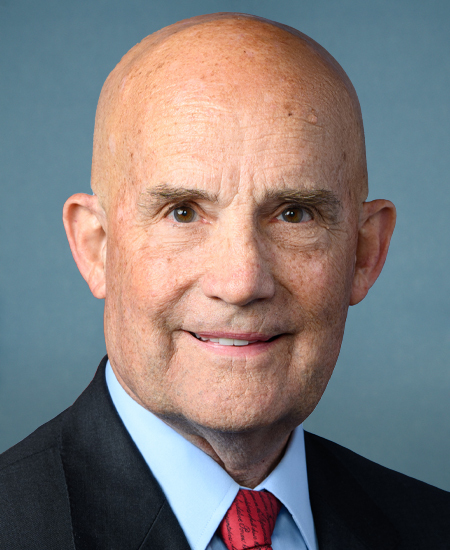
Rep. Keith Self
Sponsored bills
Maddy summaryThe SAFER at the Border Act prohibits the U.S. Department of Homeland Security from temporarily admitting (paroling) certain individuals at the border. It defines "known terrorists" (those arrested, charged, or convicted for terrorism), "suspected terrorists" (reasonably suspected of terrorism), and "special interest aliens" (those with potential terrorism links based on travel patterns). The bill explicitly bans parole for these individuals, even for humanitarian reasons or public benefit, and also prohibits parole for refugees. Additionally, it allows states to sue the Department of Homeland Security if they suffer financial harm exceeding $100 from the parole of such individuals.
Maddy summaryHR 2499, the VA Supply Chain Management System Authorization Act, authorizes the Department of Veterans Affairs (VA) to implement a cloud-based information technology system for managing medical supply chains at VA facilities. The system must track inventory (including physical and continuous stock levels), receipt, storage, distribution, and disposal of covered items like medical supplies, surgical equipment, lab materials, biomedical devices, and prosthetics, while requiring interfaces with existing VA procurement, financial, and electronic health record systems. It mandates a 3-year implementation deadline, a pilot phase at one facility before full rollout, and a capacity for at least 50,000 users, excluding software and items managed by non-VA-administered entities like the National Cemetery Administration. The bill directly affects VA medical facilities' supply chain operations, focusing on concrete system requirements rather than policy outcomes.
Maddy summaryHR 8757, the REAL Meat Act of 2024, prohibits federal funding for cell-cultured meat production, research, promotion, or related facilities. It directly affects federal programs, agencies, and recipients of agricultural funding by banning the use of taxpayer money for any activity involving lab-produced meat. The bill defines cell-cultured meat as meat grown from animal cells in a lab and exempts NASA funding intended for space consumption. This policy change restricts federal support for the emerging cell-cultured meat industry while allowing specific space-related research.
Maddy summaryThis bill defines "sex," "male," and "female" in federal law based on biological characteristics present at birth, specifically referencing reproductive anatomy (e.g., sperm production for males, egg production for females). It mandates that all federal agencies, courts, and laws interpret these terms strictly according to this biological definition, excluding self-identification or gender identity. The bill directly affects how federal programs, regulations, and legal decisions interpret terms like "sex," "gender," and "gender identity" in all federal contexts. Key provisions clarify that "gender" refers only to biological sex differences and explicitly states that gender identity does not override these definitions.
Maddy summaryThis bill imposes sanctions on individuals and entities within the Palestinian Authority (PA) and Palestine Liberation Organization (PLO) that administer or support a system paying terrorists and their families. It targets PA/PLO officials, specific entities like the Commission of Prisoners, and financial institutions processing these payments, requiring property blocking, visa bans, and restrictions on U.S. financial transactions. The sanctions apply if the PA/PLO continues payments described in the Taylor Force Act (2018), which previously mandated ending such payments. The bill terminates if the Secretary of State certifies the PA/PLO has ceased these payments.
Maddy summaryThis bill gives states the option to restrict Supplemental Nutrition Assistance Program (SNAP) benefits for specific items. States may ban purchases of sugary drinks, candy, ice cream, and prepared desserts like cakes or cookies using SNAP benefits. The Secretary of Agriculture will maintain a list of these restricted items, but states can implement bans without federal approval or additional reporting. This change directly affects SNAP participants in states that choose to adopt such restrictions, altering which food items can be bought with benefits.
Maddy summaryHJRES 165 is a congressional resolution seeking to block a Department of Education rule issued in April 2024 that updated protections against sex discrimination in schools receiving federal funding. The resolution aims to disapprove this specific rule (published as 89 Fed. Reg. 33474), which would have required schools to address sex-based discrimination in educational programs. If passed, the rule would no longer be in effect, meaning schools would not need to comply with its requirements. This resolution directly affects all schools and educational programs receiving federal financial assistance, as it targets the implementation of the new nondiscrimination standard.
Maddy summaryHRES 1377 is a procedural resolution requiring the Secretary of Homeland Security to provide the House of Representatives with all relevant documents, records, and communications about the July 13, 2024, attempted assassination of Donald J. Trump within 7 days of the resolution's adoption. It specifically mandates the transfer of Secret Service protection records, DHS-SS communications, and audio/video recordings related to Trump's Butler, Pennsylvania, campaign rally on that date. The resolution does not change policy but demands transparency by directing the executive branch to disclose existing materials. It directly affects the Department of Homeland Security and its Secretary, who must comply with the 7-day deadline.
Maddy summaryThe SAVE Act (HR 8281) requires U.S. citizens to provide documentary proof of citizenship when registering to vote in federal elections. It defines acceptable proof as documents like passports, REAL ID-compliant IDs, military IDs, or birth certificates, and mandates that states verify citizenship using information from government agencies like DHS and Social Security. States must establish processes for voters without required documentation to provide an attestation under penalty of perjury. The law also requires states to remove noncitizens from voter rolls when verified evidence shows they're not citizens. This bill directly affects all applicants registering to vote in federal elections and state election officials who must implement these requirements.