Maddy summaryHR 10549, the Sovereign State Environmental Quality Assurance Act, would abolish the Environmental Protection Agency (EPA) 270 days after enactment, requiring the EPA Administrator to wind up operations and submit a progress report within 90 days. It redirects $4.4 billion annually (2026-2029) to state environmental departments based on population, plus $880 million yearly for Treasury oversight. The Congressional Budget Office must also conduct annual efficacy studies and reports on the Act during the same funding period. This bill directly affects all 50 states, the District of Columbia, Puerto Rico, and U.S. territories by shifting federal environmental funding and oversight authority to state-level agencies.
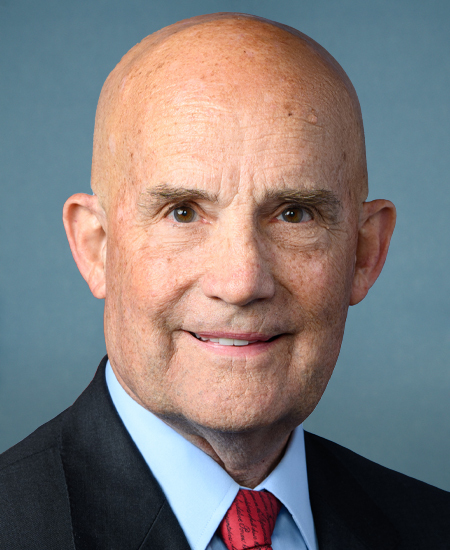
Rep. Keith Self
Sponsored bills
Maddy summaryThe FOCA Act of 2023 requires federal agencies to stop mandating or banning contractor agreements with labor organizations (like union contracts) in construction project bids and contracts. It directly affects federal contractors, subcontractors, and agencies managing construction projects funded by the government. The bill prohibits favoring or penalizing contractors based on their labor affiliation status, aiming to promote fair competition and reduce costs. It also mandates updates to federal contracting rules within 60 days of enactment to implement these changes.
Maddy summaryThis bill requires the U.S. Customs and Border Protection (CBP) headquarters to relocate to Texas by January 1, 2026. It mandates the move be strategically positioned near the U.S.-Mexico border to address border crises, directing the Secretary of Homeland Security to collaborate with Texas' General Land Office. The bill allows the federal government to acquire land in Texas through standard real estate contracts and requires any land title to meet federal government approval standards. It directly affects CBP operations, federal land acquisition processes, and Texas as the designated relocation site.
Maddy summaryThe VALOR Act of 2024 establishes specific criteria for determining when a democratically elected government is in power in Venezuela, requiring free and fair elections with international observers, respect for human rights, release of political prisoners, and restoration of democratic institutions. The bill authorizes sanctions against the Maduro regime, including financial restrictions on debt instruments, cryptocurrency transactions, and blocking property of the Venezuelan government. It creates mechanisms for the U.S. to provide humanitarian and democracy-building assistance through independent NGOs once a democratically elected government is recognized, with safeguards to ensure aid reaches the people of Venezuela. The bill requires regular reporting to Congress on sanctions implementation, assistance programs, and foreign entities doing business with the Maduro regime.
Maddy summaryHR 8411, the Defending American Property Abroad Act, blocks U.S. government funding for activities involving foreign ports or terminals where a U.S. entity owns the land needed for access, and a foreign government has taken actions like nationalizing that land or nullifying a related contract. It requires the Homeland Security Secretary to designate such "prohibited property" within 60 days, then prohibits funding for vessels using these locations to import goods, dock, or receive maintenance. The bill mandates annual reports to Congress tracking designated properties, affected vessels, and the foreign actions triggering designations, along with assessments of economic and national security impacts. This directly affects U.S. businesses with foreign port access and U.S. agencies managing maritime activities.
Maddy summaryThe Patient’s Choice Act of 2024 prohibits federal agencies from implementing or enforcing a 2023 proposed rule that would have shortened the maximum duration of short-term health insurance plans. It blocks efforts to reduce the current allowable term for these plans below the existing standard, ensuring they can still be offered with an initial term under 12 months and a total duration of up to 3 years (including renewals). This bill directly affects health insurance issuers and consumers who rely on short-term plans as a temporary coverage option. The legislation maintains the current regulatory framework without altering plan requirements or creating new benefits.
Maddy summaryHR 7427 clarifies that states may use Temporary Assistance for Needy Families (TANF) funds to support pregnancy centers and other "alternatives to abortion" programs that provide life-affirming services like counseling, parenting resources, and material support to pregnant individuals. The bill explicitly defines these programs as those promoting childbirth over abortion through services such as prenatal care coordination, job training, infant supplies, and adoption referrals, while excluding entities that provide or facilitate abortions. It also prohibits federal discrimination against grantees or states that fund such programs, including preventing the government from imposing unfair requirements or cutting funding based on a provider's opposition to abortion. This bill directly affects pregnancy centers, adoption agencies, and maternity homes receiving TANF funding, ensuring their eligibility under existing federal law. The legislation responds to a 2023 federal proposal that threatened to restrict such funding.
Maddy summaryThis bill removes a requirement for ambulatory surgical centers participating in Medicare to report the COVID-19 vaccination status of their healthcare workers. Specifically, it directs the Secretary of Health and Human Services to revise Medicare regulations (42 CFR §§ 416.300-416.330) within 45 days of enactment to eliminate this reporting mandate. The change directly affects ambulatory surgical centers that receive Medicare funding, removing a specific administrative burden related to employee vaccination data. The bill focuses solely on modifying existing reporting rules, with no new funding or program requirements.
Maddy summaryThis bill adds Ecuador to the list of countries eligible for trade benefits under the Caribbean Basin Economic Recovery Act (CBERA), specifically designating it as a "CBTPA beneficiary country" for preferential tariff treatment. It requires the President to issue a formal proclamation designating Ecuador as such within 90 days of the bill's enactment. The change would allow Ecuadorian goods to enter the U.S. with reduced or eliminated tariffs under the CBERA framework, directly affecting Ecuador's exporters and U.S. importers of Ecuadorian products. This is a procedural adjustment to existing trade law, not a new policy.
Maddy summaryThe Maximum Pressure Act (HR 6114) is a legislative proposal that would maintain and expand U.S. sanctions against Iran. The bill would codify existing sanctions, require Iran to meet 12 specific conditions before sanctions could be lifted (including ending support for terrorism, releasing hostages, and ending nuclear enrichment), and expand sanctions on Iran's Revolutionary Guard Corps and missile programs. It also establishes new reporting requirements for the U.S. government to monitor Iran's activities and the impact of sanctions. The legislation would require congressional review before any sanctions could be lifted or modified, preventing the executive branch from unilaterally easing restrictions.