Maddy summaryThis bill adjusts health insurance subsidies by modifying the premium tax credit structure under the Internal Revenue Code. It replaces previous income thresholds with a sliding-scale formula, increasing subsidies for households earning between 150% and 400% of the federal poverty level - reducing their required premium payments as income rises within these tiers. The changes apply to tax years beginning after December 31, 2025, directly affecting middle-income individuals and families purchasing coverage through health insurance marketplaces. It also repeals specific provisions from a prior reconciliation law related to health care.
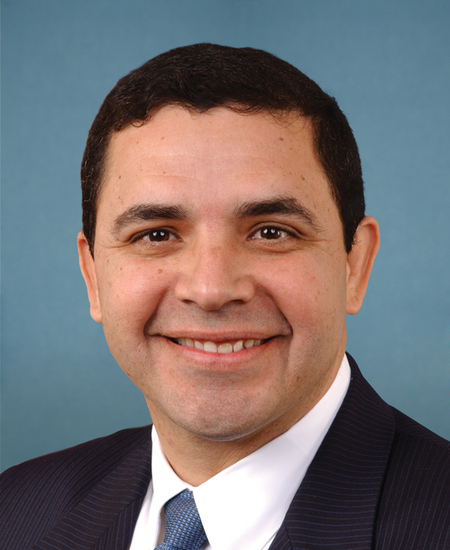
Rep. Henry Cuellar
Sponsored bills
Maddy summaryThis resolution (HRES 618) formally commends the U.S. Coast Guard, specifically Air Station Corpus Christi and the crew of helicopter CG-6553 (including Lt. Ian Hopper, Lt. Blair Ogujiofor, AMT3 Seth Reeves, and AST3 Scott Ruskan) for their rescue efforts during the July 4, 2025, catastrophic flooding in Texas. The bill highlights their actions in saving 165 lives and evacuating 15 people amid rapidly rising rivers and severe weather, including 3 aborted landing attempts due to poor conditions. It recognizes their response as one of the most consequential rescue operations in U.S. history, emphasizing Coast Guard professionalism during the disaster. As a commemorative resolution, it does not enact policy but serves as a formal expression of gratitude to the Coast Guard personnel and all first responders.
Maddy summaryThis bill removes a barrier preventing most low-income students from accessing SNAP benefits. It amends the Food and Nutrition Act to explicitly allow students enrolled at least half-time in recognized higher education programs to qualify for SNAP, reversing a prior exclusion. The key change eliminates the previous requirement that students meet specific exceptions (now deleted) and adds a new eligibility category under Section 3(m)(5). This directly affects low-income undergraduate and graduate students at colleges and training programs who were previously ineligible. The changes take effect January 2, 2026.
Maddy summaryHR 4788 would amend a 1932 District of Columbia law to allow Members of Congress (Senators and Representatives) to carry concealed firearms in Washington, D.C., if they hold a valid concealed carry license from a state where they are permitted to carry, or are otherwise legally allowed to carry concealed in their home state. The bill requires these members to not be federally prohibited from possessing firearms, to carry a valid state-issued license or proof of residency rights, and to present photo identification. This exception applies only to Members of Congress and does not alter D.C.'s general concealed carry laws for other individuals. The provision would take effect upon the bill's enactment.
Maddy summaryThis bill appropriates $15 billion in emergency funding for flood recovery in Texas following 2025 flooding events. The funds, designated as an emergency requirement under federal law, are for FEMA to cover costs under the Stafford Act, directly supporting Texas residents and communities affected by the floods. Key provisions include mandatory reporting every six months on fund distribution (geographically and by assistance type), unmet needs, and barriers to aid, with all funds required to be spent by September 30, 2028. The bill does not create new programs but allocates existing emergency funds for immediate recovery efforts.
Maddy summaryThis bill (HR 4677) renames a U.S. Postal Service facility in Amarillo, Texas (located at 505 East 9th Avenue) as the "Mayor Jerry H. Hodge Post Office Building" to honor the late mayor. It updates all official U.S. government references to the building to reflect this new name. The bill has no policy impact beyond this ceremonial designation and affects no specific legislation or funding.
Maddy summaryThis bill prohibits life, disability, and long-term care insurers from denying coverage, canceling policies, or increasing premiums based solely on a person's status as a living organ donor. It directly protects living organ donors by preventing insurance discrimination unrelated to actual health risks. The bill also requires the Health and Human Services Secretary to update public educational materials about organ donation benefits, risks, and insurance impacts within six months of enactment. These materials will include information on the new insurance protections established by the bill. The law relies on state insurance regulators for enforcement of the insurance provisions.
Maddy summaryThis bill amends the Family and Medical Leave Act (FMLA) and federal employee leave rules to clarify that recovery from organ donation surgery qualifies as a "serious health condition." It directly affects private-sector workers covered by the FMLA and federal civil service employees. The key change adds "including recovery from surgery related to organ donation" to the definitions of serious health conditions in both the FMLA and federal leave statutes. This ensures eligible employees can use their existing family and medical leave benefits to recover after donating an organ, without requiring new leave entitlements.
Maddy summaryHR 3613, the Streamlining Foreign Military Sales Act of 2025, amends the Arms Export Control Act by raising multiple financial thresholds for foreign military sales. It increases specific dollar limits, such as raising the threshold for certain sales from $250,000 to $500,000 (Section 36(a)(10)), and from $7 million to $30 million (Section 25(a)(1)). These changes affect defense contractors and U.S. government agencies processing foreign military sales under the Arms Export Control Act. The bill directly modifies existing financial caps without creating new programs or altering substantive approval processes.
Maddy summaryHR 1522, the Federal Retirement Fairness Act, changes federal retirement rules to include temporary employees' service after January 1, 1988, in retirement benefit calculations. It directly affects temporary federal employees (including U.S. Postal Service workers) and Members of Congress who served after that date. The bill removes a previous cutoff date in retirement law, allowing their temporary service to count toward retirement eligibility. This means eligible temporary workers can now have their full service period considered when calculating retirement benefits.