Maddy summaryThe Protect America's Workforce Act cancels an executive order issued on March 27, 2025, that excluded certain groups from federal labor-management relations programs, making it legally unenforceable. It also ensures that all collective bargaining agreements between federal agencies and labor unions, which were active as of March 26, 2025, remain fully effective until their agreed terms expire. This directly affects federal agencies, labor unions, and the employees covered by these agreements. The bill prevents federal funds from being used to implement the canceled executive order while preserving existing labor agreements.
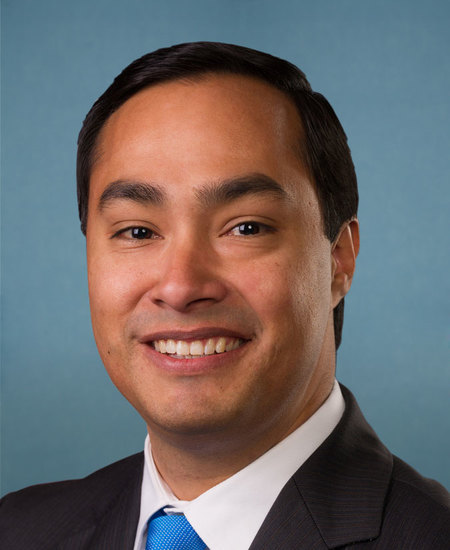
Rep. Joaquin Castro
Sponsored bills
Miracle on Ice Congressional Gold Medal Act This act provides for the award of Congressional Gold Medals to the members of the 1980 U.S. Olympic men's ice hockey team in recognition of the team's achievement at the 1980 Winter Olympic Games.
Maddy summaryThe Keeping All Students Safe Act prohibits the use of unlawful seclusion and restraint in schools receiving federal funding, including physical restraint that restricts breathing or blood flow, chemical restraint not prescribed for medical treatment, and mechanical restraint. The bill requires schools to use less restrictive interventions first, mandates that staff using physical restraint be trained and certified through State-approved programs, and requires immediate parent notification after any restraint incident. States must develop plans to monitor compliance, collect and report data on restraint incidents (disaggregated by race, disability status, and school type), and implement positive behavioral interventions. The bill provides $40 million annually for five years to support states in implementing these requirements and improving school climate through evidence-based approaches.
Maddy summaryHR 6499, the Assessing Safety Tools for Parents and Minors Act, directs the Federal Trade Commission (FTC) to review how technology companies promote online safety for minors under 17. The FTC must examine industry efforts like parental controls, age-appropriate content labels, and privacy settings to assess their effectiveness in reducing online harms, consulting with parents, experts, and industry. Within 6 months of enactment, the FTC must begin this review and submit a report to Congress within 3 years, including recommendations for improving online safety. The bill does not create new regulations but requires the FTC to evaluate existing industry practices and provide findings to lawmakers. This review directly affects the FTC and technology companies by mandating their participation in assessing current safety tools.
Maddy summaryThis bill requires the Federal Trade Commission (FTC) to launch a nationwide online safety education program within 180 days of enactment, targeting minors under 17. It mandates collaboration with schools, parents, online platforms, and nonprofits to promote best practices for safe internet use, including protection from harmful content (like adult material or cybercrimes) and mental health risks. The FTC must submit annual reports to Congress for 10 years detailing these efforts. The law directly affects minors, parents/guardians, schools, and online platforms through these educational initiatives, without restricting content or imposing new regulations.
Maddy summaryThis bill amends reporting requirements for the U.S. Development Finance Corporation (DFC), directly affecting how the agency tracks and shares its work. It requires the DFC to provide annual reports detailing portfolio health (including funds committed, defaults, and investment returns), strategic development impact, private capital mobilization, and country-specific funding breakdowns. The bill also mandates a public, machine-readable database with project-level details like development impact assessments and performance metrics. These changes aim to increase transparency and accountability in DFC's operations without altering its funding or project approval processes.
Maddy summaryHR 6563, the Terrorist Watchlist Modification Review Act, requires the FBI Director to notify Congress within 30 days of any significant changes to policies governing the terrorist watchlist or transnational crime watchlist, including additions or removals of individuals. It also mandates an annual report by January 31st (starting in 2026) detailing the number of U.S. persons on the watchlist, including breakdowns by list type (e.g., no-fly, selectee), suspected terrorist affiliations, and which federal agencies nominated them. The bill directly affects the FBI (as the reporting entity) and Congress (as the recipient of notifications and reports). Key mechanisms include mandatory advance notifications of policy changes and standardized annual data collection on U.S. persons listed. The law focuses on increasing transparency around watchlist management without altering the watchlist itself.
Maddy summaryHR 6565, the Reuniting Families Act, would significantly reform family-based immigration by reclassifying spouses, permanent partners, and minor children of legal permanent residents as "immediate relatives," eliminating current visa backlogs for these family members. The bill creates a new legal definition of "permanent partner" to provide equal treatment for same-sex partners in immigration processes, expanding eligibility for family-based visas. It increases the worldwide level of family-sponsored immigrant visas and adjusts allocation numbers to reduce processing delays, while also providing specific relief for orphans, widows, widowers, and certain Filipino veterans. The bill also expands refugee family reunification provisions and increases diversity visa numbers from 55,000 to 80,000. These changes would directly affect family members seeking to reunite with U.S. citizens or legal permanent residents through family-based immigration pathways.
Maddy summaryHRES 929 is a House resolution condemning the U.S. President's pardon of former Honduran President Juan Orlando Hernández, who was convicted in a U.S. court for leading a decades-long drug trafficking conspiracy. The resolution reaffirms U.S. commitment to partner with Honduras on counter-narcotics efforts and democratic cooperation, regardless of the outcome of Honduras' November 30, 2025, election. It states the pardon undermines U.S. credibility in anti-corruption and counter-narcotics work, emboldens criminal networks, and signals that political influence can override the rule of law. The resolution urges continued U.S. support for security, economic development, and anti-corruption measures in Honduras.
Maddy summaryThe Dignity for Detained Immigrants Act establishes minimum standards for detention facilities operated by the Department of Homeland Security, requiring them to follow the American Bar Association's Civil Immigration Detention Standards. It mandates annual unannounced inspections by the DHS Inspector General, with penalties including fines for noncompliant private facilities and transfers of detainees from noncompliant facilities. The bill requires DHS to publicly report on facility compliance, phase out private detention facilities over three years, and prohibit solitary confinement. It also ensures detainees have access to legal orientation, counsel, and more frequent custody review hearings. The bill directly affects all individuals detained in DHS custody, including immigrants, asylum seekers, and refugees held in facilities operated by or contracted to DHS.