Maddy summaryThis bill requires the U.S. State Department to report to Congress within 90 days on all U.S. funding provided to UNRWA (the UN agency aiding Palestinian refugees) from fiscal years 2020-2024, including monthly breakdowns and how funds were spent. It then prohibits the use of federal funds - directly or indirectly - to support UNRWA starting on the bill’s enactment date. The bill directly affects UNRWA by halting U.S. financial support pending the report, without making any findings about UNRWA’s activities. The key mechanisms are the mandatory funding report and the immediate funding ban.
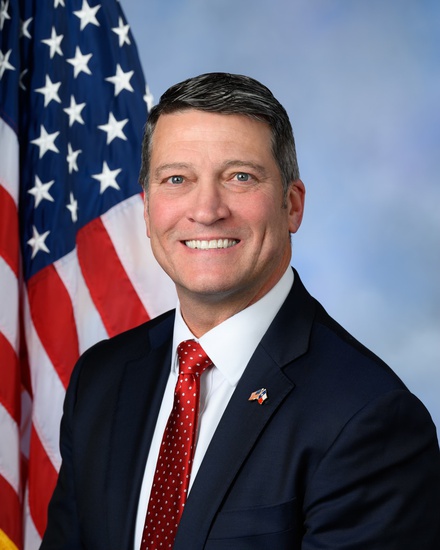
Rep. Ronny Jackson
Sponsored bills
Maddy summaryThis bill prohibits financial institutions and payment processors from using specific merchant category codes that separately identify businesses selling firearms or ammunition. It directly affects banks, credit card networks, and payment processors that handle transactions for firearm retailers. The key provision amends the Truth in Lending Act to require these covered entities to treat firearm merchants the same as other businesses for transaction categorization purposes. The law does not change gun ownership laws or restrict firearm sales, only addressing how financial transactions are classified.
Maddy summaryHR 1195, the Protect Medicaid Act, prohibits federal Medicaid funds from covering administrative costs related to health benefits provided to unauthorized immigrants who lack lawful immigration status and are ineligible for Medicaid. This directly affects states that currently provide such benefits, requiring them to separate these administrative costs from general Medicaid program expenses. The bill adds a new provision to the Social Security Act clarifying that federal funds cannot be used for these specific administrative costs, while allowing funds for systems designed to enforce this rule. It also mandates an Inspector General report detailing how states separate costs, ensure compliance, finance these programs (e.g., through provider taxes), and the impact on drug pricing for this population.
Maddy summaryHR 1207 transfers the administration of the Food for Peace Act's food aid programs from USAID to the Department of Agriculture. This means the Agriculture Secretary, not the USAID Administrator, will now handle all related functions, including managing assets, grants, and rules for distributing U.S. food aid overseas. The bill requires immediate implementation upon enactment, with references in law automatically updating to the Agriculture Secretary, and allows for swift interim rules to maintain program continuity. It also specifies that the Famine Early Warning Systems Network will continue under Agriculture, and the Department must consult with the State Department on certain aspects of the program.
Maddy summaryThis bill designates the Department of Veterans Affairs community-based outpatient clinic in Lubbock, Texas, as the "General Bernie Mittemeyer VA Clinic" upon enactment. It updates all official references in federal laws, documents, and records to reflect this new name. The bill does not alter services, funding, or operations at the clinic - its sole purpose is to honor General Bernie Mittemeyer through a ceremonial naming designation. This change affects only the clinic's official identification within federal systems.
Maddy summaryHR 1169, the Wildfire Victim Tax Relief and Recovery Act, provides tax relief for individuals affected by specific 2024 Texas Panhandle wildfires. It treats compensation received for losses from the Smokehouse Creek, Windy Deuce, Grape Vine Creek, 687 Reamer, and Roughneck fires as tax-free disaster relief payments, covering costs like property damage, closing fees, and inconvenience. The bill also amends tax code provisions to allow wildfire victims to defer capital gains taxes on livestock sold due to fire, similar to existing flood-related rules. These changes apply to payments received on or after February 26, 2024, and tax returns filed for 2024 and later. The law directly benefits Texas residents who suffered wildfire-related losses and received qualifying compensation from government agencies, Xcel Energy, or related entities.
Maddy summaryHR 1137, the "No Kill Switches in Cars Act," repeals Section 24220 of the Infrastructure Investment and Jobs Act (Public Law 117-58), which previously required vehicle manufacturers to implement advanced impaired driving technology. This bill directly affects car manufacturers by removing a mandate to integrate specific safety technology designed to detect driver impairment. The key provision is the repeal itself, eliminating the requirement without creating new obligations or altering existing vehicle safety standards.
Maddy summaryHR 1131 exempts certain family farms and small businesses from being counted as assets when calculating financial need for federal student aid under the Higher Education Act. Specifically, it amends the law to exclude the net value of a family farm where the family resides and small businesses (with ≤100 employees) owned by the family from need analysis calculations. This change directly affects students from qualifying family farm or small business households when applying for federal financial aid. The exemption applies to need analysis conducted for award years beginning after the bill's enactment date. The bill modifies Section 480(f)(2) of the Higher Education Act of 1965 to implement this policy change.
Maddy summaryHR 1081, the Preventing SBA Assistance from Going to China Act, amends the Small Business Act to bar certain businesses from qualifying as small business concerns for SBA programs. It prohibits businesses located or incorporated in China, or those with over 25% voting stock owned by Chinese affiliates, from accessing SBA loans, contracts, or other assistance. This directly affects U.S. businesses with significant Chinese ownership or ties that would otherwise qualify for federal small business support. The key mechanism is a new definition in the law that blocks eligibility based on foreign ownership or location.
Maddy summaryThe AIM HIGH Act establishes an Air Force Technical Training Center of Excellence under the Secretary of the Air Force. It requires the Center to coordinate all Air Force technical training installations, set standards for training excellence, and collaborate with industry and academia to improve curriculum and facilities. The Center will publish best practices for maintainers across the military and serve as a hub for aviation technology advancements. This directly affects Air Force technical training personnel, installations, and maintenance programs by centralizing and elevating their training standards.