Fair Access to Banking Act This bill restricts certain banks, credit unions, and payment card networks from refusing to do business with a person who is in compliance with the law. Restrictions include prohibiting the use of certain lending programs, initiating the process of terminating an institution's depository insurance, and instituting specified civil penalties.
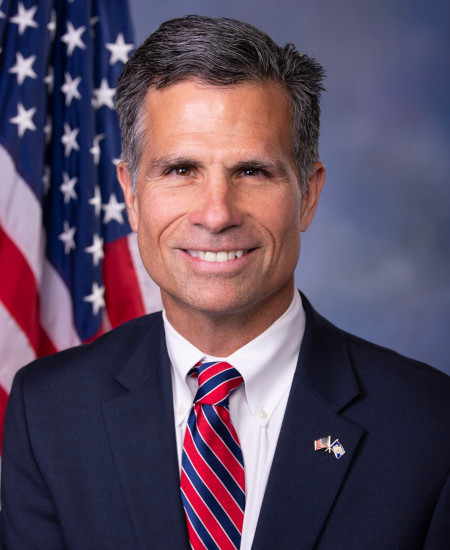
Rep. Daniel Meuser
Sponsored bills
This resolution supports the designation of a National FFA Week. It also (1) recognizes the important role of the National FFA Organization (Future Farmers of America) in developing the next generation of leaders who will change the world, and (2) celebrates 50 years of National FFA alumni and supporters.
This bill requires the Federal Communications Commission (FCC) to analyze and report on the demands associated with edge provider data transmitted over rural broadband networks during a specified six-year period. An edge provider is an entity that provides content, applications, or services over the internet (e.g., search engine providers, streaming video or music services, social media platforms, and retailers). Some edge providers generate revenue by selling products or subscriptions to their content, while others offer their content for free and generate revenue by selling advertising to users based on user-provided information. In its analysis, the FCC must retrospectively and prospectively estimate the quantity of edge provider data transmitted over rural broadband networks. It must also calculate costs to rural broadband providers that are not otherwise recovered for transmitting such data. These costs include (1) initial deployment of rural broadband networks, (2) operation and maintenance of those networks, and (3) the delivery of services to users over those networks.
Treatment and Relief through Emerging and Accessible Therapy for PTSD Act or the TREAT PTSD Act This bill requires the Department of Veterans Affairs (VA) and the Department of Defense (DOD) to furnish stellate ganglion block to certain veterans or members of the Armed Forces (including reserve components) diagnosed with post-traumatic stress disorder (PTSD). Blocking the stellate ganglion (a group of nerves at the base of the neck) by injecting a local anesthetic is a treatment that may alleviate PTSD symptoms. The bill authorizes this treatment for any veteran or member of the Armed Forces who (1) is enrolled in the VA health care system or TRICARE program, (2) has been diagnosed with PTSD, and (3) has elected to receive stellate ganglion block after being informed by a physician of the risks and benefits. Such treatment may be furnished at a VA medical center, DOD medical facility, or through health care provider under the Veterans Community Care Program or TRICARE health insurance program. The bill also requires the VA and DOD to update the VA/DOD Clinical Practice Guideline (CPG) for the Management of PTSD to ensure that information about stellate ganglion block is included.
Girls' Leadership, Engagement, Agency, and Development Act of 2021 or the Girls LEAD Act This bill directs the Department of State and the U.S. Agency for International Development (USAID) to jointly report to Congress a strategy to strengthen the participation of adolescents, particularly girls, in democracy, human rights, and governance. The State Department and the USAID shall (1) implement activities to achieve this goal, including activities to increase adolescent girls' civic and political knowledge and skills and address barriers to political participation; and (2) prioritize foreign assistance funding for democracy, human rights, and governance programs toward achieving the goals in this bill.
This joint resolution proposes a constitutional amendment limiting Representatives to three terms and Senators to two terms. Terms beginning before the ratification of this amendment do not count towards these term limits.
This joint resolution proposes an amendment to the Constitution to require that the Supreme Court consist of nine Justices.
Protecting the Right to Keep and Bear Arms Act of 2021 This bill prohibits (1) the President or the Department of Health and Human Services from declaring emergencies or disasters for the purpose of imposing gun control; and (2) a federal officer or employee, or person operating under color of federal law, from banning the manufacture, sale, or transfer of firearms or ammunition while acting in support of relief from a major disaster or emergency.
Qualified Immunity Act of 2021 This bill codifies the defense of qualified immunity for law enforcement officers in any case under provisions regarding civil actions for deprivation of rights under color of law. Specifically, a law enforcement officer subject to such an action in his or her individual capacity shall not be found liable if the officer establishes that the right, privilege, or immunity secured by the Constitution or federal law was not clearly established at the time of the deprivation, or that at this time, the state of the law was not sufficiently clear that every reasonable law enforcement officer would have understood that the conduct alleged constituted a violation of the Constitution or federal law; or a court of competent jurisdiction had issued a final decision on the merits holding, without reversal, vacatur, or preemption, that the specific conduct alleged to be unlawful was consistent with the Constitution and federal laws. A law enforcement agency or unit of local government that employed a law enforcement officer subject to such an action shall not be liable if the officer is found not liable and to have been acting within the scope of his or her employment.
COVID Economic Injury Disaster Loan Relief Act This bill extends the deferment of a borrower's payments on an economic injury disaster loan taken in response to COVID-19 (i.e., coronavirus disease 2019) from one year to two years from the date on which the loan is made.