Emergency Community Care Notification Time Adjustment Act of 2022 This bill modifies the Veterans Community Care Program by requiring the Department of Veterans Affairs (VA) to deem as authorized emergency care or services provided by a non-VA provider to a covered veteran if the veteran (or an individual acting on the veteran's behalf) submits an application for such authorization by a deadline determined appropriate by the VA, which may not be earlier than 72 hours following the veteran's discharge from the facility. Covered veterans are those who are enrolled in the VA health care system or those who are not enrolled but are eligible for care due to a service-connected disability.
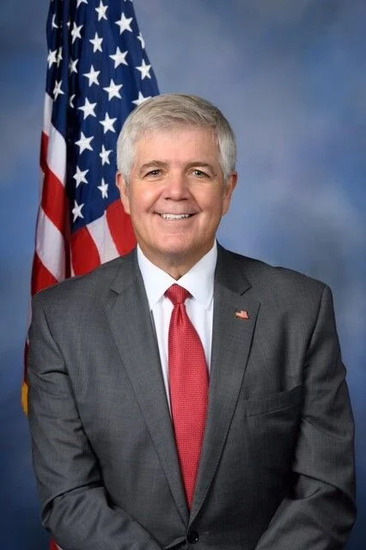
Rep. Cliff Bentz
Sponsored bills
This joint resolution nullifies the rule issued by the Department of Health and Human Services on October 7, 2021, that reverts requirements for federally funded providers of family planning services to those in effect before May 3, 2019, and makes other changes to family planning programs. Specific changes in the rule include (1) removing restrictions on pregnancy options counseling and referrals for abortion services, (2) eliminating requirements for physical and financial separation between abortion-related activities and specified family planning activities, and (3) providing a particular focus on health equity.
No OSHA Authority to Mandate Vaccines Act This bill specifies that the Department of Labor may not, under its authority to regulate workplace safety and health, require the administration of any drug, vaccine, or other biological product to an employee.
Landowner Easement Rights Act This bill prohibits the Department of the Interior from entering into a conservation easement with a term of more than 50 years. The bill sets forth requirements for the renegotiation of a conservation easement at the request of an owner of land that is subject to a conservation easement that (1) has been in effect for longer than 50 years, or (2) was put into effect before 1977 without the creation of an official corresponding map. Interior shall notify such an owner of the owner's right to submit a request.
American Energy Security and Transparency Act This bill requires the Department of the Interior to immediately resume sales of oil and gas leases in accordance with applicable onshore mineral leasing laws. The bill further specifies that Interior must conduct a minimum number of sales and offer all parcels eligible for oil and gas development in each state where there is land available for oil and gas leasing. Additionally, Interior must report to Congress, and publish certain information on its website, concerning sales of oil and gas leases and related drilling permits.
This resolution condemns the terrorist attack on Congregation Beth Israel in Colleyville, Texas, on January 15, 2022. It also expresses support for the affected community, commends the actions of law enforcement and emergency responders, and reaffirms a commitment to combat hate, bigotry, anti-Semitism, and violence against Jewish Americans.
American Energy Independence from Russia Act This bill addresses U.S. energy security, the production of oil and gas, and the importation and exportation of oil and gas. Specifically, the President must submit an energy security plan that (1) evaluates U.S. crude oil, petroleum products, and natural gas imports and exports; (2) assesses the energy security risks of such imports; and (3) includes strategies to encourage increased domestic production of crude oil, petroleum products, and natural gas to offset Russian imports. The bill also approves the TransCanada Keystone Pipeline in Phillips County, Montana for the import of oil from Canada to the United States. In addition, the bill grants the Federal Energy Regulatory Commission the authority to approve or deny applications for facilities to export natural gas from the United States to foreign countries or import natural gas from foreign countries. The President and federal agencies must obtain congressional approval before (1) prohibiting or substantially delaying certain new energy mineral leases or permits on federal lands, or (2) withdrawing certain federal lands from mineral and geothermal leasing activities. The Department of the Interior must resume issuing oil and gas leases on federal lands and offshore submerged lands in the Outer Continental Shelf as specified under the bill. Finally, the bill limits the drawdown of petroleum in the Strategic Petroleum Reserve until the Department of Energy develops a plan to increase the percentage of federal lands leased for oil and gas production.
This joint resolution nullifies the rule titled Medicare and Medicaid Programs; Omnibus COVID-19 Health Care Staff Vaccination , which was issued by the Centers for Medicare & Medicaid Services on November 5, 2021. The rule requires health care providers, as a condition of Medicare and Medicaid participation, to ensure that staff are fully vaccinated against COVID-19.
This resolution supports the designation of a National FFA Week. It also (1) recognizes the important role of the National FFA Organization (Future Farmers of America) in developing the next generation of leaders who will change the world, and (2) celebrates 70 years of the National FFA Organization's membership magazine.
Health Care for Burn Pit Veterans Act This bill updates policies and procedures related to Department of Veterans Affairs (VA) health care and benefits for veterans who have been exposed to toxic substances. Specifically, the bill extends the eligibility period for VA hospital care, medical services, and nursing home care for combat veterans who served after September 11, 2001, and were exposed to toxic substances, radiation, or other conditions, including those who did not enroll to receive VA care during the eligibility period. The VA must incorporate into its existing health care screening a screening to help determine potential exposures to toxic substances during military service. Among other requirements, the VA must also provide annual training to health care and benefits personnel with respect to veterans who were exposed to toxic substances; analyze total and respiratory disease mortality in veterans who served in specified locations on specified dates; conduct an epidemiological study on the health trends of veterans who served in the Armed Forces after September 11, 2001; conduct a study to determine trends in the rates of the incidence of cancer in veterans; publish a list of VA resources for veterans who were exposed to toxic substances, families and caregivers of such veterans, and survivors of such veterans who are receiving death benefits; and report on the data quality of the Individual Longitudinal Exposure Record and its usefulness in supporting veterans in receiving VA health care and benefits.