Maddy summaryHR 589, the FACE Act Repeal Act of 2025, would repeal a federal law (Section 248 of Title 18, U.S. Code) that prohibited obstructing access to reproductive health care facilities through physical means, intimidation, or violence. This repeal would eliminate the federal criminal penalty for such conduct, meaning federal prosecutors could no longer charge individuals under this specific law. The bill applies to all pending or future federal prosecutions related to these actions. It does not affect state laws that may still regulate access to reproductive health care facilities.
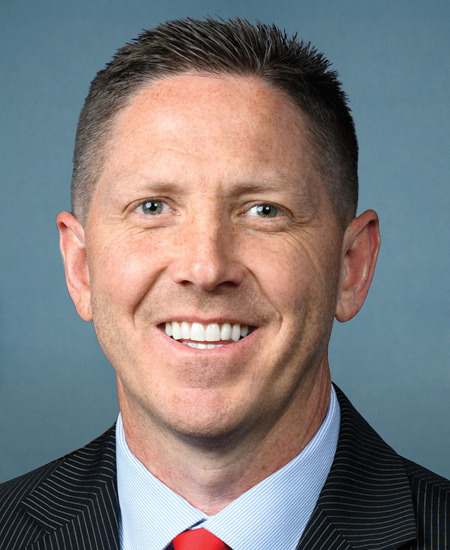
Rep. Josh Brecheen
Sponsored bills
Maddy summaryThis bill amends the Regulatory Flexibility Act to strengthen protections for small businesses affected by federal regulations. It requires agencies to conduct more detailed analyses of how proposed rules impact small entities, including assessing both direct and indirect economic effects like compliance costs and revenue impacts. The bill expands the definition of "small entity" to include more nonprofits and tribal organizations, and mandates agencies to consider alternatives that minimize negative impacts or maximize benefits for these businesses. It also enhances the role of the Small Business Administration's Chief Counsel for Advocacy, granting them greater authority to review regulations and represent small business interests during rulemaking.
Maddy summaryThis bill adds a death penalty option for individuals convicted of distributing, manufacturing, or possessing fentanyl with intent to distribute when their actions cause a death. It directly affects fentanyl traffickers and dealers found guilty under specific drug trafficking laws (sections 401(a)(1) or 416 of the Controlled Substances Act) if their distribution results in a fatality. The key provision allows courts to impose the death penalty, life imprisonment, or any term of years, along with fines under federal law. This policy change specifically targets fentanyl-related offenses causing death, not other drugs or non-fatal cases.
Maddy summaryThis bill increases penalties for nonimmigrant visa overstays under U.S. immigration law. It directly affects individuals admitted on temporary visas (like students or workers) who remain in the U.S. past their authorized stay, defining a violation as failing to maintain status for 10 cumulative days. Key provisions raise civil fines from $50-$250 to $500-$1,000 per violation, with doubled penalties for repeat offenses, and add criminal penalties of up to 6 months (first violation) or 2 years (repeat offenses). The law also clarifies that these penalties apply in addition to existing civil or criminal penalties.
Maddy summaryHRES 475 (June 4, 2025) is a non-binding resolution that formally recognizes "Family Month" and ends the House of Representatives' recognition of Pride Month. It directs the House to "recognize the benefit of marriage and family" while stating it "no longer recognizes Pride Month," citing the resolution's view that traditional nuclear families are essential to society. The resolution does not create new laws or policies but changes the House's official acknowledgment of months. It specifically targets the House's ceremonial recognition, not federal law or programs affecting citizens. This is a symbolic procedural action with no direct impact on legislation or constituents.
Maddy summaryThis bill, titled "Make DOGE Permanent Act," amends the Federal Funding Accountability and Transparency Act of 2006 to provide Members of Congress (Senators and Representatives) with real-time access to federal award data. It requires the Office of Management and Budget to create a secure, separate online link for Congress to view updated information on federal spending, including payments to individual recipients and federal employees. The website must update in real time for this access, and the link must be established within six months of enactment. The bill directly affects congressional oversight capabilities but does not change public access to the same data.
Maddy summaryThis bill would reform immigration parole by requiring the Secretary of Homeland Security to grant temporary entry only on a case-by-case basis for urgent humanitarian needs or significant public benefit, reversing what the bill describes as systemic overuse. It imposes a strict annual cap of 3,000 paroles starting in fiscal year 2029, restricts parole for nationals of designated "countries of concern" without a State Department waiver, and allows states to sue if they claim financial harm exceeding $100 from parole decisions. The bill directly affects immigrants seeking temporary entry and DHS officials administering the program. Key mechanisms include the new cap, country restrictions, and state lawsuit provisions to enforce compliance.
Maddy summaryHJRES 98 is a non-binding joint resolution designating June as "Life Month" to promote awareness of the value of human life. It expresses support for protecting unborn life, references the Dobbs v. Jackson decision, and urges policymakers to defend "the sanctity of human life" through legislation. The resolution does not create new laws, alter funding, or impose requirements - its purpose is solely symbolic recognition. It was introduced by multiple representatives and referred to relevant committees for consideration.
Maddy summaryHR 513, the Offshore Lands Authorities Act of 2025, reverses multiple existing presidential protections that blocked oil and gas leasing on offshore federal lands. It nullifies 8 specific presidential withdrawals (including areas in the Arctic, Atlantic, Gulf of Mexico, and Pacific) and restricts future presidential actions by limiting withdrawals to 150,000 acres per action, capping them at 20 years, and requiring Congressional approval for cumulative withdrawals exceeding 500,000 acres. The bill mandates that before any withdrawal, the Secretary must complete four assessments covering mineral resources, economic/energy value, revenue impacts, and national security. It also establishes a fast-track process for Congress to disapprove withdrawals within 20 days, with limited debate (10 hours) on the resolution.
Maddy summaryHR 3330, the Energy Freedom Act, repeals numerous tax credits and incentives related to clean energy and energy efficiency. The bill specifically targets credits for residential energy improvements, clean vehicles, renewable energy production, biofuels, and energy-efficient buildings. These repeals would eliminate tax benefits for individuals and businesses that previously claimed these credits. The changes would take effect for property placed in service, vehicles acquired, or credits claimed after December 31, 2025, depending on the specific provision. The bill does not repeal all energy-related tax provisions, as section 7 modifies the Second Generation Biofuel Producer Credit rather than repealing it.