Maddy summaryThe NEPTUNE Act allows the U.S. Navy to contract for up to two new submarine cable laying and repair ships to maintain undersea telecommunications infrastructure. It requires the Navy to keep the existing USNS Zeus operational until a replacement ship with equal or better capabilities achieves full operational status. The bill limits the Navy’s financial liability for contract termination and ties payments to available funding. This directly affects Navy procurement and operations related to protecting critical undersea internet and communication cables. The legislation focuses on maintaining continuity of these essential infrastructure assets.
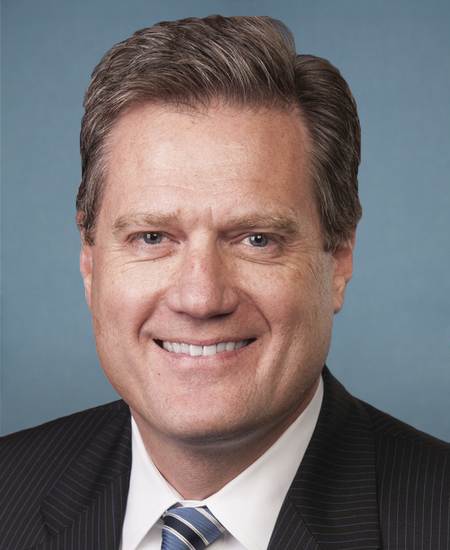
Rep. Michael R. Turner
Sponsored bills
Maddy summaryHR 4747 amends the Dayton Aviation Heritage Preservation Act of 1992 to expand the boundary of the Dayton Aviation Heritage National Historical Park by adding approximately 1 acre of land in Dayton, Ohio. The bill specifies this adjustment using a map dated February 2023, which details the exact parcel to be included. This change directly affects the park's physical boundaries but does not alter the park's management, purpose, or existing protections. The amendment is procedural, focusing solely on updating the park's geographic scope.
Maddy summaryThis bill establishes two grant programs to support construction and manufacturing apprenticeship colleges. It provides up to $500,000 per college for community outreach (e.g., connecting with high schools, rural businesses, and workforce boards) and student support services (e.g., academic advising, mental health resources, childcare). The grants target increasing enrollment and completion rates for underrepresented groups, including rural students, first-generation college students, and minorities. Funding of $5 million annually (2026-2030) requires colleges to report on program outcomes like retention rates and diversity metrics. The law directly affects apprenticeship colleges offering work-based training in construction and manufacturing fields.
Maddy summaryHR 1522, the Federal Retirement Fairness Act, changes federal retirement rules to include temporary employees' service after January 1, 1988, in retirement benefit calculations. It directly affects temporary federal employees (including U.S. Postal Service workers) and Members of Congress who served after that date. The bill removes a previous cutoff date in retirement law, allowing their temporary service to count toward retirement eligibility. This means eligible temporary workers can now have their full service period considered when calculating retirement benefits.
Maddy summaryThe PAPER Act requires banks and credit unions (covered entities) to give customers the option to receive paper copies of their monthly statements, rather than forcing them to use digital versions only. It prohibits these financial institutions from making digital statements a condition for accessing their services. The law applies specifically to depository institutions and credit unions as defined in federal banking laws, ensuring consumers can choose their preferred statement format without penalty.
Maddy summaryThis bill requires a nonpartisan review of rising costs for transit buses in the U.S. The Comptroller General will analyze factors driving high manufacturing and procurement costs, compare U.S. prices to other countries, and examine how supplier challenges affect federal transit programs like the Low/No Emission Grant Program. The review will assess strategies such as joint state procurement that might reduce costs and speed up delivery. The findings will be reported to Congress within 18 months, but the bill itself does not change funding or directly alter bus procurement processes.
Maddy summaryHRES 584 is a symbolic resolution affirming U.S. support for Montenegro's EU accession process. It recognizes Montenegro's progress in meeting EU standards, its NATO membership since 2017, and its cooperation with the U.S. (including Maine's National Guard partnership). The resolution urges the U.S. President and Secretary of State to advocate for Montenegro's EU membership without additional conditions and support broader Western Balkans integration. It does not create new laws or alter U.S. policy but formally endorses Montenegro's path toward EU membership as a strategic partner.
Maddy summaryHR 4382 authorizes the U.S. Mint to produce commemorative coins for the 2028 Los Angeles Olympics/Paralympics and 2034 Salt Lake City Winter Olympics/Paralympics. It specifies gold, silver, and half-dollar coin designs with defined mintage limits (e.g., up to 100,000 $5 gold coins for each event), all bearing inscriptions like "2028" or "2034" and standard coin features. A surcharge ($5-$50 per coin) is added to sales, with all funds directed to the respective Olympic committees to support event hosting and legacy programs like youth sports. The bill ensures no net cost to the government by requiring surcharge revenues to cover all design, production, and marketing expenses before funds are disbursed.
Treat and Reduce Obesity Act of 2025 This bill expands Medicare coverage of intensive behavioral therapy for obesity. Specifically, the bill allows coverage for therapy that is provided by (1) a physician who is not a primary care physician; or (2) other health care providers (e.g., physician assistants and nurse practitioners) and approved counseling programs, if provided upon a referral from, and in coordination with, a physician or primary care practitioner. Currently, such therapy is covered only if provided by a primary care practitioner. The bill also allows coverage under Medicare's prescription drug benefit of drugs used for the treatment of obesity or for weight loss management for individuals who are overweight.
Maddy summaryThe CONNECT for Health Act of 2025 expands Medicare telehealth coverage by removing geographic restrictions that limited where patients could receive care, expanding the types of health care providers who can offer telehealth services, and eliminating the requirement for an in-person visit before receiving telemental health services. The bill includes specific provisions to support telehealth use for Native American health facilities, rural health clinics, and Federally Qualified Health Centers. It requires the Centers for Medicare & Medicaid Services to collect and publish data on telehealth usage and impacts, and to develop resources to improve accessibility for people with disabilities and limited English proficiency. Program integrity measures are added to monitor telehealth billing practices and prevent fraud while maintaining coverage for telehealth services during public health emergencies.