This resolution expresses the sense of the House of Representatives that the Food and Drug Administration (FDA) has the authority to review and approve drugs pursuant to its own expertise, and that recent court decisions blocking the FDA's approval of mifepristone (which is used in medication abortion) violate congressional intent with respect to the FDA's authority.
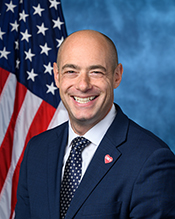
Rep. Greg Landsman
Sponsored bills
Maddy summaryHR 2715, the Keep Our PACT Act, mandates increased federal funding for two key education programs. It requires specific annual funding levels for Title I of the Elementary and Secondary Education Act (which supports high-poverty schools) and the Individuals with Disabilities Education Act (IDEA), guaranteeing students with disabilities access to a high-quality education. The bill sets mandatory funding amounts that rise each year, with IDEA funding gradually increasing to reach 40% of the national average per-pupil expenditure for students with disabilities by fiscal year 2033. This directly affects school districts receiving Title I funds and states administering IDEA services for students with disabilities. The bill fulfills a prior commitment made under the Individuals with Disabilities Education Improvement Act of 2004.
Maddy summaryHR 2725, the "Do No Harm Act," amends the Religious Freedom Restoration Act (RFRA) to clarify that RFRA does not apply when federal laws protect against discrimination or promote equal opportunity. It specifically exempts protections under the Civil Rights Act, Americans with Disabilities Act, workplace benefits like leave, child labor safeguards, and healthcare access from RFRA challenges. The bill also clarifies that RFRA does not block private lawsuits between individuals, applying only to cases involving government entities. This amendment ensures that existing federal civil rights and workplace protections remain enforceable under RFRA.
Maddy summaryThe Latonya Reeves Freedom Act of 2023 strengthens the Americans with Disabilities Act's requirement that individuals with disabilities receive long-term services and supports in community settings rather than institutions. It defines "community-based" services to include specific housing options where individuals with disabilities can live independently with maximum control over their lives, including access to integrated housing, employment, and community participation. The bill requires states to develop transition plans to move people from institutional settings to community-based services within 12 years, with measurable annual targets for reducing institutionalization. It establishes enforcement mechanisms through the Department of Justice and Department of Health and Human Services to ensure compliance with these requirements.
Maddy summaryThe Puppy Protection Act of 2023 sets new standards for businesses that sell dogs (dealers), directly affecting pet stores and breeders operating under the Animal Welfare Act. It requires specific housing with space allowances based on dog size (e.g., 12-30 square feet per dog), temperature control (45-85°F), clean food twice daily, and daily exercise or socialization with humans/dogs for at least 30 minutes. The bill also mandates annual veterinary exams including dental care, strict breeding limits (e.g., age restrictions, maximum 2 litters in 18 months), and efforts to place retired breeding dogs in homes instead of selling them to other breeders. Regulations must be finalized within 18 months of enactment.
Maddy summaryHR 1378, the Veterans’ Appeals Backlog Improvement Act, establishes two new programs to improve staffing at the Department of Veterans Affairs (VA) for processing veterans' appeals. It creates a competitive internship program for ABA-accredited law students to gain experience with the Board of Veterans' Appeals, and a nine-year pilot program to recruit and retain entry-level attorneys through student loan repayment benefits and structured professional development, including mentorship and rotational assignments. The bill requires the VA to report on improving telehearings access within 180 days, including recommendations for reimbursing travel costs and testing new methods for remote hearings. These provisions aim to reduce the appeals backlog by strengthening the VA’s legal workforce, directly affecting VA recruitment and retention of legal professionals.
Maddy summaryThis bill allows the Department of Veterans Affairs (VA) to use existing funds more flexibly to assist homeless veterans and veterans in HUD housing programs. It authorizes the VA to provide immediate needs like food, shelter, transportation for appointments, and communication devices (e.g., phones, tablets) to support veterans' stability and health. The law expands how VA funds can be applied beyond traditional housing assistance, focusing on urgent, practical support. It directly affects homeless veterans and those in HUD's housing assistance program by enabling faster, more adaptable aid. The bill amends existing VA law to improve responsiveness to veterans' immediate survival and health needs.
Maddy summaryThis bill amends tax law to allow charitable organizations to fund collegiate housing projects without losing their tax-exempt status. Specifically, it permits 501(c)(3) charities to make grants for building, improving, or maintaining housing properties where full-time students live, as long as the housing is connected to a college or university. Grants cannot fund fitness facilities, and the bill clarifies that housing must primarily serve students (not incidental social activities). It directly affects charitable organizations and universities seeking tax-qualified funding for student housing infrastructure.
Maddy summaryThe Junk Fee Prevention Act requires businesses to clearly display total prices including all mandatory fees at the point of sale, preventing hidden or excessive charges. It applies to ticketing services (for events like sports and theater), short-term lodging providers, and communications services (internet, mobile), prohibiting deceptive fees and requiring full refunds if tickets can't be delivered. The bill also mandates that airlines seat young children (13 or younger) adjacent to an accompanying adult without additional cost, with specific options for refunds or rebooking if this isn't possible. The Federal Trade Commission and Federal Communications Commission will enforce these provisions with penalties for violations. The bill aims to increase price transparency and protect consumers from unexpected fees across multiple industries.
Maddy summaryHR 2414 extends CHAMPVA health coverage for children of veterans from age 21 to 26, regardless of marital status. This change directly affects children of veterans enrolled in the CHAMPVA program who would otherwise lose coverage upon turning 21. The bill amends Section 1781(c) of Title 38, U.S. Code, to update eligibility rules for medical care provided after the law's enactment. It does not impact existing coverage for children under a specific subsection (section 101(4)(A)(ii)).