

Maddy summaryThis bill, titled the Congressional Oversight and Agency Access Act, grants Members of Congress and their full-time staff guaranteed entry to all federal public buildings during regular business hours. It requires these individuals to present official congressional identification and mandates that staff members be accompanied by their employing Member of Congress. The legislation also ensures access outside of normal hours within 24 hours of a request, allows immediate entry during public meetings, and permits access to secure areas if the Member belongs to a relevant committee or obtains consent from the committee's leadership. Additionally, the bill prohibits temporary modifications to buildings that would obstruct a Member's ability to observe the facility.
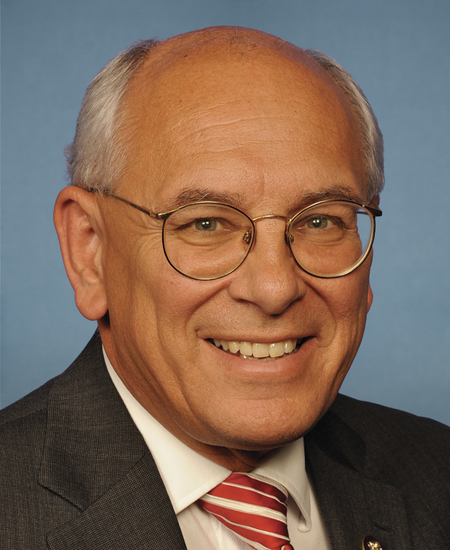
Rep. Paul Tonko
Sponsored bills
This bill designates the facility of the United States Postal Service located at 80 Atlantic Avenue in Oceanside, New York, as the "Detective Luis G. Alvarez Post Office".
Maddy summaryThe Protecting Immigrants From Legal Exploitation Act of 2026 aims to combat fraud by increasing criminal penalties for individuals who falsely represent themselves as immigration lawyers or provide fraudulent services. It requires non-lawyer immigration service providers to identify themselves on applications and allows victims of unauthorized practice of law to withdraw and resubmit their immigration forms without penalty. The bill also empowers the Attorney General to issue civil injunctions against fraudulent providers and mandates that convicted fraudsters reimburse their clients for services rendered. To support legitimate legal aid, the legislation authorizes funding for outreach programs and grants to nonprofit organizations that provide direct legal assistance to immigrants.
Maddy summaryHR 6529, the Protecting Families from AI Data Center Energy Costs Act, mandates the Federal Energy Regulatory Commission (FERC) to hold a technical conference within 90 days of enactment. The conference will include AI data centers, utilities, and ratepayer advocates to develop strategies protecting residential and small commercial customers from rising energy costs caused by large energy users. FERC must then submit a report with recommendations to Congress within 180 days. This procedural bill directly affects households and small businesses facing potential rate increases due to AI data center energy demands.
Maddy summaryThis bill reauthorizes federal programs focused on preventing and responding to tick-borne diseases through 2026-2030, extending existing efforts beyond their previous expiration. It updates the National Strategy for Vector-Borne Diseases to emphasize identifying, reporting, preventing, and responding to these illnesses. The bill modifies two sections of the Public Health Service Act to continue funding for health departments working on vector-borne disease control. It directly affects public health programs and state/local health departments managing tick-borne disease prevention and response.
Maddy summaryThe AADAPT Act reauthorizes and expands Project ECHO grants to improve Alzheimer’s and dementia care through technology-enabled training. It specifically funds grants for healthcare providers in rural, frontier, or medically underserved areas to enhance early diagnosis, quality care, and provider retention for dementia patients. The bill authorizes $1 million annually (2027-2032) for these dementia-focused training programs, requiring funds to supplement - not replace - existing resources. This directly supports primary care providers licensed to serve underserved communities, using collaborative online learning to address care gaps.
Maddy summaryThis bill establishes the INCLUDE Project at the National Institutes of Health (NIH) to advance research on Down syndrome and related health conditions. It requires NIH to fund high-risk studies on trisomy 21, support inclusive clinical trials for people with Down syndrome across all ages, and investigate co-occurring conditions like Alzheimer’s disease and autoimmunity. The law mandates NIH coordination across its institutes, consultation with patient advocates, and biennial reports to Congress detailing funded research and its real-world applications. The project directly affects individuals with Down syndrome, their families, and medical researchers, aiming to improve diagnosis, treatment, and quality of life through targeted scientific efforts.
Maddy summaryThe Modernizing Opioid Treatment Access Act 2.0 of 2026 allows specific addiction medicine specialists to prescribe methadone for opioid use disorder to be dispensed directly through pharmacies, rather than requiring patients to attend traditional treatment clinics. This change permits these qualified doctors to use telemedicine for patient care and requires that the methadone be in a liquid or dispersible tablet form. While the bill maintains existing clinic-based treatment options, it streamlines access by removing the need for pharmacies to obtain separate registrations to dispense the medication. The law also mandates that patients sign informed consent forms explaining how privacy rules differ between clinic and pharmacy settings, and it requires the Drug Enforcement Administration to report on the program's progress to Congress every year.
Maddy summaryOrlin's Law requires immigration officials to identify detained parents and prioritize family unity by limiting detention when possible. The bill mandates that parents be allowed to make free calls and visits with their children, participate in family court proceedings, and access necessary documents to care for their dependents. It also establishes a new office within U.S. Immigration and Customs Enforcement to coordinate these protections and provides for community-based alternatives to detention. Additionally, the law creates a presumption that parental rights remain intact even if a child is separated from a detained parent and outlines specific steps to facilitate reunification upon removal.
Maddy summaryThe Stop CHEATERS Act directs the Internal Revenue Service to increase its enforcement efforts against high-income individuals and large corporations by allocating billions of dollars in additional funding for tax audits, criminal investigations, and taxpayer services through fiscal year 2031. A significant portion of this funding is designated for modernizing the IRS's technology and business systems to improve its ability to detect fraud and noncompliance. The legislation also requires the IRS Commissioner to submit regular reports to Congress detailing plans to shift auditing resources toward wealthy taxpayers and analyzing how much unpaid tax is owed by different income groups.