

Maddy summaryThis bill amends the Omnibus Crime Control and Safe Streets Act to include Transportation Security Administration (TSA) employees as eligible for public safety officers' death benefits. It specifically covers TSA officers who die while performing duties related to protecting transportation systems, ensuring their families receive financial support similar to other public safety officers. The key change adds a new definition (subparagraph H) to the existing law, expanding eligibility to TSA personnel who are actively safeguarding transportation infrastructure. This directly affects TSA employees and their dependents by granting access to these death benefits for on-duty fatalities. The amendment applies to incidents occurring on or after October 31, 2013.
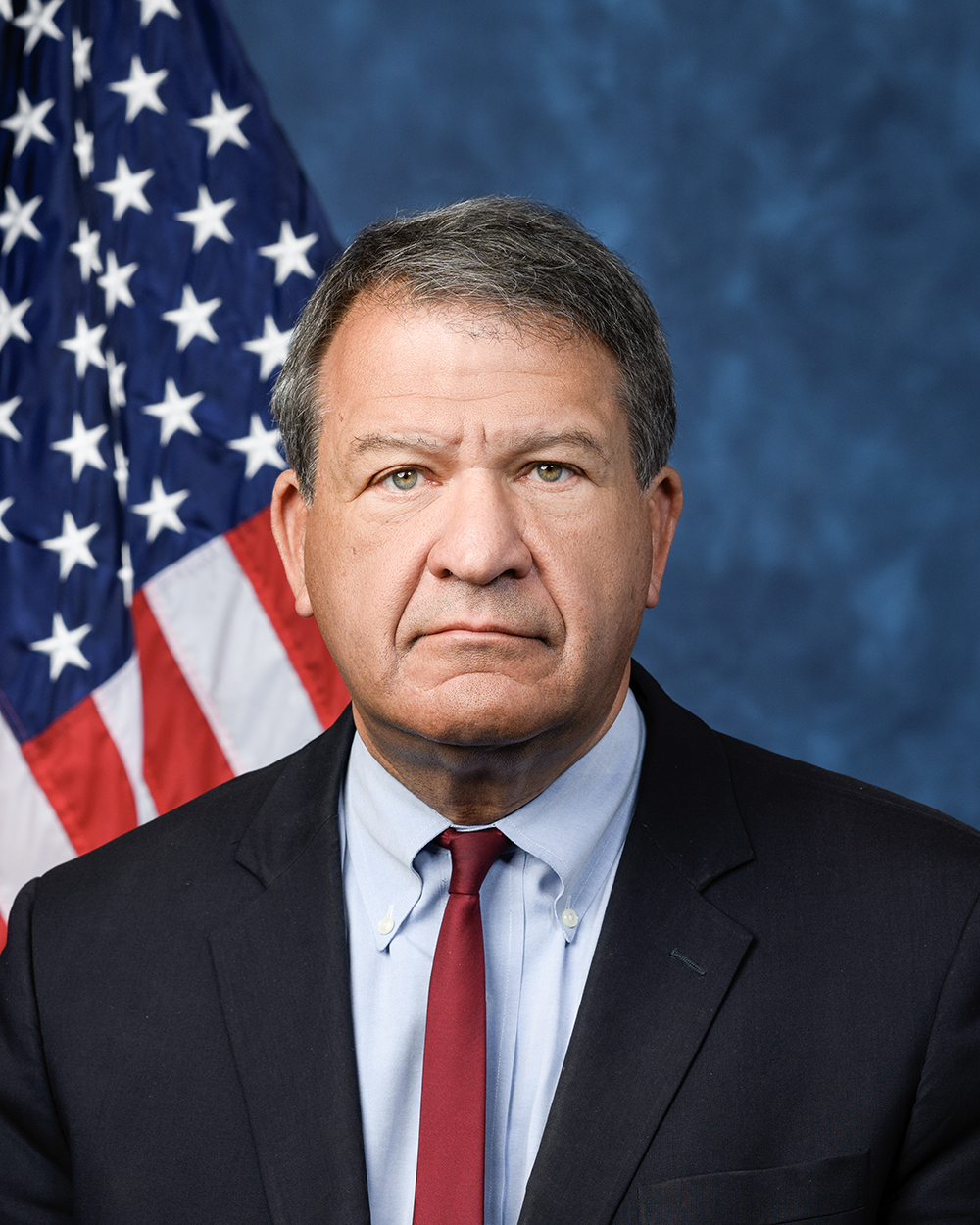
Rep. George Latimer
Sponsored bills
Protecting Sensitive Locations Act This bill prohibits immigration enforcement actions within 1,000 feet of a sensitive location except in exigent circumstances, such as the imminent risk of death, violence, or physical harm to any person. Sensitive locations include health care facilities; schools and school bus stops; places that provide assistance for people such as children, pregnant women, and abuse victims; child care facilities; places that provide disaster or emergency services; places of worship; courthouses and lawyers’ offices; facilities used as polling places; certain labor union facilities; and public assistance offices. The prohibition shall apply to Department of Homeland Security officers and agents, as well as state employees pursuing immigration enforcement actions. If an enforcement action is carried out in violation of this prohibition (1) no information resulting from the action may be entered into the record in a resulting removal proceeding, and (2) the affected individual may move to immediately terminate such a proceeding. U.S. Immigration and Customs Enforcement and U.S. Customs and Border Protection shall annually report to Congress about enforcement actions taken at sensitive locations in the preceding year.
Protect Our Letter Carriers Act of 2025 This bill requires or authorizes certain actions related to the U.S. Postal Service (USPS). The bill requires the Department of Justice to appoint an assistant U.S. attorney in each judicial district to coordinate and supervise the investigation and prosecution of various crimes related to postal services (for example, assault on a postal service employee, breaking into a post office, or obstruction of mails). The bill also requires the U.S. Sentencing Commission to amend sentencing guidelines to provide that the assault or robbery of a postal employee shall be treated the same as the assault of a law enforcement officer. Additionally, the bill authorizes appropriations for the USPS to install high security collection boxes and replace older versions of the universal mailbox key with electronic versions.
Maddy summaryHR 1102 establishes a commission to study the feasibility of creating a National Museum of Italian American History and Culture in Washington, D.C. The commission, composed of 8 members appointed by congressional leaders, will examine factors like location options, costs, fundraising potential, and impacts on existing museums, and must report back within 18 months. It will not create the museum itself but will develop recommendations for Congress on whether to proceed, with all funding coming from private sources - no federal funds may be used for the commission’s work. The bill focuses solely on the study process, not on building or operating the museum.
Maddy summaryThe QUIET Act (HR 1027) requires that robocalls or text messages using artificial intelligence to mimic human communication must disclose at the beginning that AI is being used. It doubles penalties for violations involving AI impersonation intended to defraud, cause harm, or obtain value, applying to automated calls sent to stored numbers or generated randomly. The bill excludes calls requiring substantial human intervention, focusing on transparency and deterrence in AI-driven automated communications.
Maddy summaryHR 211, the Equal Access to Contraception for Veterans Act, eliminates out-of-pocket costs for specific contraceptives for veterans using VA healthcare. It amends Section 1722A of Title 38 to prohibit the VA from charging veterans copayments for contraceptive items that must be covered without cost-sharing under federal law (as required by Section 2713(a)(4) of the Public Health Service Act). This means veterans will not pay any amount for contraceptives covered by the federal mandate, such as birth control pills or IUDs, when obtained through the VA system. The bill directly affects veterans enrolled in VA healthcare seeking contraceptive services, ensuring no additional costs beyond what is already mandated for these items.
Maddy summaryHR 989 would turn Executive Order 11246 into law, requiring federal contractors and subcontractors to follow its equal employment nondiscrimination rules. This bill directly affects businesses working with the U.S. government by making these requirements legally binding. The key provision ensures the existing order has the full force of law, rather than being subject to executive changes.
Maddy summaryHR 1024, the US-Kazakhstan Trade Modernization Act, terminates the application of Title IV of the Trade Act of 1974 to Kazakhstan. This means the U.S. will no longer apply special trade restrictions tied to Kazakhstan's emigration policies, as Kazakhstan has been found compliant since 1997. The bill allows the President to determine that Title IV no longer applies and extend normal trade relations (NTR) treatment to Kazakhstan's products. As a result, Kazakhstan's exports to the U.S. will be subject to standard U.S. trade rules rather than the specific Title IV provisions.
Maddy summaryHR 1007, the Antisemitism Awareness Act of 2025, clarifies how the Department of Education enforces Title VI of the Civil Rights Act of 1964 to address discrimination against Jewish individuals. It requires the Department to consider the International Holocaust Remembrance Alliance (IHRA) definition of antisemitism when investigating complaints involving discrimination based on actual or perceived Jewish ancestry or ethnic characteristics. This affects Jewish students and communities in K-12 schools and colleges receiving federal funding, as it ensures antisemitism is assessed under existing civil rights protections. The bill does not create new laws but specifies that the IHRA definition - already used by the Department since 2018 - must be applied in Title VI enforcement cases.
Maddy summaryThis bill establishes a federal right to access contraception, protecting individuals' ability to obtain contraceptives and health care providers' ability to offer them without government interference. It prohibits states from banning or restricting contraceptive services, products, or information, including laws that force providers to deny care based on personal beliefs or limit access to specific methods. The law immediately overrides conflicting state regulations and ensures that contraception remains available regardless of factors like race, income, disability, or location. It applies to all individuals and providers, building on existing federal protections like the Affordable Care Act's coverage requirements.