

Maddy summaryThis bill would amend federal law to strengthen penalties for organized retail crime by expanding definitions of theft to include digital goods, gift cards, and setting a $5,000 aggregate value threshold for charges over a 12-month period. It would establish a new "Organized Retail and Supply Chain Crime Coordination Center" under Homeland Security to coordinate Federal, State, local, and Tribal law enforcement efforts against cross-jurisdictional theft groups. The Center would share information with retailers, transportation companies, and law enforcement agencies, track crime trends, and produce annual reports on organized retail crime. This legislation directly affects retailers, supply chain businesses, and law enforcement agencies, while targeting organized crime groups responsible for a 93% increase in larceny incidents and rising safety concerns for retail employees. The bill aims to address significant financial losses and supply chain disruptions noted in the National Retail Federation's 2023 data.
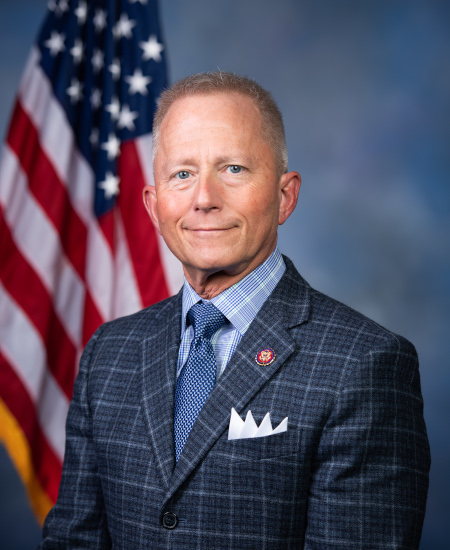
Rep. Jefferson Van Drew
Sponsored bills
Maddy summaryThis concurrent resolution expresses Congress's appreciation for the Federal Protective Service and its law enforcement officers. It formally recognizes the dedication of these officers who protect over 8,500 federal facilities and honors those who have died in the line of duty. The resolution encourages continued collaboration between the service and the communities it serves to strengthen public safety and trust.
Maddy summaryThis bill establishes the Philadelphia Campaign Two Hundred and Fiftieth Commemoration Commission to officially recognize the 250th anniversary of the 1777-1778 military events in the American Revolution. The Commission, composed of 14 voting members appointed by various government officials and historical leaders, will develop a report recommending federal activities such as preserving artifacts, creating digital resources, and hosting educational events. To support these efforts, the legislation authorizes $5 million in funding for the commission to operate in 2027 and 2028 and requires the group to submit interim and final reports to Congress before dissolving.
Maddy summaryThe Connected Vehicle Security Act of 2026 restricts the importation, sale, and manufacture of vehicles and related technology from specific countries, including China, Russia, Iran, and North Korea, to address national security concerns. The law defines prohibited items as connected vehicles, their software, and hardware components and sets different effective dates, with vehicle bans starting in 2027 and hardware restrictions beginning in 2030. A government official can grant exceptions for specific items after reviewing security risks and notifying Congress, while the agency must publish annual reports on enforcement actions and compliance.
Maddy summaryThis bill, titled the Nursing is a Professional Degree Act, updates federal definitions to classify nursing degrees as professional degrees. It directly affects students pursuing nursing education and the federal financial aid programs that support them. The legislation amends the Higher Education Act to explicitly list nursing degrees, such as the Master of Science in Nursing and Doctor of Nursing Practice, alongside other advanced fields like medicine and law. By making this change, the bill ensures that nursing programs are recognized at the same level as other established professional disciplines within the federal student aid system.
Maddy summaryThe Training Rural Law Enforcement Officers Act of 2026 allows nonprofit organizations to receive federal grants to provide free training to small rural police departments and sheriff's offices with fewer than 50 officers. This change aims to help smaller agencies access funding that they often cannot navigate due to complex application processes and reporting requirements. The bill authorizes these grants only if the training aligns with Department of Justice priorities and is delivered at no cost to the recipient agencies. Eligible nonprofits must have recognized expertise in law enforcement training as determined by the Attorney General.
Maddy summaryThis bill is a non-binding resolution that expresses the House of Representatives' sentiment to honor public servants for their dedication to the United States. It specifically acknowledges the work of federal, state, and local government employees, as well as uniformed service members, who deliver essential services and support the economy. The resolution calls on the American public to observe Public Service Recognition Week with ceremonies and activities that recognize these contributions. Because it is a symbolic expression of the House's feelings rather than a law with enforceable rules, it does not create new policies or mandate specific actions.
Maddy summaryThis bill requires federal agencies to analyze indirect economic costs on small businesses when creating new rules, including costs affecting businesses that interact with regulated entities (like suppliers or partners). It creates a new process allowing small businesses to petition the Small Business Administration's Chief Counsel to review agency certifications claiming a rule won't significantly impact them. Agencies must then provide detailed cost analyses, publish guidance online for small business feedback, and face penalties if they fail to cooperate with reviews. The bill does not change existing regulations but adds new review steps for small business input.
Maddy summaryThis resolution expresses the U.S. House of Representatives' disapproval of actions by the United Kingdom government that it claims restrict free speech and expression. The bill directly addresses Prime Minister Keir Starmer and UK officials, citing specific incidents such as arrests for online comments, protests, and silent prayer. It calls on the Trump Administration to consider sanctions, visa revocations, and other measures against UK officials accused of infringing on American constitutional rights. The document also urges the U.S. to refuse recognition of UK laws that the resolution deems to undermine freedom of speech.
Maddy summaryThe Public Safety UAS Readiness Act establishes a grant program to help fire departments, law enforcement agencies, and emergency medical services train their personnel on operating drones for public safety missions. Funded by up to $10 million annually from 2026 to 2029, these grants can be used to develop training curriculums, purchase compliant drones, and cover administrative costs related to the programs. Recipients must submit detailed plans outlining their safety protocols, risk management strategies, and data privacy measures, with a priority given to agencies in high-risk areas or underserved regions that currently lack drone training capacity. To ensure quality, the act requires that training materials be maintained by recognized nonprofit organizations and mandates annual reporting on the number of trained personnel and drone deployments to Congress.