This resolution condemns Iranian state-sponsored terrorist attacks against U.S. citizens and officials and Iranian dissidents and expresses support for the people of Iran who are engaged in legitimate and peaceful protests against the Iranian regime.
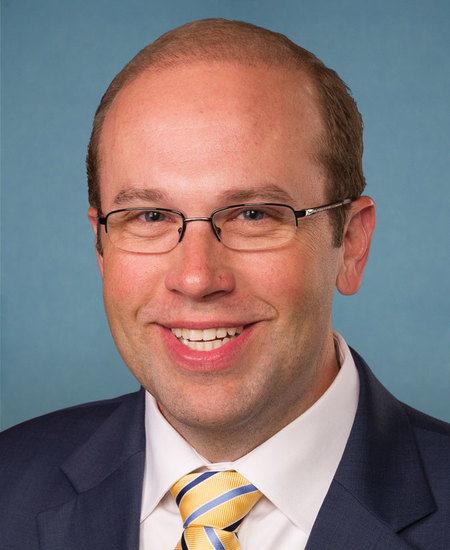
Rep. Jason Smith
Sponsored bills
This resolution urges the Department of State to take action on unpaid Peruvian agrarian reform bonds by encouraging Peru to negotiate in good faith with U.S. bondholders regarding payment of these bonds.
Historic Tax Credit Growth and Opportunity Act of 2021 This bill increases the rehabilitation tax credit and modifies certain requirements for the credit. The bill increases the rate of the credit for qualified rehabilitation expenditures in taxable years beginning after December 31, 2019, and before January 1, 2027, after which the rate reverts to 20%. The bill increases the rate of the credit to 30% for certain small projects whose qualified rehabilitation expenditures do not exceed $2.5 million. The bill also expands the types of buildings eligible for rehabilitation by decreasing the rehabilitation threshold from 100% to 50% of project expenses. It also eliminates the basis adjustment requirement for the credit and modifies rules relating to tax-exempt use property eligible for the credit.
State Tax Freedom Act This bill removes a prohibition on states and territories using COVID-19 relief funding under the American Rescue Plan Act of 2021 to offset a reduction in revenue resulting from a reduction in taxes or a delay in the imposition of a tax or tax increase. Additionally, the bill requires the Department of the Treasury to refund the state, territory, or tribal government any money that was repaid to the federal government since enactment of the American Rescue Plan Act of 2021 due to the state cutting taxes.
Reopening America by Supporting Workers and Businesses Act of 2021 This bill permits states to provide a one-time lump sum payment, through July 1, 2021, to individuals who (1) were eligible for COVID-19 pandemic unemployment compensation during any week after enactment of this bill, and (2) are no longer eligible as a result of becoming thereafter reemployed. Payments of $1,200 shall be paid to individuals who work at least 30 hours and $600 to individuals who work at least 20 hours but less than 30. The payments are available for claimants (1) who are not employed by a government entity, (2) who return to work for at least four consecutive weeks, and (3) whose annual salary does not exceed $75,000. Before receipt of a payment, the individuals' employers must verify their hours and earnings. Additionally, the bill (1) accelerates a scheduled increase in funding for reemployment services and eligibility assessments (RESEA), (2) allows states to use RESEA funds to serve all workers receiving unemployment benefits, and not just those most likely to exhaust their benefits; and (3) allows states to provide reemployment services to individuals receiving pandemic unemployment assistance and pandemic emergency unemployment compensation. Finally, the bill reinstates the requirement that unemployment claimants certify they are able, available, and actively seeking work.
Ensuring Parity in MA and PACE for Audio-Only Telehealth Act of 2021 This bill allows audio-only diagnoses that are made via telehealth to be used for purposes of determining risk adjustments to payments under Medicare Advantage. Additionally, the bill requires payments for Medicare telehealth services that are furnished during the public health emergency relating to COVID-19 (i.e., coronavirus disease 2019) to be made in the same amounts as those for in-person services.
Preventing SBA Assistance from Going to China Act This bill prohibits the Small Business Administration from providing aid, counsel, or assistance to a small business concern that (1) is headquartered in China, or (2) has more than 25% of voting stock owned by citizens of China.
Heartbeat Protection Act of 2021 This bill makes it a crime for a physician to knowingly perform an abortion (1) without determining whether the fetus has a detectable heartbeat, (2) without informing the mother of the results, or (3) after determining that a fetus has a detectable heartbeat. It provides an exception for an abortion that is necessary to save the life of a mother whose life is endangered by a physical (but not psychological or emotional) disorder, illness, or condition. A physician who performs a prohibited abortion is subject to criminal penalties—a fine, up to five years in prison, or both. A woman who undergoes a prohibited abortion may not be prosecuted for violating or conspiring to violate the provisions of this bill.
Stop Greenlighting Driver Licenses for Illegal Immigrants Act This bill prohibits a state from receiving certain federal law enforcement grants if it takes certain immigration-related actions. Specifically, a state may not receive such grants if it (1) issues a driver license to an individual who does not have proof of U.S. citizenship or lawful presence in the United States, or (2) prohibits a local or state government entity or official from sharing immigration enforcement information with the Department of Homeland Security.
Teleabortion Prevention Act of 2021 This bill restricts the use of telehealth for chemical abortions (also known as medication abortions). Specifically, it requires a provider who dispenses or prescribes medication for a chemical abortion to physically examine the patient, be physically present at the location of the chemical abortion, and schedule a follow-up visit. The bill provides an exception for a chemical abortion that is necessary to save the life of a mother whose life is endangered by a physical disorder, illness, injury, or condition. The bill establishes criminal penalties—a fine, a prison term of up to two years, or both—for a provider who does not comply with the requirements. A patient who undergoes a chemical abortion may not be prosecuted.