Maddy summaryThis bill increases criminal penalties for individuals who re-enter the U.S. after being deported, removed, or excluded. It sets a maximum 5-year prison sentence for most cases, but adds up to 10 years for those with prior drug/crime convictions or multiple prior removals. For serious cases - such as aggravated felonies or two prior reentry convictions - it mandates a 5-20 year prison term. The law directly affects people who return without authorization after formal immigration removal proceedings.
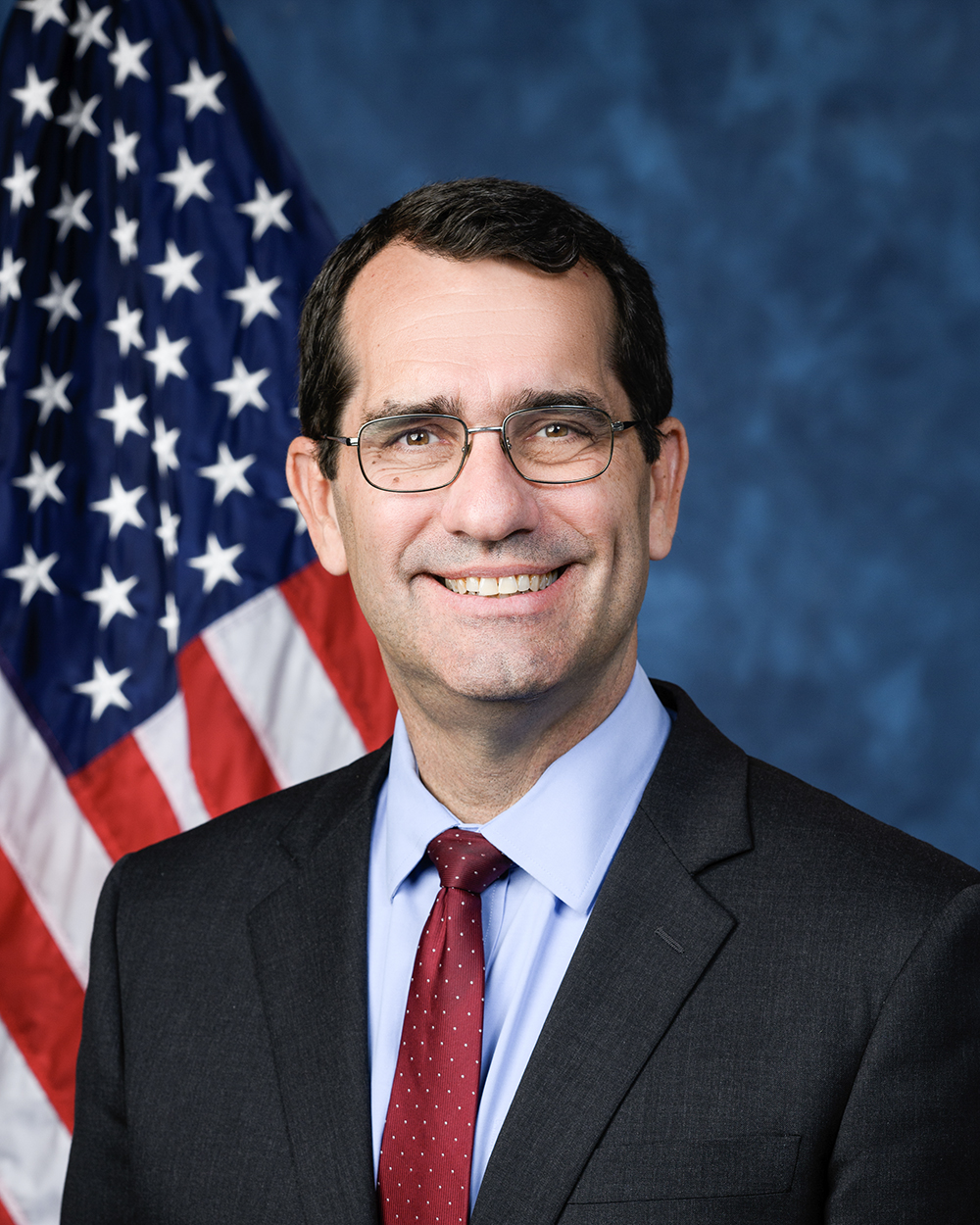
Rep. Derek Schmidt
Sponsored bills
Maddy summaryHR 756, the 287(g) Program Protection Act, makes it easier for state and local law enforcement agencies to partner with federal immigration authorities under the 287(g) program. It requires the Secretary of Homeland Security to enter written agreements with any state or local agency that requests participation within 90 days, prohibits arbitrary denials without 180 days' notice to Congress, and bans termination of existing agreements without compelling reasons and 180 days' notice. The bill also mandates uniform federal training standards for participating officers, requires annual reports on program performance (including apprehensions, removals, and compliance), and establishes dedicated funding for the program. This directly affects state and local police departments seeking to enforce federal immigration laws within their jurisdictions.
Maddy summaryHR 643, the Federal Insurance Office Elimination Act, eliminates the Federal Insurance Office within the Treasury Department and removes the position of its Director. The bill updates federal law by deleting references to the office from the Dodd-Frank Act and other legislation, while clarifying that Treasury retains all existing authority over insurance matters. This change directly affects the structure of federal financial regulation by removing a specific oversight role and modifying related statutory language. The bill does not alter insurance policy or create new regulatory requirements, only removing an existing office and its associated references.
Maddy summaryThe Regulation Decimation Act requires federal agencies to repeal at least ten existing regulations before issuing a new rule that affects businesses, states, or local governments. For major rules (those with significant economic impact), agencies must repeal ten related rules and ensure the new rule's cost does not exceed the cost of the repealed rules, with Office of Management and Budget certification. The law excludes internal agency policies and rules revised to reduce burdens, and mandates agencies to review all costly or outdated rules within 90 days of enactment, reporting on rule reductions to Congress every five years. This bill directly affects federal agencies creating new regulations, aiming to reduce regulatory burden through mandatory rule repeal.
Maddy summaryHR 703, the Main Street Tax Certainty Act, makes a key tax deduction permanent for small business owners. It removes the temporary sunset provision (subsection (i)) from Section 199A of the tax code, ensuring the qualified business income deduction remains available for eligible small businesses. This change directly affects pass-through business owners (like S-corps, partnerships, and sole proprietorships) who currently qualify for this deduction. The permanent change takes effect for tax years starting after December 31, 2025.
Maddy summaryHR 696, the "End Unaccountable Amnesty Act," restricts immigration benefits by making Temporary Protected Status (TPS) more difficult to obtain. The bill requires new legislation for each country's TPS designation, mandates specific findings about armed conflict or disasters, and limits TPS to 12-month periods with possible 12-month extensions. It also limits immigration parole to 1,000 people annually for specific urgent humanitarian reasons or public benefits, and repeals "cancellation of removal" provisions that allowed some individuals to adjust their immigration status. These changes primarily affect immigrants seeking temporary protections or parole in the United States.
Maddy summaryHJRES 28 proposes a constitutional amendment to permanently fix the number of justices on the U.S. Supreme Court at nine. This would require ratification by 38 state legislatures (three-fourths of states) within seven years to become part of the Constitution. The amendment directly affects the structure of the Supreme Court, which has had nine justices since 1869 but could otherwise be altered by future congressional action. It does not change current court operations or create new laws, but instead seeks to make the nine-justice composition a permanent constitutional requirement.
Maddy summaryThe RIFLE Act of 2025 amends federal firearm licensing laws to create a more structured process for addressing violations by licensed firearm businesses. It establishes graduated penalties for violations, with non-willful violations requiring notification and a reasonable timeframe to correct, while willful violations could lead to license suspension (up to 30 days for first-time offenders) or revocation. The bill adds procedural protections including written notice requirements, administrative hearings with due process, and a 90-day period to liquidate inventory after license expiration or revocation. It also requires the Attorney General to reconsider denied applications from former licensees and reverse certain past license revocations made under specific ATF orders. The bill aims to balance enforcement with due process for firearm licensees while maintaining public safety standards.
Supporting Accurate Views of Emergency Services Act of 2025 or the 911 SAVES Act This bill requires the Office of Management and Budget to categorize public safety telecommunicators as a protective service occupation under the Standard Occupational Classification system no later than 30 days after the enactment of this bill. (The Standard Occupational Classification system is a federal statistical standard used by federal agencies to classify workers into occupational categories for the purpose of collecting, calculating, or disseminating data.)
Maddy summaryHR 7 prohibits federal funds from being used for abortions or health insurance plans covering abortion, with exceptions for pregnancies resulting from rape, incest, or when a woman's life is endangered. It blocks federal premium tax credits under the Affordable Care Act for health plans covering abortion (except in specified cases) and requires clear disclosure of abortion coverage and related surcharges in plan materials. The bill allows individuals or employers to purchase separate abortion coverage using non-federal funds, such as out-of-pocket payments, without affecting federal subsidies. It directly affects federal health programs, ACA marketplace plans, and health insurance issuers offering coverage that includes abortion services.