Maddy summaryHR 5655, the "No Shame at School Act of 2025," requires schools to eliminate stigma around unpaid meal fees for students. It mandates that school districts automatically certify eligible students for free/reduced meals (replacing "may" with "shall"), prohibits physical segregation or public identification of students with unpaid fees (like special tokens or name lists), and bans withholding grades or activities due to meal debt. The bill also prevents schools from using debt collectors for meal fees and requires adjustments to past meal claims when eligibility is later confirmed. This directly affects schools, local educational agencies, and students from households with outstanding meal fees.
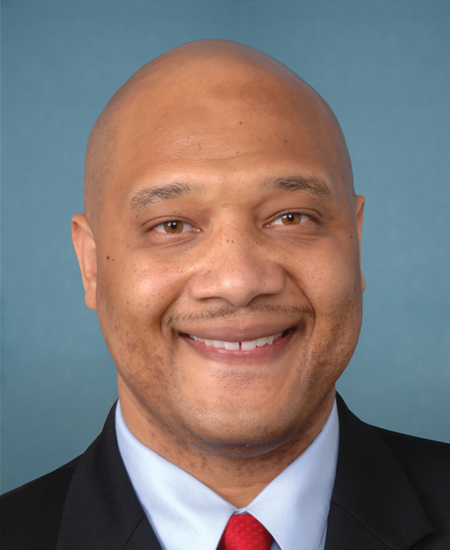
Rep. André Carson
Sponsored bills
Maddy summaryThis bill repeals longstanding restrictions on federal funding for gun violence research that have been in place since 1996. It establishes a National Gun Violence Research Program coordinated by the Office of Science and Technology Policy, authorizing $200 million over six years ($200,000 annually from 2026-2031) to fund research across multiple agencies including the National Institutes of Health, Centers for Disease Control, and National Institute of Justice. The bill requires sharing of gun trace data with researchers and creates an interagency working group and advisory committee to guide the research program. This legislation focuses on enabling research into the causes and prevention of gun violence without making changes to gun laws or regulations.
Maddy summaryThis resolution (HRES 770) is a symbolic statement expressing the House's support for "Military Sexual Trauma Awareness Day" observed on September 25. It directly affirms the House's commitment to military sexual trauma (MST) survivors - impacting both women and men in the military - by highlighting the need to reduce stigma and improve support systems. The resolution encourages the Department of Defense and Veterans Affairs to expand access to MST-related services and promote transparency in handling cases, but it does not create new laws or funding. As a non-binding resolution, it serves only to formally acknowledge the issue and encourage existing agencies to prioritize survivor care.
Maddy summaryThe Patients Deserve Price Tags Act (HR 5582) requires hospitals, clinical diagnostic laboratories, imaging services providers, and ambulatory surgical centers to publicly disclose detailed pricing information for healthcare services. This includes standard charges, discounted cash prices, and payer-specific negotiated rates for each item or service, presented in machine-readable formats and consumer-friendly displays. Implementation deadlines are set for 2026 for hospitals and 2027 for other providers, with civil monetary penalties for non-compliance ranging from $300 per day for smaller facilities to up to $10,000,000 annually for health plans. The legislation aims to increase price transparency so consumers can better understand and compare healthcare costs before receiving services.
Maddy summaryThis bill prevents federal agencies from terminating employees during a government shutdown caused by a lapse in discretionary funding. It prohibits removals of civil service employees at any agency affected by a funding gap, and if an employee is wrongfully removed, they can return to their job with back pay once funding resumes. The law directly protects all federal employees covered by the civil service system during shutdowns. It applies automatically to any funding lapse, requiring automatic reinstatement without needing separate legal action.
Maddy summaryHR 5614, the "If You See It, Squish It Act of 2025," directs the Secretary of Agriculture to launch a national public awareness campaign about spotted lanternflies. The campaign requires placing TV, radio, and billboard ads in high-incidence areas to inform the public that spotted lanternflies are invasive pests threatening agriculture and to encourage people to kill any they encounter. It specifically mandates these public service announcements and allows the Secretary to use additional awareness tools. This bill directly affects residents in regions with spotted lanternfly infestations by providing information on identifying and addressing the pest.
Maddy summaryHRES 764 is a symbolic House resolution recognizing persistent disparities in mental health access and treatment for Black youth. It cites alarming statistics, including a 149% rise in suicide rates among Black adolescents (2007-2023) and higher rates of suicide attempts among Black high school students. The resolution calls on the current administration to continue previous efforts addressing these disparities, incorporate recommendations from the Congressional Black Caucus’s "Ring the Alarm" report, and protect the Substance Abuse and Mental Health Services Administration (SAMHSA) as an independent agency. It does not create new laws or allocate funds but serves as a formal acknowledgment of the crisis and a request for policy continuity.
Maddy summaryThis bill bans the import, export, and sale of donkey skins and ejiao products (a gelatin made from donkey skin) in U.S. commerce. It directly affects U.S. businesses importing or selling ejiao, which currently accounts for $12 million in annual U.S. imports. The law prohibits trading in donkey skins for ejiao production or any product containing ejiao, with civil penalties up to $10,000 per violation or criminal charges for larger offenses. Enforcement will be handled by U.S. Customs and Border Protection, targeting the U.S. market for a product driving global donkey population declines.
Maddy summaryThe Improving Child Care for Working Families Act of 2025 increases the tax exclusion limit for dependent care assistance from $7,500 to $10,500 annually for most taxpayers. This change directly benefits working families who receive employer-provided child care benefits by allowing them to exclude more of that assistance from their taxable income. Married couples filing separately would see their exclusion limit rise from $3,750 to $5,250. The amendment applies to amounts paid or incurred in calendar years starting after the bill's enactment.
Maddy summaryHJRES 126 is a joint resolution directing the removal of U.S. Armed Forces from military operations against specific targets without congressional authorization. It requires the President to end hostilities involving: (1) foreign terrorist organizations designated after February 20, 2025; (2) countries where those groups operate; or (3) non-state groups trafficking illegal drugs, unless Congress explicitly authorizes such actions through a war declaration or specific law. The bill cites recent military strikes on vessels as examples of unauthorized hostilities and emphasizes that drug trafficking alone does not justify military force under the War Powers Resolution. This resolution applies to all current and future operations targeting these groups without prior congressional approval.