Maddy summaryThis bill restores the pre-January 20, 2025, administrative structure of the Head Start program within the Department of Health and Human Services. It establishes a central Office of Head Start with 12 regional offices, requiring the Secretary to maintain all prior staffing levels, organizational structure, and functions. The bill prohibits the Secretary from restructuring the office or reducing staff without providing 60 days' notice to Congress and the public, ensuring continuity in program oversight. It directly affects the Office of Head Start, its regional offices, and HHS staff managing Head Start operations.
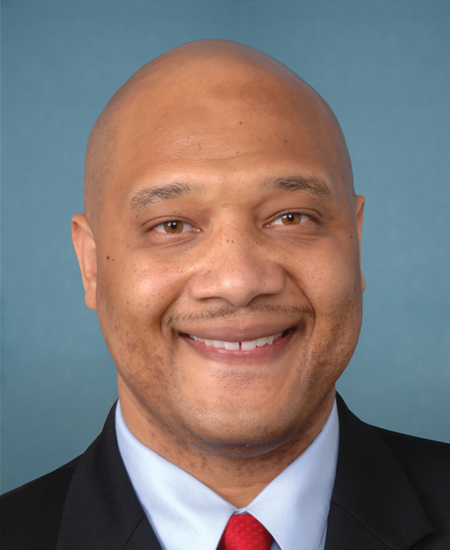
Rep. André Carson
Sponsored bills
Maddy summaryHR 647, the Ensuring Veterans’ Final Resting Place Act of 2025, amends a provision in U.S. Code (38 U.S.C. § 2306(h)) to change how burial benefits are provided for veterans. It removes the requirement that a veteran’s family must provide an urn or plaque for the Department of Veterans Affairs (VA) to offer additional burial benefits; the VA will now automatically provide these benefits regardless of whether the family supplies such items. This change directly affects veterans’ families arranging burial services, making it easier to access burial benefits without needing to procure specific items first. The amendment applies to veterans who die on or after January 5, 2021, updating existing eligibility rules.
Maddy summaryHCONRES 57 is a symbolic resolution honoring Wadee Alfayoumi, a 6-year-old Palestinian-American boy murdered in a hate crime in Illinois on October 14, 2023. It commemorates his life and condemns the perpetrator’s anti-Muslim, anti-Palestinian hate speech that led to his death. The resolution states that the U.S. has "zero tolerance for hate crimes, Islamophobia, anti-Semitism, and anti-Palestinian and anti-Arab discrimination." As a concurrent resolution, it does not create new laws or policies but serves to recognize the victim and affirm national principles against hate-based violence.
Maddy summaryHRES 809 is a symbolic resolution expressing the House of Representatives' support for designating the second Monday in October 2025 as "Indigenous Peoples' Day." It does not create new law or directly affect any individuals or communities, but rather encourages the public to observe this day through ceremonies celebrating Indigenous history and culture. The resolution highlights existing local and state observances (over 200 municipalities and 17 states) and notes that Columbus Day currently does not honor Indigenous contributions. It urges Americans to recognize Indigenous Peoples' enduring legacy and cultural impact, while supporting the eventual designation of this day as a Federal holiday.
Keep Air Travel Safe Act This bill provides continuing appropriations for the Transportation Security Administration (TSA) during any period in which there is a lapse in appropriations for TSA. It also requires the continuing appropriations to be funded using certain unobligated funds that were provided to U.S. Immigration and Customs Enforcement by the One Big Beautiful Bill Act. The bill provides the appropriations for TSA to continue all programs, projects, or activities (including the costs of direct loans and loan guarantees) that were funded in the preceding fiscal year. The appropriations provided by this bill are available from the first day of a lapse in appropriations for TSA until the earlier of the date on which the applicable regular appropriations bill for the fiscal year becomes law or a joint resolution making continuing appropriations becomes law, or the date that is 180 days after the first day of a lapse in appropriations.
Maddy summaryHCONRES 56 is a symbolic congressional resolution recognizing the persistent wage gap faced by Latina women in the U.S. It specifically highlights that, as of 2024, Latina workers earn just 58 cents for every dollar paid to White, non-Hispanic men working full-time year-round. The resolution designates October 8, 2025, as "Latina Equal Pay Day" to raise awareness about this disparity, which affects over 14 million Hispanic women in the labor force. It does not create new laws or policies but formally acknowledges the economic impact of this gap on Latina families and the broader economy.
Maddy summaryHRES 797 is a non-binding resolution expressing concern about the rising number of book bans in U.S. schools and libraries. It cites PEN America data showing 6,870 book bans affecting 3,751 titles between July 2024 and June 2025, with books about race, LGBTQ+ experiences, and marginalized communities disproportionately targeted (e.g., *The Handmaid’s Tale*, *Maus*, *This Book Is Gay*). The resolution calls on schools to follow best practices for book challenges, protect students’ access to diverse materials, and return books removed from military schools under recent executive orders. It directly addresses students, educators, librarians, and authors impacted by censorship, emphasizing that such bans threaten free expression and democratic values.
Maddy summaryHR 5708, the Federal Employees Civil Relief Act, provides temporary protections for federal workers and contractors during government shutdowns. It suspends civil proceedings like evictions, mortgage foreclosures, student loan collections, and tax payments if the worker is furloughed or working without pay. During a shutdown (and for 30 days after), courts can pause these obligations or adjust payments to prevent harm, and lenders/insurers cannot penalize workers for missed payments due to the shutdown. The law directly affects federal employees whose income is disrupted by a shutdown, ensuring housing, loan, and tax protections while maintaining their civil rights.
Maddy summaryHR 5705 requires the federal government to reimburse state agencies for funds they use to maintain participation in the WIC program during a government shutdown. It directly affects states that cover WIC costs using their own money when federal funding lapses. The bill establishes a process where states can seek reimbursement from the federal government after the shutdown ends. This ensures states aren’t burdened with costs for a federal funding gap that impacts nutrition assistance for women, infants, and children.
Maddy summaryHR 5707, the Voter Purge Protection Act, sets strict standards for states removing voters from registration lists. It requires states to use only objective, reliable evidence (like proof of death or moved residence) to remove voters - not factors like not voting or not responding to notices - and mandates 48-hour written notice to affected voters with reinstatement instructions. States must also issue public notices about removal programs to help voters verify their status. This bill directly affects state election officials and voters whose registration might be challenged, aiming to prevent improper removals under the National Voter Registration Act. It amends existing federal voting laws to enforce these new verification and notice requirements.