

Maddy summaryThis bill expands educational benefits under three Department of Veterans Affairs programs to include siblings of veterans who died in service or were killed in action. It amends eligibility criteria in the Survivors’ and Dependents’ Educational Assistance Program, the Marine Gunnery Sergeant John David Fry Scholarship, and the Post-9/11 GI Bill to explicitly include "siblings" alongside spouses and children. The bill defines "sibling" broadly to cover blood relatives, adopted siblings, or those in recognized guardianship relationships. It also creates a special provision allowing siblings acting as primary caregivers for injured veterans to pause and resume benefit use, with benefits usable until age 26 or the standard 15-year delimiting date. This change directly affects siblings of fallen service members who previously did not qualify for these educational benefits.
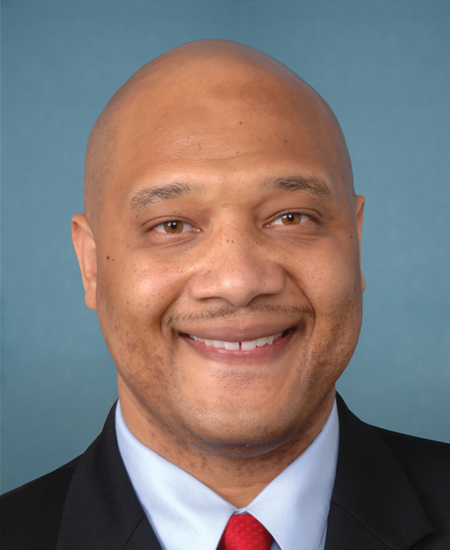
Rep. André Carson
Sponsored bills
Maddy summaryHR 4611 (EACH Act of 2025) requires all federally funded health programs - including Medicaid, Medicare, military health plans, and the Indian Health Service - to cover abortion services without restrictions, repealing the Hyde Amendment's long-standing ban on federal funding for most abortions. This directly affects millions of people enrolled in these programs, particularly low-income women, women of color (including 25% of Black women and 22% of Hispanic women on Medicaid), and young people. The bill mandates coverage in all federally administered health plans and prohibits state or private insurers from restricting abortion coverage in health insurance. It aims to eliminate current federal and state barriers that deny abortion access to people who rely on government health programs.
Maddy summaryHRES 962 is a ceremonial resolution honoring Harriet Tubman's legacy. It formally acknowledges her courage, leadership in the Underground Railroad (rescuing ~70 enslaved people), Civil War service (including the Combahee River Raid liberating 700), and post-war advocacy for human rights and women’s suffrage. The resolution has no legal effect or policy changes - it is solely a symbolic recognition by the U.S. House of Representatives. It does not affect any individuals, programs, or government actions.
Maddy summary# Summary of Proposed Tax Code Amendment This document is a comprehensive proposal for tax code amendments, primarily focused on extending, modifying, and creating new tax credits related to clean energy, energy efficiency, and environmental initiatives. The key components include: ## Housing and Residential Credits - **First-Time Homebuyer Tax Credit**: A refundable credit for first-time homebuyers (Section 13001) - **Renter Tax Credit**: A refundable credit for renters paying more than 30% of their adjusted gross income in rent (Section 13002) ## Clean Energy Credits (Sections 21001-21007) - Extended clean energy production credit with a new phase-out date (2032 or when greenhouse gas emissions reach 25% of 2022 levels) - Extended clean electricity investment credit for wind and solar facilities - Restored credit for wind and solar leasing arrangements - Extended clean hydrogen production credit (construction date reverted to 2033) - Extended residential clean energy credit (termination date moved to 2034) - Reinstated special rate for sustainable aviation fuel (35 cents/ gallon for certain facilities) ## Energy Efficiency Credits (Sections 22001-22004) - Restored product identification number requirement for energy-efficient home improvements - Extended new energy efficient home credit (acquisition date moved to 2032) - Repealed termination of new energy efficient commercial buildings deduction - Restored cost recovery for energy property ## Electric Vehicle and Charging Infrastructure Credits (Sections 23001-23005) - Extended previously-owned vehicle credit (acquisition date moved to 2032) - Extended clean vehicle credit (placement in service date moved to 2032) - Extended commercial clean vehicles credit (termination date moved to 2032) - Extended alternative fuel vehicle refueling property credit (termination date moved to 2032) - Created a new credit for electric bicycles (30% of cost, up to $5,000 per bicycle) ## Clean Infrastructure and Resiliency Credits (Sections 24001-24007) - Created qualifying water reuse project credit (30% of qualified investment) - Created recycling property investment credit (30% of qualified investment with phase-out) - Excluded amounts received from State-based catastrophe loss mitigation programs from gross income - Expanded exclusion for certain emergency agricultural assistance - Created credit for disaster mitigation expenditures (30% of qualifying mitigation activities) - Created qualifying electric power transmission line credit (30% of qualified investment) - Created qualifying advanced battery project credit (30% of qualified investment with $3 billion cap) The proposed amendments generally extend existing credits through 2032-2037, with some credits having phase-out schedules and others having specific termination dates. The document also includes numerous conforming amendments to other sections of the tax code to accommodate these changes.
Maddy summaryHR 6839, the Vaccine Transportation Access Act, provides federal grants to nonprofit community organizations that serve low-income or minority communities facing transportation barriers to vaccines. The grants fund projects like on-demand rides, first/last mile transportation to vaccine sites, and expanded transit coordination to reduce missed appointments. Recipients must track performance metrics and report outcomes to the Department of Health and Human Services. The bill also adds a provision ensuring 100% federal funding for nonemergency vaccine-related transportation costs under Medicaid plans.
Maddy summaryThis bill amends the Servicemembers Civil Relief Act to create a new 6% interest rate cap for student loan consolidation or refinancing. Specifically, it limits interest to 6% on loans consolidated or refinanced during military service to cover student debt incurred *before* service (not new debt during service). This applies to active-duty servicemembers (or jointly with their spouse) who refinance pre-service loans while serving. The change affects how military members manage existing student debt during their service, without altering interest rates on other loans or providing debt forgiveness.
Aviation Funding Solvency Act This bill provides continuing appropriations to the Federal Aviation Administration (FAA) if (1) an appropriations bill for the FAA has not been enacted before a fiscal year begins, or (2) a law making continuing appropriations for the FAA is not in effect. Specifically, the bill provides appropriations from the Aviation Insurance Revolving Fund at the rate of operations that was provided for the prior fiscal year to continue programs, projects, and activities that were funded in the preceding fiscal year. The FAA may use the balance of the fund, minus $1 billion. If the FAA determines that the amounts from the fund are insufficient to continue all programs, projects, or activities, then the FAA must prioritize compensation payments for employees of the Air Traffic Organization (e.g., air traffic controllers). The bill provides the appropriations until the date on which either (1) specified appropriations legislation for the fiscal year becomes law, or (2) a bill making continuing appropriations becomes law. Finally, the bill permanently extends the FAA Non-premium War Risk Insurance Program. This program provides aviation insurance without a premium to eligible air carriers at the request of the Department of Defense or another federal agency, provided that the agency agrees to indemnify the FAA from all losses covered under the insurance. Eligible air carriers include those whose operations are under a federal contract and are necessary for national security or to carry out U.S. foreign policy.
Maddy summaryHRES 955 is a symbolic House resolution recognizing the importance of maintaining U.S. leadership in ending pediatric HIV/AIDS globally. It affirms support for existing programs like PEPFAR and the Global Fund, which provide critical prevention services (e.g., antiretroviral prophylaxis for pregnant women) and treatment for children. The resolution specifically calls for continued commitment to closing the treatment gap for children, expanding access to long-acting prevention methods, and advancing the Global Alliance to End AIDS in Children by 2030. As a recognition measure, it does not create new laws or allocate funding but underscores ongoing U.S. efforts to prevent mother-to-child transmission and improve pediatric HIV outcomes.
Maddy summaryHR 6815 creates a publicly available EPA tool to identify communities facing environmental burdens, such as poor air quality, climate risks, health issues, poverty, and racial disparities. The tool uses geospatial mapping to flag neighborhoods meeting specific thresholds across six categories of factors (e.g., asthma rates, proximity to pollution sources, unemployment). Federal agencies must adopt this tool within a year to prioritize funding and resources for affected communities. The EPA will update the tool annually based on public feedback and new data, with annual reports to Congress on changes in identified communities.
Maddy summaryHR 6818, the Part-Time Worker Bill of Rights Act, would expand rights for part-time workers by reducing eligibility requirements for family and medical leave from 12 months to 90 days of employment under the FMLA. The bill prohibits employers from discriminating against part-time workers based on hours worked, requiring equal treatment for benefits, promotions, and scheduling. It mandates that employers obtain written statements from employees about their desired work hours and prioritize offering available work hours to existing employees before hiring new external workers. The bill establishes enforcement mechanisms including civil penalties for violations and allows employees to file private lawsuits for damages, with the Secretary of Labor having investigative authority to ensure compliance. This legislation directly affects part-time workers and employers with more than 15 employees across both private and public sectors.