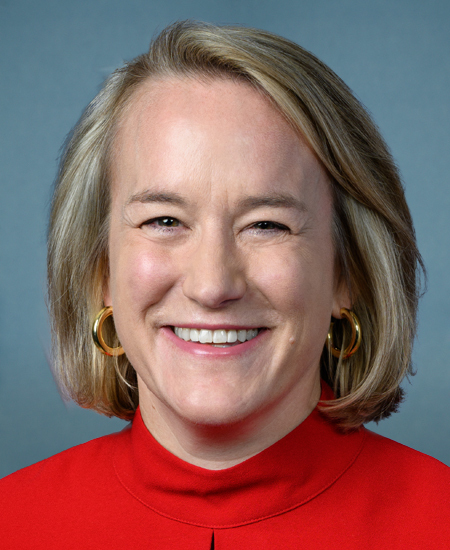
Photo of Nikki Budzinski
D United States House · District 13 · Illinois On the 2026 ballot

Rep. Nikki Budzinski

Compare
Total votes
1,879
all sessions
Attendance
100%
5 missed
Higher than 96% of chamber peers
With party
94%
of cast votes
Lower than 76% of chamber peers
Bipartisan score
3%
crosses aisle rarely
Higher than 75% of chamber peers
Sponsored
1,021
bills & resolutions
Higher than 84% of chamber peers
Committees
6
assignments
1,021 bills and resolutions

Sponsored bills

Total
1,021
Primary
34
Co-sponsor
987
This page
1,021
matching current filters
Co-sponsor HRES 287
In committee · Oregon House · Co-sponsor
Supporting the goals and ideals of National Public Safety Telecommunicators Week.

Maddy summaryHRES 287 is a symbolic resolution recognizing National Public Safety Telecommunicators Week. It does not create new laws or policies but formally supports and honors the work of public safety telecommunicators - professionals who handle emergency calls, provide life-saving guidance during crises, and manage critical information for first responders. The resolution encourages the public to acknowledge their vital role in emergencies, including missing persons cases, hostage situations, and natural disasters. It directly affects telecommunicators by affirming their contributions through congressional recognition, without altering funding, regulations, or operational procedures.

In committee Apr 10, 2023 1 co-sponsor
Co-sponsor HR 2402
In committee · Oregon House · Co-sponsor
Alan Reinstein Ban Asbestos Now Act of 2023

Maddy summaryHR 2402, the Alan Reinstein Ban Asbestos Now Act of 2023, bans the manufacture, processing, use, and sale of commercial asbestos (including specific types like chrysotile and crocidolite) in the U.S. starting one year after enactment, with key exceptions. It allows the chlor-alkali industry to continue using asbestos for diaphragm manufacturing until two years after enactment and permits limited national security exemptions for up to three years with public disclosure. The bill also requires the EPA and HHS to create public education resources about asbestos health risks and mitigation options. This directly affects manufacturers, distributors, and users of commercial asbestos products, excluding asbestos present only as an impurity.

In committee Apr 7, 2023 1 co-sponsor
Co-sponsor HR 2411
In committee · Oregon House · Co-sponsor
National Nursing Workforce Center Act of 2023

Maddy summaryThis bill creates a 2-year pilot program to establish or improve state-based nursing workforce centers. It provides $1.5 million annually (2024-2025) for up to six state or regional centers, requiring non-Federal matching funds (1:4 ratio). These centers will analyze nursing workforce data - including education, retention, and shortages - and develop strategies to recruit, retain, and diversify nurses, especially in rural and underserved areas. The program mandates annual reports to Congress on outcomes and best practices for addressing nursing shortages. It directly affects states, nursing schools, healthcare employers, and nursing workforce centers through federal grants and data-driven planning.

In committee Apr 7, 2023 1 co-sponsor
Co-sponsor HR 2439
In committee · Oregon House · Co-sponsor
Ally’s Act

Maddy summaryHR 2439, the Ally’s Act, requires most private health insurance plans to cover hearing-related services and devices for qualifying individuals. It mandates coverage for cochlear implants, bone conduction devices, maintenance, upgrades every five years, hearing assessments, surgery, and rehabilitation, without separate cost-sharing or medical necessity reviews. This directly affects people with hearing loss who need implantable devices, as defined by a physician or audiologist. The law applies to group health plans under the Public Health Service Act, ERISA, and Internal Revenue Code, taking effect for plan years beginning January 1, 2025.

In committee Apr 7, 2023 1 co-sponsor
Co-sponsor HR 2434
In committee · Oregon House · Co-sponsor
Next Generation Fuels Act of 2023

Maddy summaryHR 2434, the Next Generation Fuels Act of 2023, requires automobile manufacturers to design vehicles for model years 2028 and later to operate with gasoline containing up to 25% ethanol (2028-2032) or 30% ethanol (2033+) and to be compatible with gasoline having a research octane number of 95 or higher (2028-2032) or 98 or higher (2033+). Fuel retailers must install equipment to ensure compatibility with these high-octane, high-ethanol fuels, while refiners must meet specific requirements for gasoline aromatics content and low-carbon fuel standards. The bill mandates labeling requirements to inform consumers about fuel compatibility and potential consequences of using lower-octane fuels. EPA must determine nationwide availability of 98 octane gasoline by 2031 before the full requirements take effect in 2033, affecting automobile manufacturers, fuel retailers, and refiners through changes in vehicle design, fuel composition, and consumer information standards.

In committee Apr 7, 2023 1 co-sponsor
Co-sponsor HR 2389
In committee · Oregon House · Co-sponsor
Resident Physician Shortage Reduction Act of 2023

Resident Physician Shortage Reduction Act of 2023 This bill increases the number of residency positions eligible for graduate medical education payments under Medicare for qualifying hospitals, including hospitals in rural areas and health professional shortage areas. Current law provides for an increase of up to 200 positions per fiscal year beginning in FY2023, with a total increase of 1,000 positions; each hospital may receive up to 25 additional positions. Current law also provides for an additional increase of up to 200 positions for FY2026, with at least 100 of these positions for psychiatry or related specialties; each hospital may receive up to 10 additional positions. The bill provides for an additional increase of 2,000 positions per fiscal year from FY2025-FY2031; during this period, each hospital may receive up to 75 additional positions in total under the bill and current law. Additionally, one-third of the positions that are made available under the bill must be allocated to hospitals that are already operating above applicable resident limits. The bill also requires the Government Accountability Office to report on strategies to increase the diversity of the health professional workforce, including with respect to representation from rural, low-income, and minority communities.

In committee Apr 7, 2023 1 co-sponsor
Co-sponsor HR 1839
In committee · Oregon House · Co-sponsor
Combating Illicit Xylazine Act

Maddy summaryHR 1839, the Combating Illicit Xylazine Act, makes the illicit use and distribution of xylazine a federal crime by adding it to the Controlled Substances Act. The bill broadly defines xylazine to cover numerous chemical variants and prohibits human use or non-licit distribution, while preserving legitimate veterinary and pharmaceutical uses. It requires tracking xylazine in drug supply chains and mandates two reports to Congress within 1 and 4 years on its prevalence, sources, and whether it should be rescheduled. The bill directly affects individuals distributing or using xylazine illicitly, including as an additive to drugs like fentanyl, and aims to address its public health risks. Congress declared illicit xylazine an "emerging drug threat" under existing law.

In committee Apr 7, 2023 1 co-sponsor
Co-sponsor HR 1826
In committee · Oregon House · Co-sponsor
PSA Screening for HIM Act

Maddy summaryHR 1826 (PSA Screening for HIM Act) requires health insurance plans and issuers to cover prostate cancer screenings without out-of-pocket costs for men aged 40 and over who are at high risk of prostate cancer. This directly affects African-American men and men with a family history of prostate cancer (defined as having a first-degree relative diagnosed with or who died from prostate cancer). The bill mandates coverage for evidence-based screenings under the same requirements as other preventive services, effective for plan years starting January 1, 2024. It aims to address disparities in prostate cancer outcomes by removing financial barriers to early detection for high-risk groups.

In committee Apr 7, 2023 1 co-sponsor
Co-sponsor HR 12
In committee · Oregon House · Co-sponsor
Women’s Health Protection Act of 2023

Maddy summaryThe Women's Health Protection Act of 2023 would protect access to abortion services by prohibiting states from imposing restrictions that are more burdensome than those for comparable medical procedures. The bill would ensure people can obtain abortion services before fetal viability without unnecessary limitations like mandatory waiting periods or biased counseling, and after viability when necessary to protect the patient's life or health. It would preempt state laws that conflict with these protections and allow for civil enforcement actions to challenge restrictive state laws. This bill directly affects people seeking abortion services (including transgender and nonbinary individuals who can become pregnant), health care providers, and states that have implemented abortion restrictions.

In committee Apr 7, 2023 1 co-sponsor
Co-sponsor HR 2532
In committee · Oregon House · Co-sponsor
Women in NCAA Sports Act

Maddy summaryHR 2532, the Women in NCAA Sports Act, establishes a 16-member Commission to study and compare how the NCAA treats men’s and women’s sports programs. The Commission will examine NCAA operations - including tournament venues, budgets, media contracts, and policies - to identify disparities in treatment across all sports and student-athlete programs. After 18 months, it must submit a report to Congress with findings and recommendations for improving fairness, while avoiding any review of athlete eligibility. The bill directly affects NCAA operations and requires Congress to consider the Commission’s findings for potential policy changes.

In committee Apr 6, 2023 1 co-sponsor
Showing 931 to 940 of 1,021 bills
Previous 1 … 93 94 95 … 103 Next