

Maddy summaryThe MATCH Act requires U.S. agencies to align export controls on semiconductor manufacturing equipment with allied nations to prevent adversaries from accessing critical technology. It mandates a 150-day period for diplomatic efforts to secure countrywide denial policies from allied suppliers, after which U.S. jurisdiction would extend to equipment exported from countries not complying with these controls. The bill specifically targets semiconductor manufacturing equipment that the U.S. cannot currently produce in high volume and includes a list of Chinese companies deemed to warrant comprehensive restrictions. If allies fail to implement matching controls, the Act would allow the U.S. to regulate equipment exported from non-compliant allied countries and restrict servicing of restricted items at facilities in adversary nations. The legislation includes a sunset provision that expires five years after enactment, with annual reporting requirements to Congress on progress and compliance.
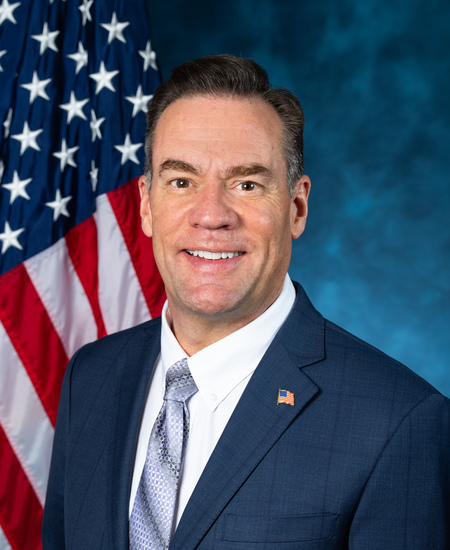
Rep. Russ Fulcher
Sponsored bills
Maddy summaryThe ESA Amendments Act of 2025 makes significant changes to the Endangered Species Act of 1973 to streamline conservation efforts and reduce regulatory burdens. It establishes a national listing work plan with priority classifications for species to better allocate resources, and creates "Candidate Conservation Agreements with Assurances" that provide private landowners with regulatory certainty in exchange for conservation actions. The bill also requires the government to publish the basis for listings online, streamlines permitting processes for projects that comply with conservation measures, and modifies critical habitat designation to better accommodate existing conservation plans on private lands. These changes aim to improve conservation outcomes while reducing delays for landowners, developers, and federal agencies working with listed species.
Maddy summaryThe Stop Climate Shakedowns Act of 2026 prohibits state and local governments from suing energy companies for damages related to climate change or greenhouse gas emissions. This bill declares that regulating emissions is exclusively a federal responsibility and voids any state laws that hold energy businesses liable for alleged climate harms. Consequently, all pending lawsuits of this nature against energy producers must be dismissed immediately, preventing states from imposing retroactive penalties for past lawful operations. The legislation directly affects companies involved in the production, refinement, and sale of oil, gas, and coal by shielding them from civil liability in both state and federal courts.
Maddy summaryThis bill, titled the Homeland Security and Further Additional Continuing Appropriations Act, 2026, provides funding for the Department of Homeland Security and extends certain continuing appropriations for fiscal year 2026. It allocates money for various DHS components including border security, immigration enforcement, cybersecurity, disaster relief, and law enforcement training. The bill also includes the SAVE America Act, which requires states to verify voter citizenship through documentary proof and mandates photo identification for voting in federal elections. Additionally, it establishes reporting requirements for DHS budgeting and oversight, and prohibits certain border crossing fees.
Representing our Seniors at VA Act of 2025 This bill expands the membership of the Geriatrics and Gerontology Advisory Committee within the Veterans Health Administration by requiring the addition of one representative from the National Association of State Veterans Homes who holds a professional license in nursing home administration. Additionally, the committee must consult with the National Association of Veterans State Homes with respect to matters concerning the association.
Maddy summaryThis resolution expresses support for the United Nations designation of 2026 as the International Year of Rangelands and Pastoralists. It recognizes the economic, social, and ecological importance of rangelands and the ranchers, farmers, and land managers who steward them. The measure encourages federal agencies, universities, and organizations to promote education, research, and outreach related to rangeland management during this designated year.
Maddy summaryThis bill, titled the Fair Treatment of Religious Organizations Act of 2026, establishes rules for how religious organizations are treated under federal tax law and financial assistance programs. It directs the IRS to determine whether an organization's purpose is religious without considering its specific beliefs about marriage, sexuality, or gender identity, even if those beliefs conflict with current laws. The legislation also prohibits federal agencies from discriminating against religious employers that receive federal funding if those employers hire staff based on their religious standards. These protections apply to religious corporations, associations, educational institutions, and societies, ensuring they can maintain employment practices aligned with their faith when receiving government support.
Maddy summaryThe COMPETE Act amends the Public Health Service Act to formally define short-term limited duration insurance as health coverage contracts lasting no more than 12 months from their original effective date. This legislation allows these policies to include renewal options that let policyholders purchase future coverage at premiums not reflecting additional underwriting. The bill directly affects health insurance issuers and consumers who purchase short-term limited duration health plans. By establishing this specific definition, the law clarifies the scope and characteristics of these temporary health insurance products.
Maddy summaryThe SILVER Act aims to improve the resilience and efficiency of the U.S. precious metals futures market by allowing storage facilities outside New York City to be approved for use in futures contracts. The bill requires derivatives clearing organizations to use transparent, objective criteria when selecting storage vaults and to approve new facilities that promote geographic diversity, competition, and lower storage costs. It mandates that at least two approved depositories be available in each of the four U.S. time zones, ensuring broader market access and reducing risks associated with concentrating vaults in one location. The legislation also requires periodic assessments of how easily market participants can access physical delivery of commodities regardless of where the storage facilities are located.
Maddy summaryHR 1799, the Financial Reporting Threshold Modernization Act, raises reporting thresholds for financial institutions handling large cash transactions. It increases the threshold for currency transaction reports from $10,000 to $30,000 and adjusts suspicious activity report thresholds from $5,000/$2,000 to $10,000/$3,000. The bill requires automatic updates to these thresholds every five years using the Consumer Price Index to account for inflation. This directly affects banks, money services businesses, and other entities that must file these reports under U.S. financial regulations.