

Maddy summaryHR 4251 requires the Government Accountability Office (GAO) to study how effectively the federal government implements the Uniformed and Overseas Citizens Absentee Voting Act (UOCAVA) for military voters. The GAO must analyze ballot transmission, processing, and rejection rates for service members and their families, as well as assess coordination between military voting assistance programs and election officials. It will also identify ways to improve access to voter registration information and assistance for active-duty personnel and their dependents. The study will examine whether military members received required registration support and evaluate potential improvements, with a report due by September 30, 2025. This bill does not change voting rules but aims to identify gaps in current systems affecting military voters.
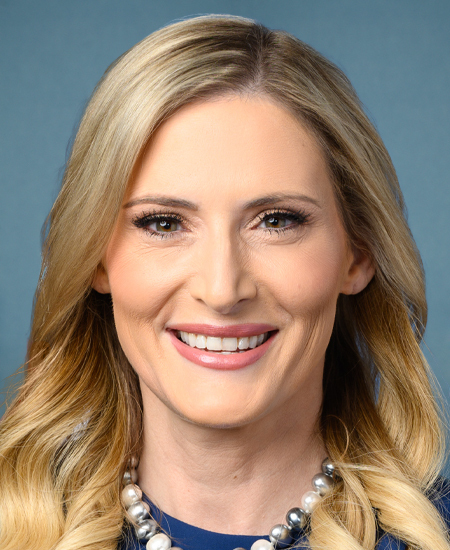
Rep. Laurel M. Lee
Sponsored bills
Maddy summaryHR 277 would require Congress to approve major federal regulations before they take effect. Major rules are defined as those with significant economic impact ($100 million+ annually), major cost increases for consumers or industries, or significant adverse effects on competition, employment, or innovation. Agencies must submit detailed information about these rules to Congress, including cost-benefit analyses, before they can take effect. Congress would have 70 session days to approve the rule with a joint resolution; if they don't act within that timeframe, the rule would not take effect. This would increase congressional oversight of federal regulations and require more detailed information about proposed rules before they become law.
Maddy summaryThis bill prohibits providing, facilitating, or possessing wireless devices (like cell phones) in U.S. detention facilities (e.g., prisons, jails) if such actions violate existing federal or state laws. It imposes civil fines up to $50,000 per violation (capped at $1 million total) or criminal fines up to $50,000 for intentional violations. The law explicitly excludes lawful law enforcement activities and state enforcement powers, and defines "detention facility" broadly to include all correctional and penal institutions. It applies to conduct occurring after enactment.
Maddy summaryThe TRACE Act requires the National Missing and Unidentified Persons System (NamUs) to add a data field tracking whether a missing person’s last known location was on federal land (e.g., national parks, military bases). It mandates an annual report to Congress starting in 2025, detailing how many cases involved federal land locations. The bill specifically defines "federal land" as areas under the jurisdiction of the Agriculture, Interior, or Defense departments (excluding tribal trust land), focusing on locations like national forests or Army Corps projects. This policy change directly affects cases involving missing persons near federal properties by improving data collection and transparency for federal agencies.
Maddy summaryHR 3792 extends U.S. security funding for Israel through 2028 (Section 3) and expands energy cooperation to include advanced nuclear technologies and carbon capture (Section 5). It requires annual reports on regional security partnerships involving Israel (Section 6) and ensures countries in the Abraham Accords can access U.S. development programs (Section 8). The bill also mandates reports on diplomatic efforts against ICC investigations targeting the U.S. and Israel (Section 10) and encourages people-to-people programs to strengthen the Abraham Accords (Sections 7, 9). These provisions directly affect Israel’s diplomatic engagement, security partnerships, and economic cooperation in the Middle East.
Maddy summaryHR 3737, the High School Sports Injury Reporting Act, requires the CDC to study current high school sports injury reporting practices within 180 days of enactment. The report will examine how schools collect injury data nationwide, evaluate one state with mandatory reporting, and analyze how reporting affects athlete recovery, injury rates, and treatment. It aims to identify effective tools and federal support needed to improve safety systems, but does not create new requirements for schools. The findings will inform future safety policies for student athletes.
Maddy summaryHR 3176, the Veterans Health Care Freedom Act, creates a 3-year pilot program allowing eligible veterans (enrolled in VA care) to choose any provider within the VA healthcare system or approved non-VA facilities, removing prior location restrictions for VA care. Veterans can select primary and specialty care providers freely, with VA coordinating care through a designated primary provider. After the pilot, these expanded choices become permanent policy, requiring the VA to offer full provider selection without geographic or administrative barriers. The bill implements these changes using existing VA funding without new appropriations.
Maddy summaryHR 3684, the Douglas Mike Day Psychedelic Therapy to Save Lives Act of 2023, authorizes the Department of Defense to fund research on using psychedelic substances for treating specific conditions in active-duty military personnel. The bill creates a grant program to support phase II clinical trials (using substances like MDMA, psilocybin, or ibogaine) or training for treating PTSD, traumatic brain injury, or chronic traumatic encephalopathy, with participants including active-duty service members. It removes barriers for military personnel to join these trials, regardless of federal scheduling of the substances or military justice rules. The bill appropriates $15 million annually from 2024 to 2028 for this research and requires regular reports to Congress on grant recipients and trial findings.
Maddy summaryThis bill creates a new tax credit for expenses related to "qualified access technology for the blind" under the Internal Revenue Code. It allows taxpayers to claim a credit of up to $2,000 per year (adjusted for inflation) for costs paid for hardware, software, or IT that converts visual information into formats usable by blind individuals, covering the taxpayer, their spouse, or a dependent who is blind. The credit is limited to $2,000 over any three consecutive tax years per blind individual and expires after 2028. It directly affects blind individuals and their families who purchase qualifying assistive technology. The credit cannot be claimed for expenses already covered by other tax deductions or credits.
Maddy summaryHR 3592, the Donut Dollies Congressional Gold Medal Act, would award a Congressional Gold Medal to the 627 women who served as "Donut Dollies" in the Red Cross Supplemental Recreation Activities Overseas (SRAO) program during the Vietnam War (1962-1973). The bill directs the Treasury to design and strike the medal, which would be presented by congressional leaders and then given to the Smithsonian Institution for public display and research. It also authorizes the sale of bronze duplicates at cost to cover production expenses. This commemorative measure recognizes the service of these women, who provided recreational support to U.S. troops across 28 locations in Vietnam while facing war-zone dangers.