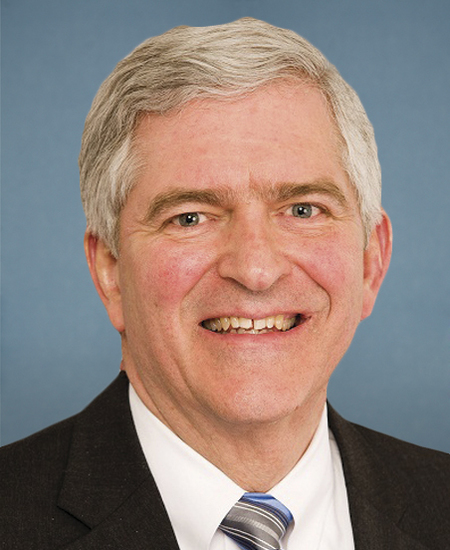
Photo of Daniel Webster
R United States House · District 11 · Florida

Rep. Daniel Webster

Compare
Total votes
2,837
all sessions
Attendance
96%
124 missed
Near the chamber average
With party
94%
of cast votes
Near the chamber average
Bipartisan score
3%
crosses aisle rarely
Near the chamber average
Sponsored
684
bills & resolutions
Near the chamber average
Committees
10
assignments
684 bills and resolutions

Sponsored bills

Total
684
Primary
19
Co-sponsor
665
This page
684
matching current filters
Co-sponsor HR 4721
In committee · Oregon House · Co-sponsor
Main Street Tax Certainty Act

Maddy summaryHR 4721, the Main Street Tax Certainty Act, makes a permanent the 20% tax deduction for eligible small business owners under Section 199A of the tax code. This provision directly affects pass-through business owners (like S-corps, partnerships, and sole proprietorships) who qualify for the deduction. The bill achieves this by removing the temporary expiration language (subsection (i)) from the existing tax code provision. The key change is ending the need for annual congressional extensions of this deduction, providing long-term tax certainty for small businesses.

In committee Jul 18, 2023 1 co-sponsor
Co-sponsor HR 1282
In committee · Oregon House · Co-sponsor
Major Richard Star Act

Maddy summaryThis bill, HR 1282 (Major Richard Star Act), expands benefits for certain military retirees by allowing them to receive both veterans' disability compensation and military retirement pay simultaneously. It specifically affects combat-related disabled retirees under Chapter 61 of the military retirement system who have fewer than 20 years of service. The key change removes the automatic reduction of military retirement pay when these retirees also receive disability compensation, as amended in Section 1413a(b)(3) of Title 10. Technical updates to the law’s structure and effective date (starting after enactment) complete the provisions.

In committee Jul 18, 2023 1 co-sponsor
Co-sponsor HR 4686
In committee · Oregon House · Co-sponsor
Flood Insurance Affordability Act

Maddy summaryThis bill creates a 30-day grace period for flood insurance policyholders under the National Flood Insurance Program (NFIP) who choose to pay premiums monthly. During this period, policyholders won't lose coverage for nonpayment, but they must later pay back unpaid premiums plus an extra fee. The bill also prohibits charging extra fees for choosing monthly payments compared to annual payments, directly affecting NFIP policyholders who select the monthly payment option.

In committee Jul 17, 2023 1 co-sponsor
Co-sponsor HR 4582
In committee · Oregon House · Co-sponsor
Protecting Kids from Fentanyl Act of 2023

Protecting Kids from Fentanyl Act of 2023 This bill permits the use of the Preventive Health and Health Services Block Grant to address fentanyl in educational institutions. Specifically, grant funds may be used to (1) purchase naloxone or other opioid overdose reversal drugs for educational institutions, (2) train school nurses and other personnel on how to administer them, and (3) provide fentanyl awareness classes or materials to students.

In committee Jul 14, 2023 1 co-sponsor
Co-sponsor HJRES 81
In committee · Oregon House · Co-sponsor
Proposing an amendment to the Constitution of the United States to require that the Supreme Court be composed of not more than nine justices.

Maddy summaryH.J.Res. 81 proposes a constitutional amendment to set a permanent maximum of nine justices on the U.S. Supreme Court. The amendment would require that the Court never exceed nine members, and Congress would have authority to pass laws enforcing this limit. If ratified by three-fourths of state legislatures within seven years, this change would become part of the Constitution. The bill directly affects the structure of the Supreme Court and the process for appointing justices.

In committee Jul 11, 2023 1 co-sponsor
Co-sponsor HR 4345
In committee · Oregon House · Co-sponsor
Dignity for Aborted Children Act

Maddy summaryHR 4345, the Dignity for Aborted Children Act, requires abortion providers to offer patients choices for handling fetal tissue after an abortion, including taking it home or having the provider arrange interment or cremation. Providers must obtain patient consent in writing for tissue disposal and arrange final disposition (interment or cremation) within 7 days if patients choose to release the tissue, failing which faces civil penalties up to $50,000 or criminal charges. The bill mandates annual reporting by providers on abortion procedures and tissue disposal methods, and requires the Secretary to submit annual reports to Congress on abortion statistics and disposal practices. This directly affects abortion providers and patients by changing post-abortion tissue handling procedures under federal law.

In committee Jun 30, 2023 1 co-sponsor
Co-sponsor HR 4333
In committee · Oregon House · Co-sponsor
Safeguarding the Homeland from the Threats Posed by Unmanned Aircraft Systems Act of 2023

Maddy summaryThis bill authorizes the Department of Homeland Security and Department of Justice to detect, identify, monitor, and mitigate drone threats to specific high-risk facilities including government buildings, airports, critical infrastructure, and locations hosting special events. It establishes a 5-year pilot program allowing state and local law enforcement agencies to use drone detection technology under federal oversight, with strict privacy protections requiring 180-day data retention limits and mandatory training for personnel. The bill requires coordination with the Federal Aviation Administration to minimize impacts on air traffic and mandates regular congressional reporting on how these authorities are being used. It sets an expiration date of 7 years after enactment for these new authorities.

In committee Jun 29, 2023 1 co-sponsor
Co-sponsor HR 2741
In committee · Oregon House · Co-sponsor
Coast Guard Authorization Act of 2023

Maddy summaryThe Coast Guard Authorization Act of 2023 authorizes funding for Coast Guard operations, infrastructure, and vessel acquisitions for fiscal years 2024-2025, including $10.75 billion for operations in 2024. It establishes requirements for tsunami evacuation plans at Coast Guard facilities in high-risk tsunami zones and mandates a study on vessel traffic patterns and emergency response capabilities in the Bering Strait. The bill also includes provisions for modernizing Coast Guard information technology systems, constructing new training facilities at locations including Cape May, New Jersey, and updating merchant mariner credentialing requirements.

In committee Jun 27, 2023 1 co-sponsor
Co-sponsor HJRES 44
Failed · Oregon House · Co-sponsor
Providing for congressional disapproval under chapter 8 of title 5, United States Code, of the rule submitted by the Bureau of Alcohol, Tobacco, Firearms, and Explosives relating to "Factoring Criteria for Firearms with Attached 'Stabilizing Braces'".

Maddy summaryHJRES 44 is a congressional resolution seeking to block a 2021 rule by the Bureau of Alcohol, Tobacco, Firearms, and Explosives (ATF). The rule classified firearms with stabilizing braces as "short-barreled rifles," which would have required additional licensing and regulation. This resolution uses a specific legal process (under Title 5, U.S. Code) to formally disapprove the ATF rule, meaning the rule would no longer be in effect. It directly affects firearm owners, manufacturers, and dealers who would have been subject to the rule’s requirements.

Failed Jun 22, 2023 1 co-sponsor
Co-sponsor HR 277
Passed · Oregon House · Co-sponsor
Regulations from the Executive in Need of Scrutiny Act of 2023

Maddy summaryHR 277 would require Congress to approve major federal regulations before they take effect. Major rules are defined as those with significant economic impact ($100 million+ annually), major cost increases for consumers or industries, or significant adverse effects on competition, employment, or innovation. Agencies must submit detailed information about these rules to Congress, including cost-benefit analyses, before they can take effect. Congress would have 70 session days to approve the rule with a joint resolution; if they don't act within that timeframe, the rule would not take effect. This would increase congressional oversight of federal regulations and require more detailed information about proposed rules before they become law.

Passed Jun 21, 2023 1 co-sponsor
Showing 411 to 420 of 684 bills
Previous 1 … 41 42 43 … 69 Next