

Maddy summary# Summary of the Water Rights Settlement Act This comprehensive legislation resolves long-standing water rights claims for three Native American tribes in the Colorado River Basin: 1. **Navajo Nation, Hopi Tribe, and San Juan Southern Paiute Tribe** - The act establishes specific water allocations and delivery systems for these tribes, including the implementation of the "iiná bá - paa tuwaqat'si" pipeline (a major water delivery infrastructure project). 2. **Water Rights Settlement** - The legislation satisfies tribal water rights claims through: - Quantification of water entitlements - Specific delivery mechanisms - Accounting rules for Colorado River water (distinguishing between Upper Basin and Lower Basin water) - Implementation of the "iiná bá - paa tuwaqat'si" pipeline system 3. **Reservation Creation** - The legislation ratifies a treaty creating the San Juan Southern Paiute Reservation (approximately 5,400 acres within the Navajo Reservation), establishing it as a reservation held by the U.S. in trust for the San Juan Southern Paiute Tribe. 4. **Key Implementation Provisions**: - Detailed accounting rules for Colorado River water (Section 17) - Limited waiver of sovereign immunity for enforcement purposes (Section 18) - Authorization for use of Navajo-Gallup Water Supply Project facilities (Section 20) - Specific requirements for Upper Basin water use in the Lower Basin 5. **Legal Framework**: - Includes comprehensive waivers of claims and releases of liability - Establishes an "Enforceability Date" with specific conditions for implementation - Includes specific provisions to ensure the settlement doesn't prejudice other water rights claims - Addresses unique circumstances of this settlement (Section 21(f)) This legislation represents a major settlement of water rights claims that has been negotiated between the federal government, the states, and the tribes, with specific implementation mechanisms and accounting rules for Colorado River water. It resolves critical water supply needs for these tribes while addressing complex legal and operational aspects of water rights in the Colorado River Basin.
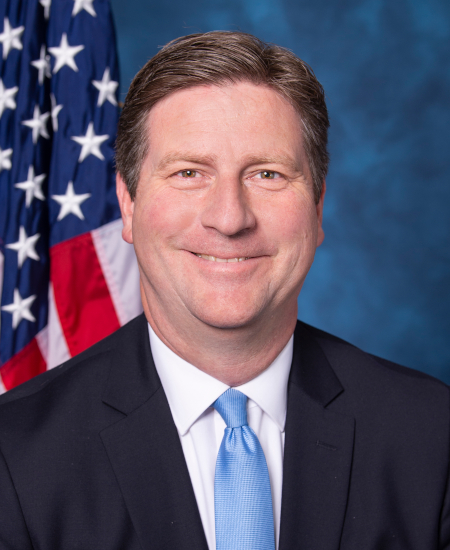
Rep. Greg Stanton
Sponsored bills
Maddy summaryThis bill requires the Transportation Security Administration (TSA) to transition its workforce from a special personnel management system to the standard federal personnel system under Title 5 of the U.S. Code by December 31, 2025. It protects TSA employees by ensuring no reduction in pay, benefits, or retirement rights during the transition, while preserving collective bargaining rights for screening agents. The legislation also mandates consultation with labor unions during the process and requires several reports on workforce issues including recruitment, harassment policies, and workplace safety.
Maddy summaryHR 2033, the Military Spouse Hiring Act, expands the Work Opportunity Tax Credit to include spouses of active-duty military personnel. It adds "qualified military spouse" as an eligible category for the tax credit, meaning employers who hire such spouses can claim the credit. A "qualified military spouse" is defined as someone certified by a local agency as married to an active-duty service member at the time of hire. The credit applies to hires occurring after the bill's enactment date. This directly affects military spouses seeking employment and employers hiring them, providing a tax incentive to encourage their hiring.
Maddy summaryThis bill terminates a national emergency declared by the President on February 1, 2025, under Executive Order 14194. It directly ends the legal status of that emergency by invoking Section 202 of the National Emergencies Act (50 U.S.C. 1622). The key mechanism is a formal congressional resolution to revoke the emergency designation, which would end any special authorities granted under that emergency. This is a procedural action affecting only the emergency status itself, not new policies or affected groups.
Maddy summaryHR 1930, the Border Workforce Improvement Act, requires the Department of Homeland Security (DHS) to assess staffing needs at the southern border within 90 days of the bill's enactment. The assessment must review current staffing models, factors affecting workloads (including reliance on overtime), and critical gaps in human resources and technology across CBP, ICE, and USCIS. DHS must then submit a report within 180 days detailing findings and recommendations for addressing staffing challenges, including solutions needing congressional action. This bill directly affects DHS agencies' workforce planning but does not change border policy or funding.
Maddy summaryThis bill authorizes a posthumous Congressional Gold Medal for actor James Earl Jones to recognize his career achievements in theater and film. It directs the Treasury Secretary to strike a gold medal bearing his name, which will be presented to his son, Flynn Earl Jones, following Jones' passing. The bill also permits the sale of bronze duplicates to cover costs. As a ceremonial honor with no policy changes, it does not affect legislation or government operations.
Maddy summaryHR 1954, the "Do No Harm Act," amends the Religious Freedom Restoration Act (RFRA) to clarify that RFRA does not override specific federal laws protecting against harm. It explicitly exempts provisions related to anti-discrimination (like the Civil Rights Act), workplace protections (wages, leave, collective activity), child safety, and healthcare access from RFRA's requirements. The bill ensures RFRA cannot be used to challenge government programs or contracts that provide these essential protections. It also clarifies that RFRA applies only to disputes involving government as a party, not private disputes between individuals. This change preserves existing legal safeguards while modifying RFRA's scope.
Congressional Trade Authority Act of 2025 This bill requires congressional approval for a presidential import adjustment due to a national security threat from an import and limits the adjustments to certain goods that are essential to national security. Specifically, the bill limits the President's authority for such import adjustments to goods related to the development, maintenance, or protection of military equipment, energy resources, or critical infrastructure essential to national security. The bill specifies that the term national security (1) means the protection of the United States from foreign aggression, and (2) does not otherwise include the protection of the general welfare of the United States. The bill requires the President to submit a proposal to Congress to adjust imports. Congress must then approve the proposal with a joint resolution before an import adjustment takes effect. Under current law, the President determines whether any adjustment of an import is necessary and must submit to Congress the reasons for any action taken or not taken. Currently, there is a congressional disapproval mechanism to override presidential actions related to petroleum imports. The bill also requires the Department of Defense (currently, the Department of Commerce) to investigate the effect of these imports on national security and submit a report before the President determines whether an adjustment to an import is necessary, establishes requirements for a process to grant requests to exclude certain goods from import adjustments, and applies retroactively to any proposed action taken up to six years before the enactment of this bill.
Maddy summaryHR 1851 increases the minimum required fighter aircraft inventory for the Air Force and its reserve components to 1,900 total and 1,200 for the reserve by October 2030, up from current levels (Section 2). The bill allows temporary reductions below these totals for recapitalization, but only for up to two years and with a floor of 1,800 aircraft, requiring congressional notification (Section 2). It mandates quarterly reports to Congress detailing new aircraft acquisitions, assignments, retirements, and recapitalization plans for both active and Air National Guard units (Section 3). The bill specifically protects 25 existing Air National Guard fighter squadrons from fleet reductions until 2030 and requires new aircraft to be assigned to service-retained units at a 3:1 ratio with legacy aircraft retirements (Sections 5, 6).
Protecting Americans’ Social Security Data Act This bill prohibits political appointees and special government employees from accessing Social Security data systems that contain personally identifiable information about Social Security beneficiaries. Specifically, political appointees and special government employees may not access systems maintained by the Social Security Administration (SSA) that issue or record Social Security account numbers, that are used to determine eligibility for or to pay Social Security benefits, or that otherwise contain personally identifiable information about individuals receiving or applying for benefits. The bill also establishes a civil right of action for an individual whose information was negligently accessed or disclosed in violation of these provisions. The individual may bring suit against the United States if the violator was a U.S. employee or officer, or against the violator if they were not a U.S. employee or officer. Such a claim must be brought within two years of the affected individual’s discovery of the violation. Upon a finding of liability, defendants are liable for specified monetary damages. If an individual is criminally charged or subject to proposed disciplinary or adverse action by a federal or state agency for having accessed or disclosed information in violation of these provisions, SSA must notify the individual whose information was accessed or disclosed of the violation as soon as practicable. Finally, the bill requires the SSA Office of the Inspector General to investigate and report to Congress on any unauthorized access to or disclosure of information in a beneficiary data system.