Maddy summaryHR 4974, the DETECT Act of 2025, is a procedural bill requiring the Comptroller General to submit a report within 180 days of enactment to the House Ways and Means and Senate Finance committees. The report must assess the potential of artificial intelligence to help the Internal Revenue Service detect tax fraud. This bill does not create new policy or directly affect any group; it mandates a study on AI's role in tax enforcement. The focus is solely on gathering information, not implementing new measures.
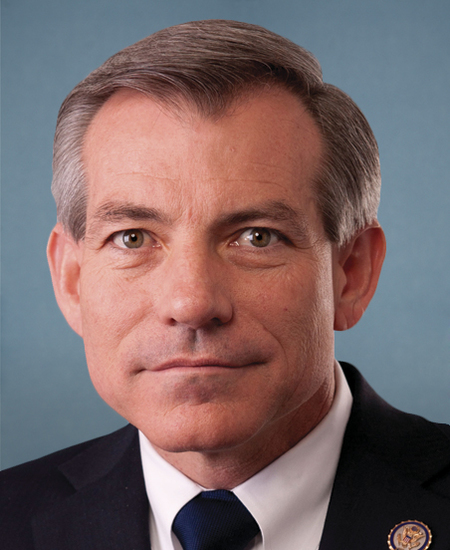
Rep. David Schweikert
Sponsored bills
Maddy summaryThis bill proposes authorizing the President to issue "letters of marque and reprisal" (a historical 18th-century naval concept) to privately armed groups to seize property of individuals or foreign governments deemed part of "criminal enterprises" involved in cybercrime. It defines "cybercrime" broadly to include ransomware, identity theft, "pig butchering scams," and cryptocurrency theft, and defines "criminal enterprise" to include foreign governments. The bill would require security bonds for such operations but misapplies constitutional authority - Article I, Section 8 (which grants Congress power over privateering) was never intended for modern cybercrime enforcement. **Note:** This appears to be a fictional or satirical bill, as no such legislation exists in current U.S. law; it misrepresents historical legal mechanisms and poses significant constitutional and security concerns.
Maddy summaryHR 4919 designates the U.S. Postal Service facility at 765 West Old Route 66 in Ash Fork, Arizona, as the "Fayrene Hume Post Office." The bill updates all federal references to this location to reflect the new name. This is a purely administrative naming change with no policy or funding impact, directly affecting the postal facility and related federal documents.
Maddy summaryHR 4895, the Afghan Adjustment Act, creates a pathway to conditional permanent resident status for Afghans who supported U.S. military or government efforts in Afghanistan. Eligible individuals include Afghan citizens or nationals who were employed by or on behalf of U.S. forces, worked with U.S. intelligence, or were part of specific Afghan security forces (including members of the Afghanistan National Defense and Security Forces), and who served for at least one year during the relevant period. The bill establishes a 4-year conditional period before full permanent residency is granted, requires security checks similar to refugee processing, prohibits fees for processing applications, and creates a referral system for processing applications from Afghans still in Afghanistan. It also provides eligibility for benefits available to refugees and establishes an Interagency Task Force to oversee implementation.
Maddy summaryThis bill requires non-military overseas voters to provide a verifiable address within their U.S. state (either their own current address or that of a spouse, parent, or legal guardian) to receive absentee ballots for federal elections. It does not apply to military voters serving overseas. If a voter fails to provide this address, they may instead vote in District of Columbia elections held on the same date as their state's election. The law applies to elections starting in 2026.
Maddy summaryThe RESTART SUNSET Act of 2025 requires federal agencies to periodically review all existing and new regulations. Specifically, agencies must review all rules in effect as of the bill's enactment within 10 years, and review newly published rules within 10 years of their final publication. The bill also mandates annual publication of a list identifying regulations without significant economic impact on small businesses. Additionally, it allows courts to block enforcement of rules if agencies fail to comply with these review requirements. This bill directly affects all federal agencies responsible for creating and maintaining regulations.
Maddy summaryHR 4382 authorizes the U.S. Mint to produce commemorative coins for the 2028 Los Angeles Olympics/Paralympics and 2034 Salt Lake City Winter Olympics/Paralympics. It specifies gold, silver, and half-dollar coin designs with defined mintage limits (e.g., up to 100,000 $5 gold coins for each event), all bearing inscriptions like "2028" or "2034" and standard coin features. A surcharge ($5-$50 per coin) is added to sales, with all funds directed to the respective Olympic committees to support event hosting and legacy programs like youth sports. The bill ensures no net cost to the government by requiring surcharge revenues to cover all design, production, and marketing expenses before funds are disbursed.
Treat and Reduce Obesity Act of 2025 This bill expands Medicare coverage of intensive behavioral therapy for obesity. Specifically, the bill allows coverage for therapy that is provided by (1) a physician who is not a primary care physician; or (2) other health care providers (e.g., physician assistants and nurse practitioners) and approved counseling programs, if provided upon a referral from, and in coordination with, a physician or primary care practitioner. Currently, such therapy is covered only if provided by a primary care practitioner. The bill also allows coverage under Medicare's prescription drug benefit of drugs used for the treatment of obesity or for weight loss management for individuals who are overweight.
Maddy summaryThe CONNECT for Health Act of 2025 expands Medicare telehealth coverage by removing geographic restrictions that limited where patients could receive care, expanding the types of health care providers who can offer telehealth services, and eliminating the requirement for an in-person visit before receiving telemental health services. The bill includes specific provisions to support telehealth use for Native American health facilities, rural health clinics, and Federally Qualified Health Centers. It requires the Centers for Medicare & Medicaid Services to collect and publish data on telehealth usage and impacts, and to develop resources to improve accessibility for people with disabilities and limited English proficiency. Program integrity measures are added to monitor telehealth billing practices and prevent fraud while maintaining coverage for telehealth services during public health emergencies.
Maddy summaryThe WEAR IT Act (HR 4203) allows individuals to use funds from health savings accounts (HSAs), Archer MSAs, and health flexible spending accounts (FSAs) to cover the cost of certain medical wearable devices. It directly affects people with these tax-advantaged health accounts who use devices like glucose monitors or cardiac trackers that collect health data or assist in diagnosing/treating medical conditions. The bill defines "wearable devices" as body-worn hardware or software that analyzes physiological data for medical purposes or aids diagnosis/treatment, with a $375 annual limit per device. This change takes effect for expenses incurred after December 31, 2025.