

Defending Education Transparency and Ending Rogue Regimes Engaging in Nefarious Transactions Act or the DETERRENT Act This bill expands oversight and disclosure requirements related to foreign sources and institutions of higher education (IHEs). Specifically, the bill requires an IHE to annually disclose to the Department of Education (ED) any year in which the IHE receives a gift from a foreign country of concern (e.g., China or Russia) or foreign entity of concern of any dollar amount; receives a gift or contract from a foreign source (other than a foreign country of concern or foreign entity of concern) that is valued at $50,000 or more, considered alone or in combination with all other gifts or contracts within a calendar year (current disclosure threshold is $250,000 or more), or which has an undetermined monetary value; enters into a contract with a foreign country of concern or foreign entity of concern after receiving a waiver for such contract; or is substantially controlled by a foreign source. Additionally, the bill prohibits IHEs from entering into contracts with a foreign country of concern or with a foreign entity of concern without obtaining a waiver, and requires certain IHEs to disclose gifts or contracts between covered individuals (e.g., researchers) and foreign sources. The bill requires ED to investigate possible violations of this bill and outlines the various penalties for each violation. Penalties may include losing eligibility for federal student financial aid.
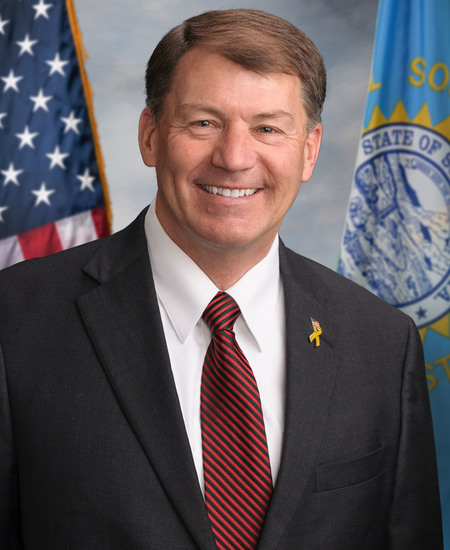
Sen. Mike Rounds
Sponsored bills
Maddy summaryThis bill amends the National Labor Relations Act to explicitly include Indian Tribes and their enterprises operating on tribal lands under federal labor law. It defines "employer" to cover tribal governments and tribal-owned businesses on Indian lands, directly affecting tribal governments and their workplaces. Key provisions add specific definitions for "Indian Tribe," "Indian," and "Indian lands" to clarify which entities and locations fall under the law. This change brings tribal employers on reservation or trust lands under the same federal labor protections as other employers, expanding the scope of the National Labor Relations Act.
Maddy summaryThis bill requires all new passenger vehicles sold in the U.S. (including domestically manufactured, imported, or shipped vehicles) to include AM radio as standard equipment, meaning it must be built into the vehicle at no extra cost to buyers. It mandates that manufacturers install AM radio receivers that can access both traditional and digital AM broadcast stations, with compliance deadlines set 2-4 years after the rule is issued. During a transition period before the rule takes effect, manufacturers must clearly label vehicles without AM radio but cannot charge extra for AM access. The bill also prohibits states from creating their own requirements about AM radio access in vehicles, aiming to ensure consistent emergency alert capabilities through AM radio in cars.
Maddy summaryThe Rural Housing Service Reform Act of 2025 establishes a permanent housing preservation and revitalization program to maintain affordable multifamily housing projects financed under sections 514, 515, and 516 of the Housing Act of 1949, authorizing $200 million annually for fiscal years 2026-2030 to support loan restructuring, rental assistance renewal, and technical assistance for owners. The bill creates a $50 million annual set-aside for Native community development financial institutions to increase homeownership opportunities for Indian Tribes, Alaska Native communities, and Native Hawaiian communities. Additionally, it modifies Section 504 loans to reserve 60% for very low-income applicants and increases the loan cap from $7,500 to $15,000, while adjusting rural housing voucher processes to allow more frequent recalculation based on changing household circumstances.
Maddy summaryThe CONNECT for Health Act of 2025 expands Medicare coverage for telehealth services by removing geographic restrictions that previously limited where patients could receive telehealth care. It allows more healthcare providers to offer telehealth services, including expanding eligibility for practitioners and removing the six-month in-person visit requirement for telemental health. The bill also includes specific provisions for Federally Qualified Health Centers, rural health clinics, and Native American health facilities to better integrate telehealth into their services. Additionally, it establishes program integrity measures to address billing patterns and requires the posting of telehealth service data to improve transparency and quality measurement. These changes aim to make telehealth more accessible for Medicare beneficiaries, particularly in rural areas and for underserved populations.
Maddy summaryThis resolution urges the U.S. government to formally recognize the 1994 Rwanda genocide using the specific term "genocide against the Tutsi in Rwanda," which the Senate states is the accurate description supported by historical records and international consensus. It directs the Secretary of State to publicly adopt this terminology and acknowledges that other atrocities occurred during the same period, including violence against Hutu and Twa communities. As a non-binding resolution, it does not change U.S. policy but expresses the Senate's position on historical terminology. The bill cites international bodies, U.S. officials, and organizations like the Holocaust Museum as supporting this precise phrasing to prevent ambiguity or denial.
Maddy summarySRES 153 is a ceremonial Senate resolution designating March 27, 2025, as "National Women in Agriculture Day." It recognizes the contributions of women in U.S. agriculture, citing that women operate over 1.2 million farms (36% of total sales, $222 billion in 2022) and work across diverse roles from farming to education and advocacy. The resolution encourages public acknowledgment of women’s impact on the agricultural workforce and food systems, urging support for women entering the field, leadership opportunities, and global food security. As a non-binding resolution, it does not create new laws or funding but formally honors this group during National Women’s History Month and National Ag Week.
Maddy summaryS 1227 (ABC Act) requires the Centers for Medicare & Medicaid Services and Social Security Administration to review and simplify eligibility processes, forms, and communications for Medicare, Medicaid, CHIP, and Social Security programs. It directly affects family caregivers - defined as individuals supporting people with disabilities or health needs - who often face duplicate paperwork and communication barriers when navigating these systems. Key provisions mandate reducing repeated information requests, improving website accessibility (including ADA compliance), cutting call wait times, providing translation services, and gathering input from caregivers and advocacy groups. The agencies must report findings and proposed improvements to Congress within two years, with follow-up reports every two years. This bill focuses on streamlining existing processes, not creating new benefits or funding.
Maddy summaryThis bill raises the asset limits for Supplemental Security Income (SSI) program eligibility. It increases the maximum allowable savings for individuals from $2,250 to $20,000 (in 2025, with future inflation adjustments) and for couples from $1,500 to $10,000 (also starting in 2025). The bill adds a specific inflation adjustment mechanism using the Consumer Price Index to automatically update these limits annually after 2025. This change directly affects low-income SSI recipients who currently lose benefits when their savings exceed the current, low thresholds.
Maddy summaryThe Keep STEM Talent Act of 2025 (S 1233) changes visa and immigration rules for foreign students pursuing master's or doctoral degrees in STEM fields at U.S. universities. It requires these students to apply for admission *before* starting their program and adds stronger background checks for their student visas. The bill also creates a new pathway to a green card for STEM graduates who secure a job in their field paying at least the median wage for that role, with approved labor certification. This allows students on F-1 visas to pursue permanent residency without violating current visa rules (dual intent), while requiring annual reports on implementation and impacts.