Maddy summaryThe Truth in Tariffs Act (S 1741) requires most businesses selling goods to U.S. consumers to clearly display the portion of a product's price attributable to new tariffs (specifically tariffs imposed after January 20, 2025) as a separate "tariff surcharge." It exempts small businesses (as defined by the Small Business Act) from this requirement. The Federal Trade Commission (FTC) will enforce this rule under its existing authority, treating violations as unfair or deceptive practices under the FTC Act. This law directly affects retailers and manufacturers selling consumer goods, aiming to make tariff costs transparent to shoppers.
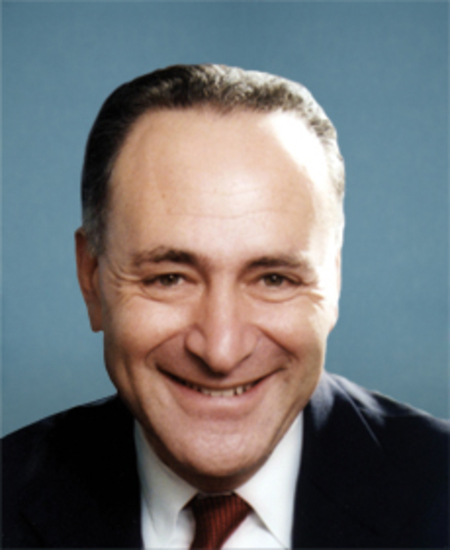
Sen. Charles E. Schumer
Sponsored bills
Maddy summaryS 1705, the Chip Security Act, requires U.S. companies exporting specific advanced integrated circuits (used in AI systems and high-performance computing) to install location verification technology before shipping them abroad. It directly affects manufacturers and exporters of chips classified under U.S. export control numbers like 3A090 or 4A090. The bill mandates that these chips include security mechanisms to verify their location and prevent diversion or tampering, with companies needing to report suspicious activity like unauthorized location changes. The Commerce Secretary must implement these requirements within 180 days and conduct annual assessments to update security standards. This aims to strengthen compliance with export laws and protect national security by securing chip supply chains.
Maddy summaryS 1668 prohibits senior U.S. government officials - including the President, Vice President, Members of Congress, and Senate-confirmed appointees - from issuing, sponsoring, or endorsing cryptocurrencies, tokens, or stablecoins for profit. It also bans acquiring similar financial interests through derivatives or investment funds, while allowing normal public market trading. Violations face civil penalties of up to 10% of the financial interest's value or profits gained, and criminal charges if losses exceed $1 million or personal financial gain occurs. The law applies during official service and for one year after leaving office.
This joint resolution terminates the national emergency declared by President Donald J. Trump on April 2, 2025, which imposed a 10% tariff on most imports to the United States and additional duties on specified trading partners.
This bill increases the annual limit on the tax credit for qualified railroad track maintenance expenses (also referred to as the short line railroad tax credit) and expands eligibility for claiming the credit. Under current law, the tax credit is limited each tax year to $3,500 multiplied by the sum of the number of miles of railroad track owned or leased by the taxpayer (miles owned or leased) and the number of railroad track miles assigned to the taxpayer by a Class II or III railroad (miles assigned). This bill increases the annual limit to $6,100 multiplied by the sum of miles owned or leased and miles assigned. The $6,100 amount used in the calculation of the tax credit limit is adjusted for inflation for tax years beginning after 2025. The bill also expands eligibility for the tax credit to include gross expenses for maintaining railroad tracks owned or leased as of January 1, 2024. Under current law, the tax credit is limited to gross expenses for maintaining railroad tracks owned or leased as of January 1, 2015.
Assault Weapons Ban of 2025 This bill makes it a crime to knowingly import, sell, manufacture, transfer, or possess a semiautomatic assault weapon (SAW) or large capacity ammunition feeding device (LCAFD). The prohibition does not apply to a firearm that is (1) manually operated by bolt, pump, lever, or slide action, except for certain shotguns; (2) permanently inoperable; (3) an antique; (4) only capable of firing rimfire ammunition; or (5) a rifle or shotgun specifically identified by make and model. The bill also exempts from the prohibition the following, with respect to a SAW or LCAFD: importation, sale, manufacture, transfer, or possession related to certain law enforcement efforts, or authorized tests or experiments; importation, sale, transfer, or possession related to securing nuclear materials; and possession by a retired law enforcement officer. The bill permits continued possession, sale, or transfer of a grandfathered SAW, which must be securely stored. A licensed gun dealer must conduct a background check prior to the sale or transfer of a grandfathered SAW between private parties. The bill permits continued possession of, but prohibits sale or transfer of, a grandfathered LCAFD. Newly manufactured LCAFDs must display serial number identification. Newly manufactured SAWs and LCAFDs must display the date of manufacture. The bill also allows a state or local government to use Edward Byrne Memorial Justice Assistance Grant Program funds to compensate individuals who surrender a SAW or LCAFD under a buy-back program.
Maddy summaryThis bill directs the Department of Education to use the International Holocaust Remembrance Alliance (IHRA) definition of antisemitism when reviewing discrimination complaints under Title VI of the Civil Rights Act. It specifically applies to cases involving discrimination based on Jewish ancestry or ethnic characteristics in schools and programs receiving federal funding. The bill clarifies that this guidance does not expand the Department’s authority, alter existing discrimination standards, or affect First Amendment rights. It aims to ensure consistent enforcement against antisemitism in federally funded education settings, building on existing Department practices since 2019.
Maddy summaryThe Equality Act (S 1503) amends existing civil rights laws to explicitly prohibit discrimination based on sexual orientation and gender identity in employment, housing, public accommodations, credit, and jury service. It expands the definition of "sex" in federal civil rights laws to include sexual orientation and gender identity, clarifying that discrimination based on these factors is prohibited under current law. The bill directly affects individuals, businesses, government entities, and service providers by requiring compliance with these expanded anti-discrimination protections. It does not create new rights but makes clear that existing protections against sex discrimination already cover sexual orientation and gender identity, as affirmed by the Supreme Court in Bostock v. Clayton County. The legislation aims to provide consistent nationwide protections against discrimination that LGBTQ+ people have historically faced in key areas of public life.
Maddy summaryThe Affordable Housing Credit Improvement Act of 2025 updates the Low-Income Housing Tax Credit program to increase affordability and accessibility for low-income households. It raises state allocation amounts through revised per capita calculations, modifies income eligibility rules to better serve extremely low-income households, and adds protections for domestic violence victims in housing. The bill expands "difficult development areas" to include rural areas and Indian lands, and changes the program's name from "Low-Income Housing Credit" to "Affordable Housing Credit" to better reflect its purpose. These changes aim to make affordable housing more accessible while improving transparency and accountability in the program's implementation.
Maddy summarySRES 170 is a procedural resolution authorizing the Senate Legal Counsel to represent Senator Ron Wyden in a civil lawsuit titled *Desmond Bellard v. Ronald Wyden, U.S. Senator* pending in the Oregon Supreme Court. The resolution specifically directs Senate Legal Counsel to defend Senator Wyden in this case, which involves allegations related to his official duties as a U.S. Senator. This authorization stems from provisions in the Ethics in Government Act of 1978, which permits the Senate to provide legal representation for members facing civil actions tied to their official responsibilities. The bill does not create new policy but formally approves existing legal support for Senator Wyden in this specific litigation.