

Medicare-X Choice Act of 20 21 This bill establishes and funds the Medicare Exchange health plan, which allows individuals who are not otherwise eligible for Medicare to enroll in a government-administered health insurance plan. The Centers for Medicare & Medicaid Services (CMS) must offer such plan in certain individual health insurance exchanges beginning plan year 2022 and offer it in all individual health insurance exchanges beginning plan year 2025. CMS must offer the plan in the small group market in all geographic areas for plan year 2025. The plan must cover primary care services without cost sharing and meet the same requirements, including essential health benefits, as existing health insurance exchange plans. Unless they opt out, health care providers enrolled under Medicare or under a state Medicaid plan must participate in the plan and are reimbursed at Medicare rates. The bill establishes a grants program for community organizations, educational institutions, and health agencies to create service partnerships and establish interactive data systems for health care providers. Additionally, the bill expands the premium tax credit available for plans purchased through an exchange and eliminates the restriction on the Department of Health and Human Services negotiating prescription drug prices for Medicare.
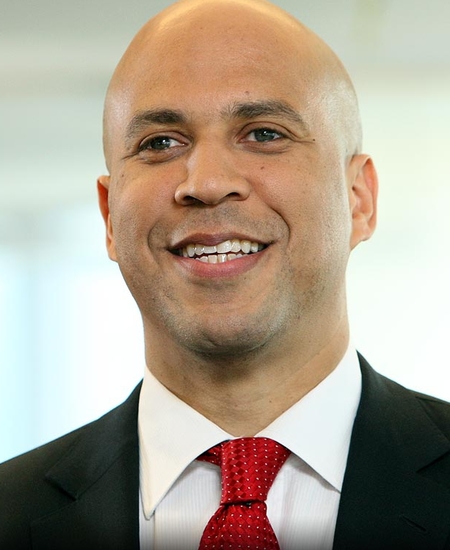
Sen. Cory A. Booker
Sponsored bills
Protection of Kids in Immigrant Detention Act or PROKID Act This bill establishes the Office of the Ombudsperson for Immigrant Children in Government Custody within the Department of Health and Human Services (HHS). The office shall ensure that if government detention of an immigrant child is necessary, that child is held in the least restrictive setting. The office shall also advocate for (1) the quick and safe release of such a detained child, and (2) a child who was detained with family to be released concurrently with a parent or legal guardian. The office's duties shall include (1) monitoring facilities with immigrant children held in government custody to ensure compliance with applicable laws and standards, (2) investigating claims of mistreatment and complaints against foster care providers, (3) reviewing contested decisions about the placement of an immigrant child, and (4) reviewing data from HHS and the Department of Homeland Security (DHS) relating to such children. The office may also offer individual case assistance to such a detained child who requires expedited processing or elevated attention. The office may also issue subpoenas with HHS approval. DHS and HHS must ensure that the office has the ability to conduct investigative and monitoring activities, including by providing unobstructed access to any detention facility with immigrant children. The office and DHS shall enter into a memorandum of understanding to coordinate oversight between DHS and HHS. The bill also establishes an expert advisory committee to assist the office and an interagency working group to identify and discuss concerns related to detained immigrant children.
Strengthening Local Processing Act of 2021 This bill revises provisions related to meat and poultry processing establishments, including smaller establishments (i.e., those with between 10 and 500 employees) and very small establishments (i.e., those with fewer than 10 employees or annual sales of less than $2.5 million). For example, the Department of Agriculture (USDA) must establish a searchable database of peer-reviewed validation studies for use in developing Hazard Analysis and Critical Control Points plans for smaller and very small establishments. The bill increases the maximum federal cost share from 50% to 65% that USDA may provide to assist states in creating meat and poultry inspection programs. Additionally, USDA must conduct outreach with states that have meat and poultry inspection programs, but that do not have Cooperative Interstate Shipment programs. The Cooperative Interstate Shipment program allows state-inspected facilities to operate as federally-inspected facilities and ship their products in interstate commerce and internationally. USDA must also award competitive grants for activities to adapt production, processing, distribution, and sales systems to respond to and recover from the effects of the COVID-19 pandemic, including activities that support (1) the health and safety of meat and poultry plant employees, suppliers, and customers; (2) increased processing capacity; and (3) the resilience of the small meat and poultry processing sector. Further, the bill establishes grant programs to (1) establish or expand career training programs at community colleges, vocational schools, and universities related to meat and poultry processing; and (2) support smaller and very small establishments by offsetting the cost of training new meat and poultry processors.
Electric Credit Access Ready at Sale Act of 2021 or the Electric CARS Act of 2021 This bill modifies and extends tax credits for electric cars and alternative motor vehicles. The bill extends the tax credit for new qualified plug-in electric drive motor vehicles through 2031. In addition, the bill modifies the credit to remove the limitation on the number of vehicles per manufacturer that are eligible for the credit, allow a taxpayer to assign the credit to a financing entity, and allow an unused credit to be carried forward for five years. The bill also extends through 2031 the tax credits for (1) alternative fuel vehicle refueling property, and (2) alternative motor vehicles.
Equality Act This bill prohibits discrimination based on sex, sexual orientation, and gender identity in areas including public accommodations and facilities, education, federal funding, employment, housing, credit, and the jury system. Specifically, the bill defines and includes sex, sexual orientation, and gender identity among the prohibited categories of discrimination or segregation. The bill expands the definition of public accommodations to include places or establishments that provide (1) exhibitions, recreation, exercise, amusement, gatherings, or displays; (2) goods, services, or programs; and (3) transportation services. The bill allows the Department of Justice to intervene in equal protection actions in federal court on account of sexual orientation or gender identity. The bill prohibits an individual from being denied access to a shared facility, including a restroom, a locker room, and a dressing room, that is in accordance with the individual's gender identity.
IMPACT to Save Moms Act This bill requires the Centers for Medicare & Medicaid Services to establish the Perinatal Care Alternative Payment Model Demonstration Project to allow states to test payment models for maternity care, including postpartum care, under Medicaid and the Children's Health Insurance Program (CHIP). Additionally, the Medicaid and CHIP Payment and Access Commission must report on specified information relating to the continuity of coverage for pregnant and postpartum women under Medicaid and CHIP.
COVID-19 Nursing Home Protection Act of 2021 This bill provides funds and establishes requirements for Medicare skilled nursing facilities (SNFs) and Medicaid nursing facilities (NFs) to address COVID-19 (i.e., coronavirus disease 2019). Specifically, the bill provides FY2021 funding for COVID-19 strike teams that can be deployed to these facilities to help with vaccinations, clinical care, infection control, or staffing. The amounts provided by the bill are designated as an emergency requirement pursuant to the Statutory Pay-As-You-Go Act of 2010 (PAYGO) and the Senate PAYGO rule. (This excludes the budget effects from being counted for the purposes of enforcing the PAYGO rules.) In addition, the bill requires the Centers for Medicare & Medicaid Services (CMS) to ensure that, during the public health emergency relating to COVID-19, at least one of its contracts with Medicare quality improvement organizations requires that the organization assist SNFs with COVID-19 infection control (e.g., training materials). Finally, the bill provides statutory authority for the requirement that SNFs and NFs report data regarding COVID-19 preparedness, testing, infections, and deaths. Additionally, the CMS must publish on the Nursing Home Compare website certain demographic information, aggregated by state, with respect to COVID-19 infections and deaths in such facilities.
Justice for Incarcerated Moms Act This bill establishes new requirements related to grants, programs, and reports to improve the treatment and care of pregnant and postpartum women who are incarcerated. Specifically, the bill requires the following: states must restrict the use of restraints on pregnant women in prison in order to receive full funding under the Edward Byrne Memorial Justice Assistance Grant program; the Bureau of Prisons must establish programs to optimize maternal health outcomes for pregnant and postpartum women in federal prisons; the Bureau of Justice Assistance must award state grants for programs to support pregnant and postpartum women in state and local prisons and jails; the Government Accountability Office must report on adverse maternal and infant health outcomes among incarcerated individuals and infants born to such individuals, with a particular focus on racial and ethnic disparities; and the Medicaid and CHIP Payment and Access Commission must report on the impact of Medicaid ineligibility for pregnant and postpartum women in prison.
Black Maternal Health Momnibus Act of 2021 This bill directs multi-agency efforts to improve maternal health, particularly among racial and ethnic minority groups, veterans, and other vulnerable populations. It also addresses maternal health issues related to COVID-19 (i.e., coronavirus disease 2019). The Department of Health and Human Services (HHS) and other specified departments must address the social determinants of maternal health, which include child care, housing, food security, transportation, and environmental conditions. The bill also extends to 24 months postpartum eligibility for the Special Supplemental Nutrition Program for Woman, Infants, and Children. Additionally, HHS and other agencies must take actions to grow and diversify the maternal health workforce. To increase access to maternity care, HHS and other agencies must (1) award specified grants; (2) test an alternative payment model for perinatal care under Medicaid and the Children's Health Insurance Program (CHIP); and (3) support training, technology, and telehealth initiatives. The bill also increases research and data collection on maternal morbidity and mortality, particularly among tribal populations and minority groups. The Bureau of Prisons and the Department of Justice must establish programs to improve maternity care for incarcerated populations. The Medicaid and CHIP Payment and Access Commission must also report on the impact of Medicaid ineligibility for pregnant and postpartum prisoners. Additionally, as a condition for certain grants, states and territories must have laws limiting the use of restraints on pregnant individuals in prisons. The bill also directs activities to mitigate adverse maternal health outcomes associated with climate change and to improve maternal vaccination rates.
U.S. Citizenship Act This bill establishes a path to citizenship for certain undocumented individuals. The bill also replaces the term alien with noncitizen in the immigration statutes and addresses other related issues. Specifically, the bill establishes a new status of lawful prospective immigrant . This status shall be available to an applying noncitizen who meets certain requirements, including being continually present in the United States from January 1, 2021, and passing background checks. After at least five years with this status, an eligible noncitizen may apply for and receive permanent resident status. The bill also provides permanent resident status to certain applying noncitizens, specifically for eligible noncitizens who (1) entered the United States as a minor, (2) were eligible for temporary protected status or deferred enforced departure on January 1, 2017, or (3) worked a certain amount of agricultural labor in the five years prior to applying. Among other things, the bill also redefines for immigration purposes the term conviction to exclude convictions that have been expunged or vacated, requires the Department of State to implement a strategy to advance reforms in Central America and address key factors contributing to migration from the region to the United States, requires the State Department to establish refugee processing centers in Central America, requires Customs and Border Patrol sectors and stations to have a certain number of employees with certain qualifications such as paramedic training, generally prohibits religious discrimination in granting or denying immigration benefits, and establishes grant programs for providing training and services to immigrants.