Maddy summaryS 430 authorizes the President to create cooperative agreements with Iraq and countries on the Arabian Peninsula (including Bahrain, Kuwait, Oman, Qatar, Saudi Arabia, the UAE, and Yemen) to develop counter-drone technology. The bill enables joint research, testing, and production of systems designed to detect, track, and destroy weaponized drones threatening civilians and U.S. partners. It requires agreements to follow arms control laws and establish intellectual property rules, while explicitly stating it does not authorize military force. The legislation focuses on enhancing regional security through shared defense technology development to protect against drone attacks.
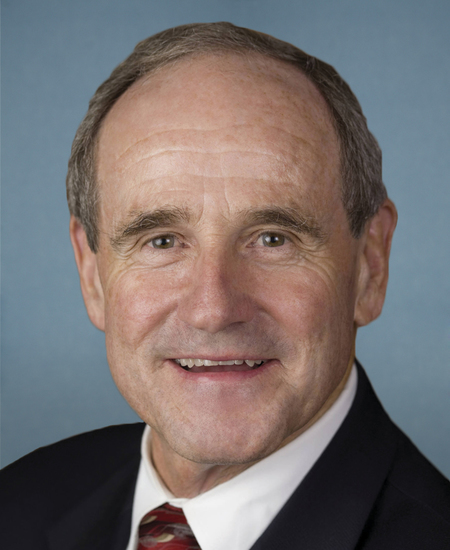
Sen. James E. Risch
Sponsored bills
Maddy summaryThis resolution (SRES 63) is a symbolic Senate measure formally celebrating Black History Month. It acknowledges the contributions of African Americans to U.S. history and society, recognizes the origins of Black History Month (beginning as Negro History Week in 1926), and encourages nationwide reflection on this history. The resolution does not create new laws or policies but serves as a formal Senate acknowledgment of the significance of Black History Month in February. It aims to honor the legacy of African American pioneers and promote learning about their impact on the nation.
Maddy summaryThis symbolic Senate resolution designates March 3, 2023, as "National Speech and Debate Education Day" to honor the value of speech and debate programs in schools. It does not create new laws or affect specific groups, but encourages educational institutions, businesses, and communities to recognize these programs. The resolution highlights how speech and debate education develops communication, critical thinking, and civic skills in students. It formally affirms the importance of these programs without imposing any requirements or funding changes.
Maddy summaryThe Hearing Protection Act (S 401) reclassifies firearm silencers as firearms under federal tax law, requiring them to be taxed at 10% like other firearms starting 90 days after enactment. It mandates the destruction of all existing federal silencer registration records within one year and preempts state laws that tax, regulate, or require registration of silencers. The bill directly affects silencer owners, manufacturers, and dealers by changing federal tax treatment, eliminating federal registration requirements, and overriding conflicting state regulations. Key provisions include updated definitions for silencers, new marking requirements for manufacturers, and removal of federal registration barriers.
Maddy summaryThis bill requires federal financial regulators (like the Federal Reserve or SEC) to analyze how new rules would affect food, electricity, and fuel prices before implementing them. Specifically, it mandates that regulators provide detailed, multi-year price impact estimates - broken down by Consumer Price Index categories - when proposing rules affecting agricultural or energy supply chain businesses. Regulators cannot adopt such rules if the analysis shows price increases, unless the annual Consumer Price Index growth is below 4.5%. The law directly affects businesses in food/energy supply chains and the federal agencies that write financial regulations.
Maddy summaryThe Build the Wall Now Act (S 422) requires the immediate resumption of border barrier construction along the U.S.-Mexico border that was underway or planned before January 20, 2021, prohibiting cancellation of existing contracts and directing use of previously appropriated funds for this purpose. The bill mandates honoring agreements with states, local governments, and tribes related to border barrier construction and amends existing law to change definitions of border barriers and construction requirements. It grants the Secretary of Homeland Security broad waiver authority to bypass numerous environmental, historical, and other legal requirements that would otherwise apply to border barrier construction. This legislation directly affects border communities, environmental regulations, and the Department of Homeland Security's operations along the southern border.
Maddy summaryThis joint resolution (SJRES 7) seeks congressional disapproval of a 2023 rule defining "Waters of the United States" (WOTUS), which would have changed how federal agencies regulate wetlands and waterways. It targets a rule jointly issued by the Army Corps of Engineers, EPA, and other agencies (88 Fed. Reg. 3004, Jan. 18, 2023), directly affecting landowners, developers, and environmental regulators by altering jurisdiction over water resources. If passed, the resolution would nullify the rule under a specific disapproval process in Title 5 of U.S. Code, preventing it from taking effect. The resolution does not create new regulations but aims to block an existing federal rule. This is a procedural step, not a new law.
Maddy summaryThis proposed constitutional amendment (SJRES 13) would require the federal government to balance its annual budget, meaning spending could not exceed revenue unless Congress passes a specific exception with a two-thirds vote. It also sets a limit of 18% of GDP for total government spending, with similar supermajority requirements to exceed this cap. The bill would mandate the President to submit a balanced budget proposal to Congress each year and require a two-thirds vote for tax increases or debt limit hikes. As a proposed amendment, it would only take effect if ratified by three-fourths of state legislatures.
Maddy summaryThis joint resolution (SJRES 12) seeks congressional disapproval of the District of Columbia Council’s approval of the Revised Criminal Code Act of 2022 (D.C. Act 24-789). It directly affects D.C. residents and local government, as the resolution targets the District’s newly enacted criminal code. The mechanism is a formal congressional disapproval under the District of Columbia Home Rule Act, requiring passage by both chambers to block the D.C. law from taking effect. The resolution does not alter the D.C. code itself but aims to halt its implementation through federal action.
Maddy summarySRES 45 is a non-binding Senate resolution introduced on February 9, 2023, by a group of senators expressing the Senate's view that the current migration levels at the U.S. southern border constitute a crisis. This resolution does not create new laws or policies, nor does it directly affect any individuals or groups - it serves solely as a symbolic statement of the Senate's position. It contains no concrete policy mechanisms or implementation plans, as resolutions of "sense" are typically used for expressing opinions rather than enacting change. The resolution was referred to the Senate Judiciary Committee but has no legal effect.