Maddy summaryHR 6213, the Heat Workforce Standards Act of 2025, prohibits the U.S. Department of Labor from finalizing, implementing, or enforcing OSHA's proposed "Heat Injury and Illness Prevention" standard (published August 30, 2024). This bill directly blocks the specific regulatory proposal targeting heat safety in both outdoor and indoor work settings. It does not create new requirements or affect workers; it solely prevents the implementation of the existing OSHA proposal. The bill is procedural, focusing on halting a regulatory action rather than establishing new policy.
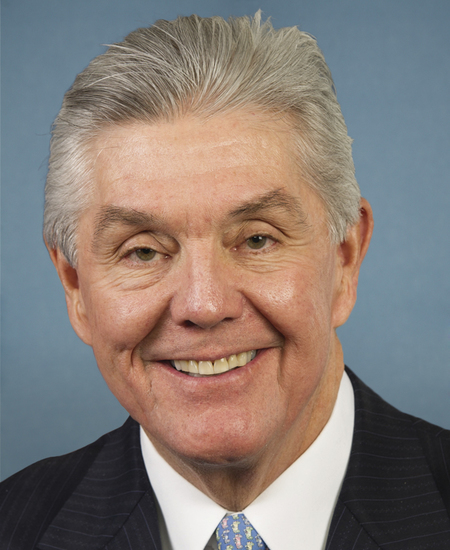
Rep. Roger Williams
Sponsored bills
Maddy summaryThis resolution honors the late Senator Lindsey Graham and condemns Omar Suleiman for publicly celebrating Graham's death. It also acknowledges that House Democrats invited Suleiman to serve as a guest chaplain in 2019 and highlights his past statements and affiliations. The measure expresses support for the House Republicans' Sharia-Free America Caucus, which aims to protect constitutional principles from what it describes as an ideology incompatible with American life.
Protecting Privacy in Purchases Act This bill prohibits payment card networks from using merchant codes that distinguish firearms retailers from general-merchandise retailers or sporting-goods retailers. The Department of Justice must enforce this bill and report annually on the resulting investigations and cases.
Maddy summaryHR 5549, the Efficient Nuclear Licensing Hearings Act, streamlines the licensing process for nuclear facilities by reducing mandatory hearings. It allows the Nuclear Regulatory Commission (NRC) to issue construction permits, operating licenses, or amendments without a hearing if it provides 30 days' notice and Federal Register publication, skipping the hearing requirement only when an amendment involves "no significant hazards." This change applies to all pending NRC applications after enactment, shifting from current rules requiring hearings unless waived. The bill directly affects nuclear facility developers, the NRC, and communities potentially impacted by licensing decisions through its revised notice and hearing procedures.
Maddy summaryThe Jewish American Security Act aims to combat antisemitism by strengthening protections for Jewish students, securing Jewish communities, and increasing transparency regarding online hate speech. For educational institutions receiving federal funds, the bill mandates the creation of specific coordinators to handle discrimination complaints, requires annual training on handling antisemitism, and establishes a new federal clearinghouse to share best practices for campus safety. To support physical security, the legislation expands grant funding for nonprofit organizations and directs the Attorney General to provide resources for law enforcement agencies protecting houses of worship. Additionally, the act requires major online platforms with over 50 million monthly users to submit detailed reports to the Federal Trade Commission on how they detect, remove, and moderate antisemitic content.
Maddy summaryThis bill amends the Small Business Act to establish a "Rule of Two" for federal contracts. It requires contracting officers to reserve contracts over the simplified acquisition threshold for small businesses if they reasonably expect two or more small businesses can compete and offer a fair market price. The law directly affects federal agencies and small business contractors by changing how government contracts are awarded. It ensures small businesses have a clear opportunity to compete for eligible contracts without requiring them to be the sole source.
Maddy summaryThis bill sets clear limits on class action lawsuits against credit reporting companies for violations of the Fair Credit Reporting Act (FCRA). For intentional failures to follow FCRA rules, it caps individual damages at $100,000 or 40% of total damages, and total class recovery at $500,000 or 1% of the company’s net worth. For negligent failures, it similarly limits total class recovery to $500,000, 1% of net worth, or 40% of actual damages. These changes directly affect credit bureaus (like Equifax or TransUnion) and creditors handling consumer credit data, preventing excessive damages in class actions. The bill harmonizes existing liability rules by adding specific, predictable financial limits to court awards.
Maddy summaryHR 4398, the Veteran Burial Timeliness and Death Certificate Accountability Act, requires Veterans Affairs (VA) physicians or nurse practitioners to certify the death of a veteran who dies of natural causes within 48 hours of learning of the death. This directly affects veterans' families, who previously faced delays of up to eight weeks in burial and access to survivor benefits due to slow death certifications. The bill mandates annual reports to Congress on VA compliance with the 48-hour rule, including statistics on delays and their causes. The key change is establishing a strict timeline for death certification to prevent unnecessary delays in honoring veterans' final arrangements.
Maddy summaryHR 2332, the SHARE Act of 2025, standardizes how states share criminal history background check information for professional licensing across state lines. It requires the FBI to provide this information to state licensing authorities through agreements with law enforcement, specifically for verifying applicants seeking licenses or practice privileges in multiple states. The bill strictly prohibits states from sharing detailed criminal history records with other states or the public, allowing only a simple "satisfactory" or "unsatisfactory" result to be shared. This directly affects licensed professionals (like nurses or contractors) seeking to practice in multiple states and the state agencies that issue their licenses.
Maddy summaryThis bill, titled the Ban Abortion by Mail Act, aims to restrict how abortion medications like mifepristone are prescribed by requiring an in-person visit between the patient and the doctor. It directly affects health care providers who are currently certified by the FDA to dispense these drugs, threatening their certification status if they prescribe them without a physical examination or to patients living in states where the provider lacks a medical license. The legislation mandates that the FDA report annually to Congress on any providers who lose this certification due to violations or unsafe prescribing practices. By enforcing these specific conditions, the bill seeks to ensure that all prescriptions for abortion drugs are administered under strict supervision and within the legal boundaries of the patient's state.