Maddy summaryHR 2808, the Homebuyers Privacy Protection Act, restricts how consumer reporting agencies share credit reports during mortgage applications. It prevents agencies from sending these reports to third parties unless the request is tied to a firm credit offer and the recipient has either the homebuyer’s explicit written consent or is directly involved in the mortgage (like the lender, loan servicer, or the homebuyer’s bank holding an active account). This directly affects homebuyers applying for residential mortgages by limiting unsolicited sharing of their credit information. The law amends the Fair Credit Reporting Act to strengthen privacy protections around mortgage-related credit data.
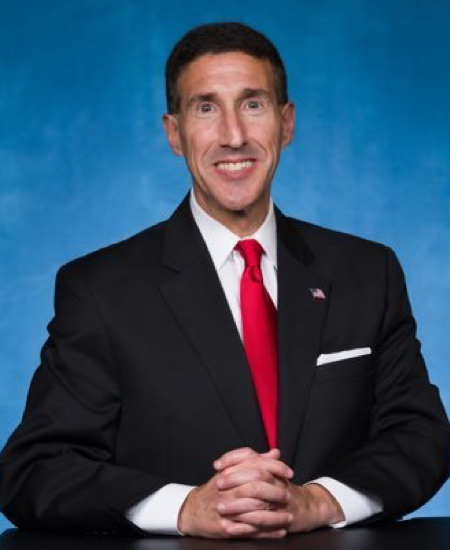
Rep. David Kustoff
Sponsored bills
Maddy summary# Summary of Proposed FEMA Reform Legislation (FEMA Act of 2025) This comprehensive legislative document proposes significant reforms to the Robert T. Stafford Disaster Relief and Emergency Assistance Act, with four main sections addressing: ## 1. Disaster Assistance Reforms - **Expanded eligibility** for assistance, including clarifying that absence of a fixed address doesn't disqualify individuals from sheltering assistance - **Improved rental assistance** with consideration of local post-disaster rent increases - **Direct assistance** for those unable to use financial assistance, with no requirement to show other assistance can cover costs (except insurance) - **Enhanced notices** for applicants, including documentation of denial decisions - **Clarification of displacement assistance** eligibility, stating insurance shouldn't be considered a duplication of benefits ## 2. Mitigation Program Enhancements - **Preapproved project mitigation plans** requiring states to develop plans with peer review processes - **Improved allocation of funds** with formulas prioritizing vulnerable communities, high-risk areas, and rural/economically distressed communities - **Resilient buildings** requirements for housing retrofits using the latest building codes - **Streamlined application processes** for hazard mitigation funds across multiple programs - **Study on mitigation benefits** to evaluate cost savings and effectiveness ## 3. Transparency and Accountability Measures - **Public dashboards** for both individual assistance (431) and public assistance (432) showing application status, approvals, denials, and funding - **Transparency requirements** for disaster declarations with detailed justifications for approvals/denials - **GAO studies** on numerous topics including: - Identity theft in disaster assistance (409) - Insurance utilization for public assistance facilities (410) - Wildfire management plans (411) - Effectiveness of alerting systems (412) - Cost savings of repair/rebuilding reforms (415) - **Prohibition on political discrimination** in assistance distribution ## 4. Workforce and Operational Improvements - **Study on workforce retention** in noncontiguous communities - **Pilot program** for preliminary damage assessments in remote communities - **Fast-moving disasters working group** to develop best practices for rapid response The legislation focuses on improving efficiency, transparency, and effectiveness of disaster relief programs while prioritizing vulnerable populations and communities with higher risk of disasters. It also emphasizes data-driven decision making through required studies and reports to continuously improve disaster management policies.
Maddy summaryThis bill establishes "cottage family homes" as a new foster care placement option under federal law. It defines these homes to require trauma-informed care, prohibit seclusion/restraints (except brief physical restraint for safety), ensure children can participate in normal activities, and maintain family connections. The bill removes time limits on foster care payments for children in these homes and gives states flexibility to classify them as foster family homes if they serve children's best interests. It directly affects foster children placed in cottage homes and the agencies operating them.
Maddy summaryThis bill extends tax filing deadline relief from 60 to 120 days for taxpayers affected by natural disasters. It allows states (or the District of Columbia) to request IRS postponements for disasters like hurricanes, floods, or droughts, rather than requiring federal disaster declarations. The change applies to all taxpayers in affected areas across all 50 states, territories, and the District of Columbia. The law modifies IRS rules under Section 7508A of the Internal Revenue Code to implement these longer, state-declared disaster extensions.
Maddy summaryThis bill modernizes the process for seasonal agricultural workers who need commercial driver's licenses (CDLs). It requires the Transportation Secretary to create online systems for easy license renewal (Section 2(a)) and clarifies that farm equipment like tractors and harvesters ("implements of husbandry") are not subject to commercial vehicle weight calculations (Section 2(b)). It directly affects farm-related service industries and their seasonal employees who operate restricted CDL vehicles. The changes simplify administrative processes and remove regulatory barriers for agricultural operations.
Veterans' Assuring Critical Care Expansions to Support Servicemembers Act of 2025 or the Veterans' ACCESS Act of 2025 This bill addresses the administration of the Veterans Community Care Program (VCCP) and other Department of Veterans Affairs (VA) health care matters. Among other provisions regarding the VCCP, the bill establishes in statute access standards that determine when a veteran is eligible to receive non-VA care through the VCCP, requires the VA to notify veterans regarding their eligibility for care within two business days after the VA is aware the veteran is seeking care, and extends the deadline for the submittal of claims under the VCCP by health care entities and providers. The VA must address its mental health treatment programs by establishing a standardized screening process to determine whether a veteran satisfies criteria for priority or routine admission to a mental health residential rehabilitation treatment program or a program for residential care for mental health and substance abuse disorders, tracking the performance of medical facilities and Veterans Integrated Service Networks in meeting the requirements for mental health treatment screenings and timely admission to treatment programs under such screenings, and establishing an appeal process for when a veteran is denied admission to a covered treatment program or is accepted into a program but not offered bed placement in a timely manner. Additionally, the VA must establish an online self-service module for veterans to request and manage appointments, track referrals, and appeal and track decisions related to requests for care.
Maddy summaryThis bill establishes state-level judicial threat intelligence centers to improve safety for judges and court staff. It defines "eligible organizations" (nonprofits with judicial security expertise) and requires the State Justice Institute to fund these centers to provide security training, threat monitoring, coordinate with law enforcement, and develop standardized reporting systems. The centers will create resources for judicial officer safety, conduct security assessments, and track threats through a national database. State Justice Institute must submit annual reports detailing threat types and severity to congressional committees. The bill directly affects state and local judges, court staff, and the nonprofit organizations operating these centers.
Maddy summaryHR 4620 amends federal law to include rioting as a form of racketeering activity under Title 18, United States Code. This change would allow prosecutors to charge individuals who organize or participate in riots as part of a larger criminal enterprise under federal racketeering laws. The bill specifically targets coordinated riot activities linked to organized crime, not isolated or spontaneous protests.
Maddy summaryHR 4335, the Abraham Accords Defense Against Terror Act, streamlines U.S. defense exports to countries that have normalized relations with Israel (via the Abraham Accords) and cooperate with the U.S. on countering Iran and Iran-aligned threats in the Middle East and North Africa. The bill authorizes the Secretary of State to identify qualifying countries and fast-tracks approval for military sales, leases, or transfers to them, requiring a 15-day congressional notification with specific safeguards. Key safeguards include ensuring sensitive U.S. technology isn’t shared with China or Russia and mandating regular strategy reports to Congress on implementation, threat assessments, and pending defense deals over $25 million. This directly affects participating Middle Eastern nations and U.S. defense export processes, aiming to accelerate security cooperation without altering Israel’s military edge. The bill focuses on procedural changes to expedite defense cooperation, not on new funding or policy outcomes.
Maddy summaryHR 4448, the Restoring Equal Opportunity Act, prohibits lawsuits alleging discrimination based on "disparate impact" in employment and housing. It amends the Civil Rights Act of 1964 and Fair Housing Act to ban claims where a neutral policy (like a test or screening rule) unintentionally disadvantages protected groups (such as race or gender), even if there was no discriminatory intent. The bill also nullifies specific federal regulations implementing civil rights laws, removing legal grounds for such claims under current enforcement rules. This directly affects employers, housing providers, and federal agencies that enforce civil rights laws, changing how discrimination claims can be brought in court.